
Thought Leaders
How Intelligent Workflows Will Turn Data Hoarding into Transformation

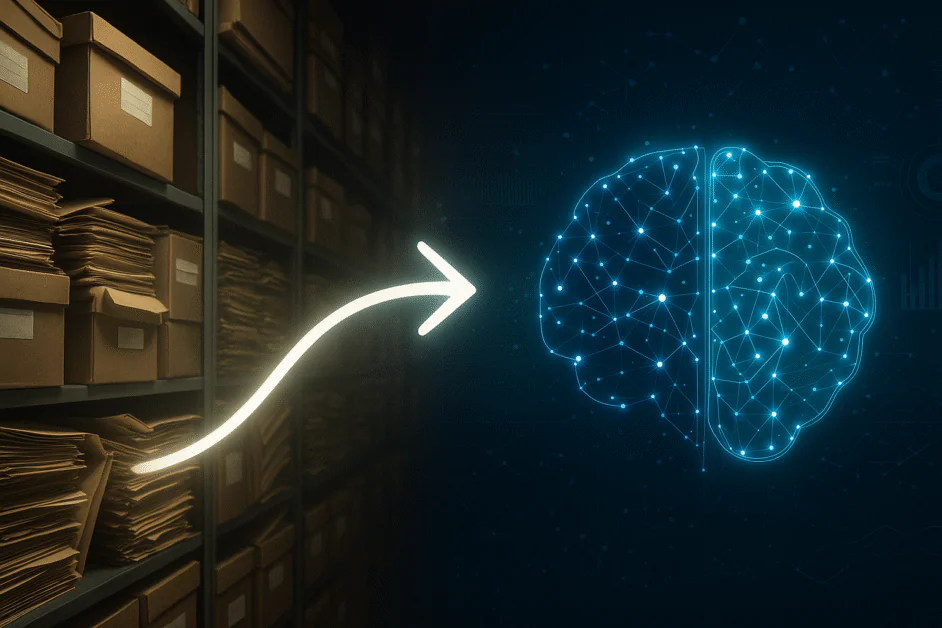
“Good” data management practices used to mean “keep only what I need now,” but that mentality is a relic of the era when data was costly and cumbersome. In the age of AI, adhering to that line of thinking risks rendering you obsolete. When organizations treat data as a living, evolving asset to be curated, connected, and continuously enriched, it becomes the fuel that turns what was once an operational byproduct into the engine driving their next wave of AI-driven innovation.
The stakes couldn’t be higher. AI is already finding immediate, high-impact uses across industries ranging from life sciences and government to media and manufacturing, delivering measurable gains customers notice (and investors expect). But the next wave of AI innovation will demand something even more valuable: precise, proprietary data that reflects your organization’s unique experience and operations. Those who harness and refine that data now will define the competitive edge everyone else is chasing.
The Hidden Costs of Data Chaos
Too often, data is trapped in silos—usually ad hoc arrangements scattered across disconnected systems, opaque clouds, and unmanaged archives that change over time from temporary solutions into the status quo. The result: duplicated effort, overburdened network infrastructure, hidden costs, and stranded value.
If this sounds familiar, it’s because every organization has lived it. Teams spin up short-term storage or cloud instances “just to get the job done,” only for those silos to linger long after the project ends. Teams, departments, even whole companies merge—and suddenly storage system chaos and data sprawl is making the work of IT admins, data managers, and AI researchers infinitely harder (not to mention a persistent productivity drain). These problems often hide in plain sight until they start affecting budgets, performance, and compliance.
Here are some of the most common warning signs that your approach to data storage will undermine your ability to build the ideal workflow:
- One-size-fits-all thinking. Beware any vendor trying to force-fit a single solution they claim will solve every problem. Deploy technology thoughtfully where it delivers the precise attributes you need at each workflow or pipeline step: Flash, object, and tape each have their strengths; locking into one can dramatically limit your future agility and choice.
- Dark or idle cloud repositories. Orphaned cloud buckets or forgotten shares sit outside your workflow and are unindexed, unmanaged, and invisible to the tools that could make them useful.
- “Cheap” cold storage that really isn’t. Archival tiers can look economical until you need to get your data back quickly and wind up hit with unplanned retrieval and egress fees.
- Performance bottlenecks at critical access points. Slow ingest or collaboration steps throttle the very workflows where fast access drives innovation, decision-making, and revenue.
- Cloud overdependence. Keeping everything in the cloud can inflate costs and isolate data from the on-site and edge workflows that need performance and control the most. This ultimately puts even more pressure on your outbound network infrastructure.
Each of these pitfalls generates operational friction that drains time, budget, and agility—the exact opposite of what AI-driven organizations need. But the biggest pitfall of all is treating data like a static resource. To be truly ready to pounce on new AI and data-driven decision-making workflows, your data needs to flow through an agile, adaptive workflow that speeds immediate use, then enriches data over time and turns scale into strategic advantage.
Turning Static Data to Living Intelligence
The storage conversation around AI has mostly focused on small examples of training today’s AI models, with today’s understanding of what’s “in” your data. But developing a system of ongoing data enrichment can be so much more. Each time data is accessed, it creates an opportunity to enrich that data through human input, system analysis, and AI-driven tagging, classification, and discovery.
Then each time you train your AI models your algorithms improve. Each iteration sharpens the model’s accuracy, refines its predictions, and reveals new relationships between seemingly unrelated sources. Your data becomes an engine of continuous learning, not a snapshot in time. When “living data,” AI technology, and human expertise operate together, organizations stop reacting to change and start predicting it.
However, unlocking this kind of living intelligence requires an equally dynamic foundation. You need performance on ingest to capture data at its freshest, GPU-powered training and inference to turn it into insight, and massive, economical storage to retain it all—ready for the next cycle of enrichment.
That balance of speed and scale is what makes an end-to-end workflow indispensable. Flash storage fuels real-time collaboration and model development. Object storage delivers searchable, durable scale. Tape extends that scale to petabytes and beyond, preserving decades of valuable information at a fraction of the cost. Together, they form a seamless pipeline—data enters fast, grows smarter, and remains ready to teach the next model.
What a Connected Workflow Unlocks
With a connected workflow, the same challenges that once slowed you down become sources of advantage:
- Freedom of choice. Deploying the best mix of flash, object, and tape ensures maximum performance and the lowest cost at scale. Each technology contributes its strengths without locking you in.
- Continuous enrichment. Every time data is accessed, used, or analyzed, new context and metadata are added. Over time, your information base becomes smarter, richer, and more useful.
- Agility at any scale. A system that makes it simple to add capacity, boost performance, or extend reach without disruption or surprise costs.
- Instant insight anywhere. Data stays close to the people and systems that need it; whether that’s in the cloud, on-premises, or at the edge. That means decisions can happen in real time.
- Economics that work. Performance and capacity align to the task at hand, keeping spending in step with actual business needs.
- Security through visibility. Unified workflows keep data traceable, auditable, and compliant, reducing the risk of leaks, loss, or abandonment.
- A foundation for AI. Data that moves, learns, and improves within an integrated system becomes a true competitive advantage—one your rivals can’t easily duplicate or catch up to.
From Burden to Breakthrough
The truth is, efficient workflows and living data aren’t separate ideas—they’re inseparable. A well-designed, high-performance workflow gives your data the structure, context, and circulation it needs to keep evolving. And living data, in turn, gives your workflow purpose—continually enriching the models, tools, and insights that define your organization’s intelligence. One fuels the other.
The pitfalls of data chaos—silos, lost repositories, runaway costs—aren’t inevitable. They’re signs of systems built for the past. The future belongs to organizations that treat data as a dynamic asset and build workflows that let it move freely, learn continuously, and grow in value over time.
Now is the moment to evaluate your own foundation. How well does your data flow? How ready is it to feed your next generation of AI tools and understanding of your business domain? Those who act now—who align intelligent data management with agile, connected workflows—will be ready not just to survive the next wave of AI innovation, but to lead it. The golden age of data is coming. The question is whether your organization will be prepared to thrive in it.



