
Thought Leaders
97% of Healthcare Data Remains Untapped: How Connectivity Can Cure Infusion Therapy

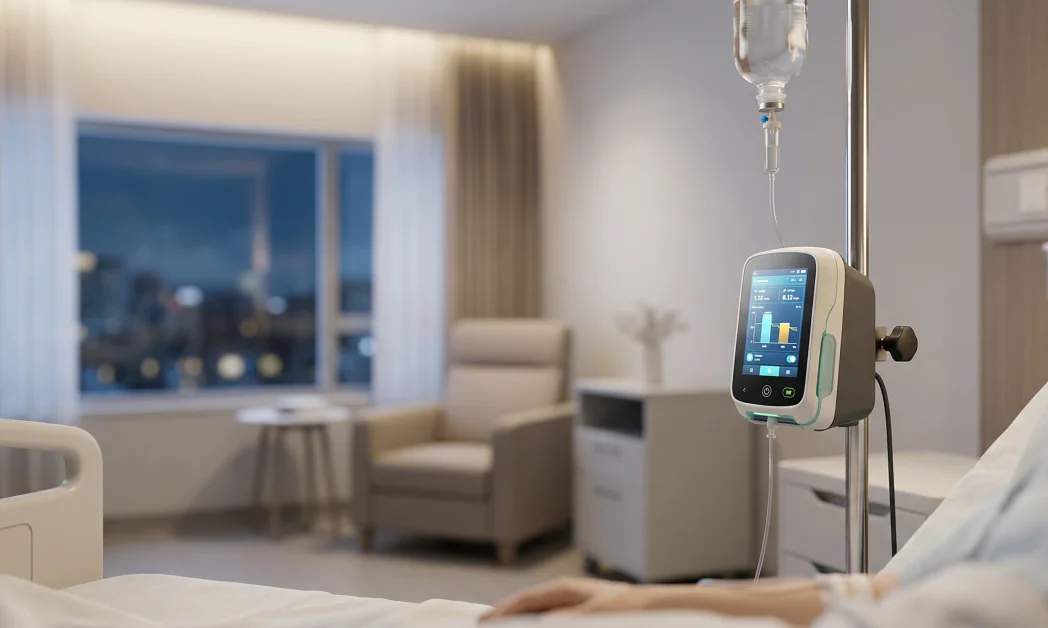
Healthcare systems generate vast amounts of information across hospitals, laboratories, diagnostic centers, and pharmacies, yet a staggering 97% of healthcare data remains untapped.
Medical records are often scattered across multiple systems that were designed for administrative functions rather than research or data analysis, making it difficult for healthcare providers to integrate it, identify patterns across patient histories or population health trends and ultimately use it to improve the patient’s outcome and healthcare workflows.
As we look at the challenges faced by global healthcare—clinician burnout, nursing shortages, and increasing patient complexity—this data gap is no longer just a missed opportunity for efficiency; it is a clinical bottleneck.
The “cure” for this untapped potential lies in connectivity: the shift from isolated medical tools to a unified, intelligent ecosystem. At OSAA Innovation, we believe that by bridging this 97% gap, we can redefine the very nature of patient safety and operational excellence in healthcare in general and infusion therapy specifically.
The Connectivity Paradox in IV Therapy
Infusion therapy is a cornerstone of modern healthcare, administered to approximately 90% of all hospitalized patients. It is the literal lifeline of the clinical environment. However, the technology used to deliver this care often exists in a vacuum.
What we are currently witnessing is an actual “Connectivity Paradox.”
Industry players like Baxter report that over 1.5 million of their connected medical devices are actively supporting patient care globally, making them a part of a bigger “connectivity picture”. So to say, healthcare technology experts estimate the number of medical devices connected to hospital networks worldwide to span between 2.2mn and 3.3mn.
Yet a national survey of smart infusion pump use revealed a startling disconnect: only 15% of responding U.S. hospitals had actually implemented smart pump interoperability.
When connectivity is absent, the burden falls entirely on the clinician. A patient requiring urgent treatment, calls for clinicians focusing entirely on saving a life; at the same time the current healthcare workflow puts clinicians under intense pressure to also manually document every action in parallel. This creates a high-risk environment for human error.
When it comes to infusion therapy, establishing two-way connectivity between devices and Electronic Medical Records (EMRs) opens new opportunities for implementing essential quality and patient safety measures. In this case IV drug prescriptions can be automatically scanned and verified against the drugs and dosages being delivered, significantly reducing the risk of drug-delivery errors.
Furthermore, when every medication dose is scanned alongside the patient and the pump, and subsequently integrated into the EMR, hospitals experience better management of their inventory of medical devices and supplies, enhancing pharmacy efficiency. This also allows healthcare professionals to more easily coordinate care, make informed decisions, and ultimately spend more time with patients.
At OSAA Innovation, we recognize that connectivity must serve a dual purpose: enhancing the safety of the individual patient and optimizing the efficiency of the entire hospital.
Quantifying the Gap: Operational “reclaim” and Patient safety.
When we evaluate the tangible impact of connectivity in infusion therapy – patient safety and workflow efficiency are one the most striking areas of transformation.
The potential for improvement is immense. An analysis of pump-related events from the ECRI Institute Patient Safety Organization database showed that 75% of analyzed infusion-related errors could potentially be avoided with full smart pump interoperability.
Research also indicates that smart pump interoperability alone results in a 16% reduction in medication administration errors. While dose error reduction software (DERS) and autoprogramming are steps in the right direction, certain errors persist without full integration.
Beyond the safety, the operational “reclaim” for the healthcare teams is profound. It is estimated that the implementation of auto-programming and auto-documentation saves clinicians approximately 10 minutes per infusion. In a ward with dozens of patients, those minutes add up to hours of reclaimed bedside care. When it comes to the institution’s economy, it also translates to over $3 million in savings for a 316-bed community hospital.
Research also suggests that Smart pump-EHR interoperability greatly enhances workflow efficiency, reducing keystrokes for infusion programming by 86 %.
Redefining the Value of Medical Devices
As healthcare systems become more digitally enabled, infusion therapy being one of the fundamental elements of modern healthcare, continues to evolve. Not surprising that medical devices such as infusion pumps, infusion monitors, or drip counters today are not only perceived as a tool for a routine service delivery. With the appearance of connectivity, the value of medical devices has been redefined, now incorporating the critical ability to provide clinicians with patient-level data and real-time information on treatment status.
Being able to quantify, contextualize, and communicate these interactions allows the MedTech industry to provide solutions that deliver value to all stakeholders.
When a nurse is provided with continual, real-time infusion data, they can make more informed and immediate care decisions without the need to travel unnecessarily to check each device. This in turn means more time for patient-focused activities like patient education, clinical assessment or monitoring.
This transition from “reactive” to “proactive” care is the hallmark of a connected facility.
The Macro-Economic Impact: A $420 Billion Opportunity and a “Bigger Picture”
The benefits of connectivity extend far beyond the walls of a single ward; they impact the global economy. As healthcare systems reach higher levels of digital maturity, the resulting improvements in productivity and patient outcomes lead to substantial savings that can be reinvested into care.
According to The McKinsey Global Institute (MGI) and the McKinsey Center for Advanced Connectivity (MCAC), these improvements could contribute between $250 billion and $420 billion to global GDP by 2030,
Remarkably, approximately 80% of this value is achievable using existing advanced connectivity technologies.
Connectivity is also an answer for many who live in the rural areas and have limited access to the quality healthcare services.
Roughly a third of all Americans live in “healthcare deserts,” or areas lacking adequate access to primary care providers, hospitals, and specialty clinics. This was already a huge problem for American healthcare before Covid, but the pandemic magnified the issue.
Connectivity-enabled remote treatment monitoring and telemedicine could bridge that gap, and help people in remote areas better manage long-term health conditions and gain access to timely preventative care.
Today, three years after Covid outbreak, advanced Remote Treatment Monitoring technologies have become an essential part of the healthcare workflow and can significantly improve patient outcomes by delivering rapidly adjusted treatments. Health systems can deploy staff, coordinate patient care, and tap limited resources more efficiently. All of the resulting improvements in population health should ultimately increase productivity and economic growth, potentially adding $2.1 trillion annually to global GDP.
Additionally, connectivity-enabled central dashboards in infusion therapy, such as OSAA Innovation’s iV-VIEW remote-monitoring system, use the data transferred from every connected device and can identify the status of every treatment, better manage patient flows, freeing up beds and ultimately optimizing staff scheduling.
All in all, we do not need to wait for the “next big thing” to save lives and billions of dollars; we simply need to implement the interoperability tools already at our disposal.
The Future of Care is Connected
The 97% of unutilised healthcare data is not a failure. This is a huge opportunity to better compile data into actionable insights for healthcare providers, that represents the untapped potential to save thousands of lives from preventable errors and to return millions of hours to an overworked nursing workforce.
Infusion technology has come a long way to improve patient safety, and now advanced infusion care is offering a brighter future for healthcare workers and the industry as a whole.
In the future of infusion therapy, the device will no longer be a silent partner at the bedside.
It will be an active participant in the care team—communicating, verifying, and documenting in real-time.
It will transfer the real-time data flows to provide more information that can assist caregivers in decision making at the bedside while simultaneously streaming information into larger data sets for translational research to help optimize future care.
At OSAA Innovation, our mission is to ensure that no piece of clinical data goes to waste, and no patient is left at risk due to a lack of connectivity.
The future of infusion therapy is connected. The clinical need is urgent. It is time to move the needle and connect the dots.



