Thought Leaders
Millennials Will Be the First Generation to Grow Old With AI – What Will Aging Look Like for Future Generations?

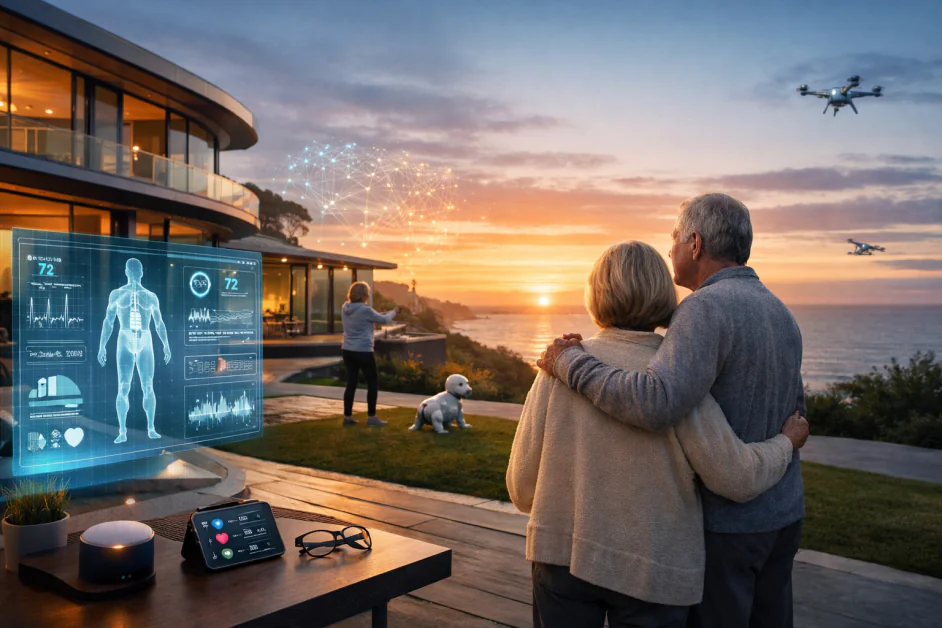
Millennials will mark an unprecedented demographic shift, becoming the first generation in history to grow old with digital technology and artificial intelligence (AI).
Raised on the age of the internet and now navigating adulthood with algorithmic tools embedded into work, health, and daily life, this generational cohort will experience aging not as a passive biological decline, but as a technologically-mediated process.
As AI reshapes prevention, care, and longevity, it is also redefining what aging means—while users increasingly demand more from the technology built to support them.
Regardless, millennials demonstrate the highest level of AI expertise and enthusiasm, with 62% of employees within this generational bracket claiming advanced familiarity with AI, compared to 50% of 18 to 24-year-old Gen Zers and 22% of baby boomers aged over 65, according to a new McKinsey study.
Millennials are also increasingly recognizing AI’s potential to automate tedious tasks, enhance creativity and drive informed decision-making. Their optimism and enthusiasm in regard to the technology position them as catalysts of change, making them more adept AI users who help push their communities toward AI maturity.
Rethinking Aging: From Decline to Prevention
Popular AI chat models, such as ChatGPT by OpenAI, have started to tap into the healthcare industry, proposing promising models and new systems that will allow technology to grow over generations. They are developing new, more advanced tools like ChatGPT Health, providing detailed diagnoses for health-related questions.
However, such generalized models often pose risks and limitations for users, despite the accessibility and immediacy of results. Users have expressed concern over the reliability of the software and user privacy over their medical records, yet OpenAI assures that all medical information is to be kept confidential, and that the model should exclusively be used for low-risk inquiries.
“The risk with AI is oversimplifying health into a single snapshot. If AI ignores these biomarkers or treats them as isolated numbers instead of trends, it can create false reassurance and or can be subject to hallucination… because it really wants to give you an answer,” said Bryan Janeczko, Founder & CEO of ResetRX, while in conversation with UniteAI.
“Good health AI needs humility. It should say, ‘Here’s what’s changing, here’s why it matters, and here’s what we can do next.’ Otherwise, confidence becomes dangerous,” he added.
“The reality is this is a tool, different in many ways than others we have seen, but a tool, and it can be used wisely,” said Dr. Lee Schwamm, senior vice president and chief digital health officer for Yale New Haven Health.
“It can be used in a safe and regulated manner, or it can be unrestrained innovation. And we will move faster, but there will be some carnage along the way.”
Because users question whether or not AI-regulated health advice is truly personalized, other millennials are gravitating towards other personalized tech-supported programs, such as ResetRx, a New York-based start-up that develops personalized biometric tests and exams that allow users to remain alert about possible health issues that could affect them later in life.
ResetRx connects the dots across labs, fitness wearables, and wellness advice into a single easy-to-use app that analyzes user data to provide a complete overview of current health status. Their initiative plans to optimize user health by measuring clinically-validated biomarkers predictive of longevity, translating them into concrete and personalized wellness plans across key lifestyle pillars with expert and coaching support to track progress along the way.
“A plan-based companion remembers your baseline, notices trends, and nudges you when habits slip, like a good coach would. When I lowered my cholesterol, it wasn’t because of one dramatic change. It was small, repeatable adjustments reinforced over time. Health improves through systems, not one-off answers,” Janeczko stressed.
The Workplace as a Longevity Lever
As millennials have stepped into adulthood, most of their time is spent in a workplace, whether it is working from home or at an office.
Meanwhile, these advanced tools ensure their health is not being neglected in such spaces; through phone apps or wearable devices, platforms such as Deep Care use AI assistants to help employees manage stress, improve ergonomics, and prevent sedentary health risks in offices, reducing absenteeism and boosting productivity.
The average adult now spends more than eight hours a day seated, five days a week—a pattern research consistently links to higher risks of heart disease, impaired circulation, elevated blood pressure, obesity, and metabolic dysfunction.
However, small habit changes can add up over time to prevent disease, and technology can make interventions more personalized than ever. Including AI assistants, such as Deep Care‘s “Isa” agent, can help prevent age-related complications that result from sedentary lifestyles.
“Health is rarely changed by radical interventions. It changes through repetition. Small adjustments, taken consistently at the right moment, reshape posture, movement, breathing, and recovery over time. AI allows these moments to be identified objectively and delivered without burden,” said Dr. Milad Geravand, CEO and founder of Deep Care.
“When behavior changes are subtle, timely, and habitual, their effect compounds over years, creating measurable long-term impact.”
The executive noted that Isa works via privacy-safe sensors–not cameras– and AI to detect everyday health risks, from prolonged sitting and poor posture to lack of movement and cognitive strain. Isa then nudges employees to make small changes throughout the workday.
By integrating systems such as Deep Care into the workplace, millennials—and subsequent generations—can address age-related health risks long before they manifest as chronic disease, reshaping what “aging” actually means.
Preventive interventions driven by automated, personalized models support longer healthspans, reduce long-term healthcare costs, and shift care from reactive treatment to continuous prevention embedded in daily life.
Loneliness, Safety, and Emotional Health in Old Age
As preventive technologies extend healthspan and keep people physically healthier for longer, they also lay the groundwork for something less easily measured, yet just as critical: mental and emotional well-being.
Aging is not only a biological process but also a psychological and social one, shaped by connection, purpose, and daily engagement with the world. Healthier bodies support greater independence, mobility, and participation—factors that significantly reduce isolation and cognitive decline—shifting the conversation from merely living longer to living better.
It is within this intersection of physical longevity and emotional resilience that AI-driven tools aimed at combating loneliness in old age begin to take on outsized importance.
One example is Kintsugi, a California-based startup using AI voice analysis to detect early signs of depression, giving users continuous, accessible support through something as simple as their own speech.
Their philosophy is simple: “tarnish the mental health cracks with gold,” as the Japanese tradition of Kintsugi repairs fractures in ceramics with gold. Their mission is to aid in the mental health support shortage in the United States, while encouraging patients to find continuous support systems wherever they are–all from a simple voice note.
A 2023 white paper by the startup, for instance, found that 32% of adults experience mild-to-severe depression–nearly double the U.S. national reported rate of one in five. Additionally, 40% of women over 65 also show signs of depression, and are 154% more likely to struggle with depression than their male counterparts.
However, the study also found that only 4% of those affected seek mental health support. This gap underscores the platform’s mission: expand access to mental health care for underserved populations like older adults and individuals who lack the resources to see a specialist regularly.
Aging as a Continuous Upgrade
Millennials will not simply age in the presence of AI—they will age alongside it. As AI becomes embedded in prevention, workplace health, emotional well-being, and daily care, aging itself begins to resemble a continuously updated system rather than an inevitable decline.
Instead of reacting to illness, isolation, or loss of autonomy, technology allows risks to be identified earlier, habits to be adjusted incrementally, and support to be adapted as needs change.
If earlier generations experienced aging as hardware wear-and-tear, millennials will experience it more like a software update: iterative, personalized, and increasingly optimized over time. In that future, growing older may not mean becoming less capable—but simply running a more refined version of life.