Funding
Forge Nano Heads to Public Markets as AI and Defense Demand Accelerates

 Add Unite.AI to your preferred sources on Google
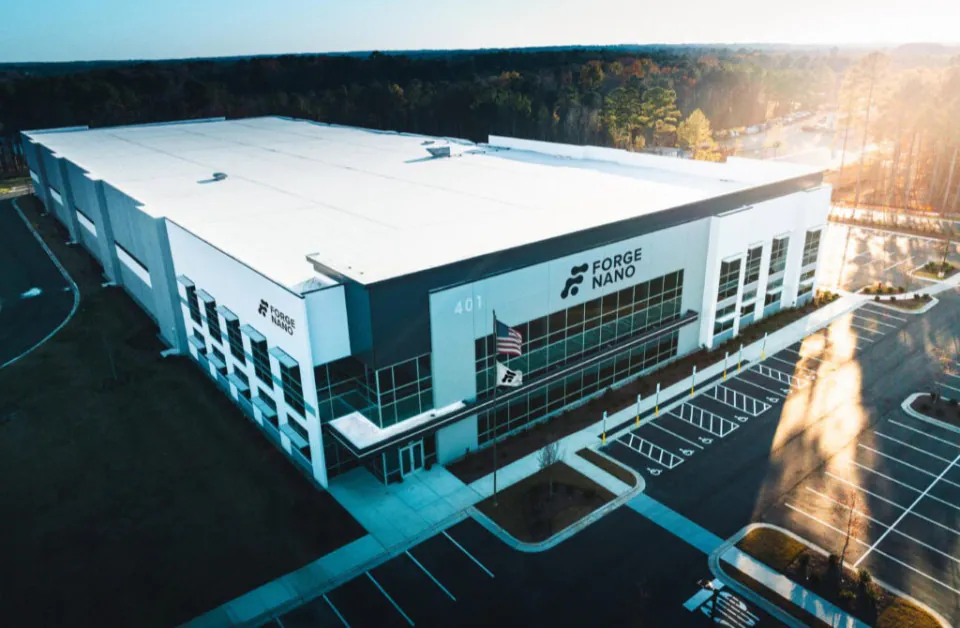
Forge Nano is preparing to enter the public markets through a merger with Archimedes Tech SPAC Partners II Co (ATII )., a move that highlights how critical advanced manufacturing has become in the era of artificial intelligence, electrification, and defense modernization.
The transaction values Forge Nano at approximately $1.2 billion pre-money, with the combined company expected to trade on NASDAQ under the ticker “NANO.” If completed in the second half of 2026, the deal could deliver significant capital to scale U.S.-based semiconductor tooling and battery production at a time when both sectors are under intense global pressure to localize supply chains.
A Materials Platform Built for the AI Era
Forge Nano operates at a deeper layer than most companies in the semiconductor or energy ecosystem. Instead of building chips or batteries directly, it focuses on engineering materials at the atomic scale.
At the center of this strategy is its Atomic Armor™ platform, built on Atomic Layer Deposition. This process applies coatings one atomic layer at a time, enabling precise control over how materials behave. Historically, this kind of coating was slow and limited to research environments. Forge Nano has turned it into a scalable manufacturing process, opening the door to industrial applications.
Why This Matters for AI Chips
The rapid evolution of AI hardware is pushing semiconductor manufacturing into increasingly complex territory. As chips become more compact and layered in three-dimensional structures, even the smallest imperfections can reduce yields and increase costs.
Forge Nano’s approach addresses this directly by improving surface uniformity and reducing defects at the material level. By integrating into existing manufacturing processes, the technology enhances performance without requiring a complete redesign of production lines. This makes it particularly attractive for next-generation AI chips, where incremental improvements can translate into major efficiency gains.
Reinventing Batteries from the Inside Out
The same atomic-level precision is being applied to energy storage, where performance limitations continue to constrain industries from electric vehicles to defense systems.
Rather than redesigning batteries entirely, Forge Nano enhances existing materials. By applying ultra-thin coatings to battery components, it reduces degradation, improves stability, and extends lifespan. This approach allows manufacturers to achieve better performance without abandoning established chemistries.
- Higher energy density
- Faster charging capability
- Improved thermal stability
- Longer cycle life
These improvements are especially valuable in demanding environments such as aerospace and defense, where reliability is critical. The company’s technology has already been used in satellites, demonstrating its ability to perform under extreme conditions.
A Vertically Integrated Manufacturing Strategy
One of Forge Nano’s defining advantages is its vertically integrated approach. Instead of focusing on a single segment of the value chain, the company builds the tools, enhances the materials, and manufactures the end products.
It develops semiconductor coating equipment, produces advanced battery materials, and manufactures lithium-ion cells domestically. This structure allows Forge Nano to control quality, accelerate innovation, and capture value across multiple layers of the ecosystem.
This model also aligns with a broader shift toward domestic manufacturing, particularly in the United States, where governments and industries are prioritizing supply chain resilience in critical technologies.
Strategic Timing Across AI, Energy, and Defense
Forge Nano’s public debut comes as several major trends converge. The expansion of AI infrastructure is driving demand for more advanced semiconductors, while the electrification of transportation and defense systems is increasing the need for better batteries.
At the same time, policy shifts are reinforcing the importance of domestic production. Upcoming legislative requirements around defense procurement are expected to favor U.S.-based battery manufacturing, creating a tailwind for companies like Forge Nano that already operate within that ecosystem.
Backing from major industrial and strategic investors further reinforces its position, signaling confidence from companies that are directly impacted by these technological shifts.
Expanding Beyond Core Markets
While semiconductors and batteries are the primary focus today, the underlying technology has much broader potential. Atomic-level coatings can enhance a wide range of materials, opening opportunities in industries such as pharmaceuticals, data centers, and even quantum computing.
This positions Forge Nano less as a single-industry company and more as a platform capable of influencing multiple sectors where material performance is a limiting factor.
A Public Bet on Atomic-Level Innovation
Forge Nano’s move to go public reflects a broader shift in how innovation is being defined. While software and AI models continue to dominate headlines, the physical infrastructure that supports them is becoming just as important.
By focusing on materials science and manufacturing at the atomic level, Forge Nano is targeting a foundational layer of the technology stack. If it successfully scales its platform, its impact could extend across multiple industries, quietly improving performance in systems that power the modern world.