
Interviews
Dr. Rihan Javid, CEO and Co-Founder of Rinova – Interview Series

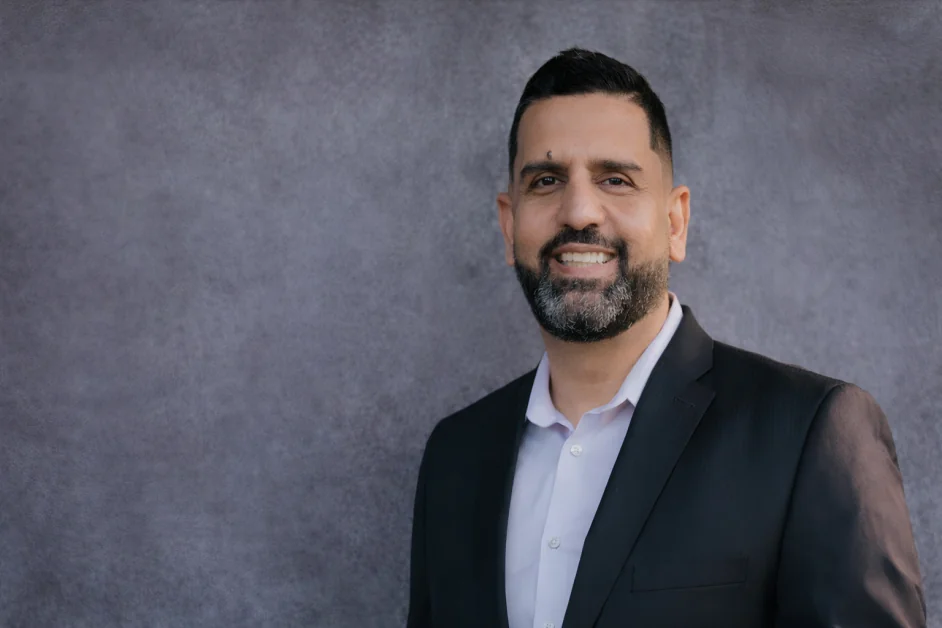
Dr. Rihan Javid, CEO and Co-Founder of Rinova AI, is a physician-executive and entrepreneur focused on modernizing healthcare operations through artificial intelligence. In addition to leading Rinova, he is the Co-Founder and President of Edge, which delivers remote workplace infrastructure solutions to insurance, medical, and dental practices. A practicing psychiatrist, he currently serves as Medical Director and Chief Medical Officer at CommonSpirit Health and St. Joseph’s Behavioral Health Center, while also holding a clinical role at Touro University Medical Group. His prior experience includes practicing psychiatry at The Permanente Medical Group, Inc. and completing residency training at California Pacific Medical Center and the University of South Florida, alongside earlier leadership experience as a principal in legal recruiting.
Rinova AI is a healthcare technology company focused on AI-driven revenue cycle management and medical billing automation. The platform is designed to reduce administrative burdens for providers by automating key processes such as insurance verification, coding optimization, claims submission, and denial management. By leveraging artificial intelligence to streamline workflows and improve accuracy, Rinova aims to deliver significant cost savings compared to traditional billing services while accelerating reimbursements and enhancing financial performance for healthcare organizations.
You co-founded Edge in 2021 after years working as a psychiatrist and later as a medical director and CMO. From an AI perspective, what early signals did you notice in billing workflows such as fragmented data, shifting payer rules, or manual exception handling that convinced you automation would eventually become unavoidable?
When I was practicing and later running clinical operations, I saw how much friction existed in billing. Data lived in multiple systems that didn’t communicate well. Payer requirements shifted constantly. Staff were spending hours reworking claims for reasons that were often predictable in hindsight.
What stood out to me was the repetition. The same errors, the same denial patterns, the same documentation gaps. These were not rare, nuanced issues. They were recurring operational breakdowns. At a certain scale, you realize that asking people to manually manage that complexity is not sustainable. That is when it becomes clear that automation is not optional. It is inevitable.
When you launched Rinova AI several years later, what had changed on the technology or data side that made it possible to apply AI to revenue cycle management in a way that could operate reliably against live payer rules and real-world claim complexity?
Two things changed. First, the data environment improved. Integrations between EHRs, clearing houses, and billing platforms became more structured. That gave us cleaner inputs and stronger feedback loops.
Second, the technology matured. We moved beyond simple rules engines. Models became capable of evaluating context, not just checking boxes. That allowed us to analyze documentation, coding, and payer logic together instead of in isolation.
It was not that billing suddenly became simple. It was that the ecosystem became stable enough for AI to operate with reliability.
Revenue cycle management has traditionally relied on static rules and post-denial recovery. How does introducing AI earlier in the workflow change how hospitals think about financial risk and reimbursement predictability?
Traditionally, revenue cycle teams accept a certain level of denial as part of doing business. The work begins after something goes wrong.
When AI is introduced upstream, the goal shifts from recovery to prevention. You can identify documentation gaps or coding misalignment before submission. That reduces variability in reimbursement.
Hospitals start thinking less about chasing revenue and more about controlling risk before it materializes. That changes forecasting, staffing models, and even board-level conversations about financial stability.
AI systems often perform well on standard cases but struggle at the edges. In billing operations today, which types of scenarios are most effectively handled by automation, and where does human judgment still play a critical role?
Automation works best in structured, high-volume tasks. Eligibility checks, authorization validation, coding consistency, and denial pattern detection are all areas where machines can process faster and more consistently than people.
Human judgment still matters in edge cases. Appeals that require clinical nuance, contractual disputes, unusual payer behavior, or complex patient scenarios all benefit from experience and reasoning. AI can flag risk. Humans still interpret gray areas and make final calls.
Edge embeds healthcare-trained revenue cycle teams into hospital workflows, while Rinova automates decision-making upstream. How do you approach designing AI systems that strengthen human decision-making rather than introducing new operational risks?
We approach AI as a support layer, not a replacement. The system surfaces recommendations and explains its logic. Our healthcare-trained teams remain embedded in the workflow.
That structure matters. AI handles scale and pattern recognition. Humans handle oversight and accountability. When those roles are clear, you reduce risk instead of increasing it.
The goal is to reduce cognitive overload, not remove human judgment.
Payer policies change frequently and are not always enforced consistently. How does real-time payer intelligence reshape the feedback loop between claims submission, denials, and continuous model improvement?
Payer policies change frequently and enforcement is not always consistent. Historically, organizations updated rules periodically and hoped they were current.
With real-time feedback, every denial and approval becomes a data point. The model learns from actual outcomes rather than static assumptions. That shortens the gap between policy change and operational adjustment.
Over time, that reduces surprise denials and improves submission accuracy. It makes the system more adaptive.
Hospitals are understandably cautious about AI systems influencing cash flow. What level of transparency or control do you think healthcare leaders should expect before trusting AI-driven billing decisions?
Leaders should expect clarity. They should understand why a recommendation was made. They should be able to override it. And they should have a clear audit trail.
Revenue cycle directly impacts cash flow and compliance. Trust comes from visibility and control, not from blind automation. Any AI system operating in this space needs to meet that standard.
Staffing shortages in revenue cycle teams are often treated as labor issues. From your perspective, how much of the problem is actually rooted in data quality and workflow design, and where can AI have the biggest impact?
Staffing challenges are real, but many of them are amplified by poor workflow design. When teams spend most of their time correcting preventable errors, burnout increases and productivity declines.
If you clean up data inputs and reduce avoidable denials, the same team can operate more effectively. AI has the biggest impact where it removes repetitive rework and standardizes processes.
Often, the issue is not simply headcount. It is friction.
As AI becomes embedded in revenue cycle operations, how do you see the role of revenue cycle teams evolving over the next few years in terms of oversight, exception handling, and governance?
I expect revenue cycle teams to become more strategic. Less time on repetitive processing. More time on oversight, complex appeals, payer negotiations, and performance analysis.
As automation handles routine work, human teams shift toward governance and optimization. That elevates the function rather than shrinking it.
Looking ahead, do you expect AI-driven revenue cycle platforms to become core financial infrastructure for hospitals rather than optional tools, and what would that shift enable for organizations operating under constant margin pressure?
Yes. Margin pressure is not going away. Predictability in reimbursement will become essential.
AI-driven platforms that improve accuracy and reduce leakage will move from being optional tools to foundational infrastructure. When cash flow becomes more stable, hospitals can plan with more confidence and invest more intentionally in patient care.
That is ultimately the outcome we care about.
Thank you for the great interview, readers who wish to learn more should visit Rinova AI or Edge.



