
Partnerships
Disney’s $1 Billion OpenAI Bet Signals a New Era for AI Video Generation

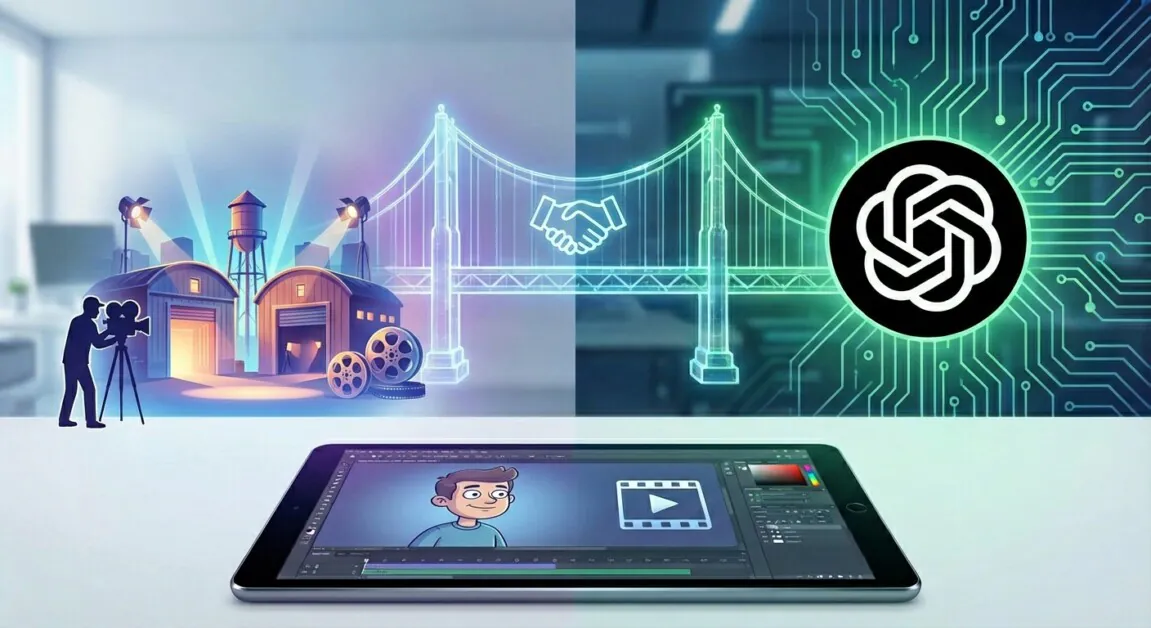
Disney’s $1 billion investment in OpenAI is a declaration that the entertainment industry has decided how it will engage with generative AI. License, don’t litigate. Partner with the platforms you can control, and sue the ones you can’t.
The agreement announced Thursday brings more than 200 characters from Disney, Marvel, Pixar, and Star Wars to Sora, OpenAI’s video generation platform. Users will be able to create AI videos featuring Mickey Mouse, Darth Vader, Iron Man, and dozens of other characters when the integration launches in early 2026. It marks the first time Disney has licensed its intellectual property to an AI platform and represents the most significant collaboration between a Hollywood studio and an AI company to date.
But the deal’s real significance lies in what it establishes: a commercial framework for how entertainment IP will flow into generative AI systems. And that framework has implications that extend far beyond Disney and OpenAI.
The Licensing Model Takes Shape
Disney’s agreement with OpenAI contains a crucial restriction: OpenAI cannot use Disney intellectual property to train its models. The deal covers only inference-time generation—using existing Sora capabilities to produce Disney characters on demand, not improving those capabilities by learning from Disney’s content library.
This distinction matters enormously. The lawsuits currently working through courts against AI companies center on unauthorized training—the use of copyrighted material to build model capabilities without permission or payment. By explicitly prohibiting training while permitting generation, Disney is drawing a line that other studios will likely follow.
The structure suggests a future where AI platforms pay for generation rights while training remains either prohibited or subject to separate, likely more expensive, agreements. For studios, this preserves leverage: they can monetize AI generation without giving up the training data that would help competitors build better models.
OpenAI accepted these terms because character licensing provides something models can’t learn on their own—official, legally clear access to specific intellectual property. Sora can generate impressive video without Disney characters, but it cannot legally generate Mickey Mouse without Disney’s permission. That permission now costs $1 billion in equity plus undisclosed licensing fees.

Image: OpenAI
The Two-Track Strategy
The timing of Disney’s OpenAI announcement was not accidental. It arrived one day after Disney sent a cease and desist letter to Google on Wednesday, alleging the search giant infringed Disney copyrights “on a massive scale” by using copyrighted works to train AI models without authorization.
The juxtaposition reveals Disney’s playbook: pursue legal action against unauthorized AI training while simultaneously monetizing IP through licensed partnerships. By partnering with OpenAI under strict terms while threatening Google with litigation, Disney demonstrates that cooperation is possible but only on the studio’s terms.
The message to the rest of Silicon Valley is clear: come to the table with checkbooks and contracts, or face the courts. Disney is betting that AI companies will choose the former, and that the resulting licensing revenue will more than compensate for whatever disruption generative AI brings to traditional content creation.
What This Means for Sora’s Competitors
The Disney deal immediately reshapes the competitive landscape in AI video generation. Runway’s Gen 4.5 may top technical benchmarks, and Google’s Veo 3 may offer tight integration with YouTube and Google Cloud. But neither can legally generate Elsa, Spider-Man, or Baby Yoda.
This creates a new dimension of competition where IP access matters as much as model quality. A user choosing between Sora and Runway will weigh not just which produces better video, but which produces video featuring the characters they actually want to use. For a generation raised on Marvel movies and Disney+ originals, that’s a meaningful differentiator.
The deal also raises the barrier to entry for new AI video platforms. Competing on model quality is difficult enough; competing on model quality plus major studio licensing relationships may prove impossible for startups without significant capital and credibility.
Expect other studios to watch Disney’s results closely. If the OpenAI partnership generates meaningful revenue without cannibalizing Disney’s core businesses, Warner Bros., Universal, and Paramount will face pressure to pursue similar deals. The alternative—watching Disney monetize AI video while they sit on the sidelines—may prove untenable.
The Consumer Question
Disney is betting that consumers want to create content featuring beloved characters. It’s a reasonable assumption given the popularity of fan art, fan fiction, and unofficial mashup videos that have circulated online for decades. Generative AI simply lowers the barrier to creation.
But the deal also raises questions about what “creation” means when the creative inputs are someone else’s characters. A video of Iron Man dancing to a user’s favorite song is technically user-generated, but how much creative expression does it actually contain? And will users pay premium prices for access to Disney characters when they can generate original content for less?
The inclusion of user-generated Sora videos on Disney+ suggests the company sees potential for a new content category—something between professional production and pure user creation. If compelling videos emerge from the platform, Disney gets free content for its streaming service. If not, the experiment costs relatively little compared to traditional production.
The Guardrails Problem
Sam Altman confirmed that guardrails will govern how Disney characters appear in user-generated content, but neither company detailed what those guardrails will look like. This is where the deal gets complicated.
Disney’s brand depends on controlling how its characters are portrayed. Mickey Mouse appearing in violent, sexual, or politically charged contexts would damage brand value that took a century to build. But generative AI is notoriously difficult to constrain—users have consistently found ways to circumvent content restrictions on every major AI platform.
The technical challenge of preventing misuse while enabling legitimate creativity will test both companies. Too restrictive, and users will find the feature useless. Too permissive, and Disney risks brand damage that no licensing fee can offset. The early 2026 launch gives both companies time to develop these systems, but the problem is genuinely hard.
Beyond Video: The Broader Implications
The Disney-OpenAI deal establishes principles that will likely extend beyond video generation. If Disney can license characters for AI video, it can license them for AI image generation, AI game development, AI interactive experiences, and applications not yet invented.
The three-year term of the agreement suggests both parties view this as a starting point rather than a final arrangement. If the partnership succeeds, expect expansion into additional products and deeper integration. If it fails, expect other studios to learn from Disney’s mistakes.
Disney will also deploy ChatGPT Enterprise across its workforce and use OpenAI technology to develop new products. This enterprise relationship may prove more valuable than the consumer-facing character licensing—giving Disney early access to AI capabilities that could transform animation, visual effects, and content production.
The $500 Billion Question
Disney’s $1 billion investment adds another major corporate backer to OpenAI’s cap table alongside Microsoft’s multi-billion dollar commitment. At OpenAI’s $500 billion valuation, Disney’s stake represents a modest position, but the strategic relationship matters more than the financial exposure.
For OpenAI, Disney provides legitimacy with the entertainment industry and a template for future studio partnerships. For Disney, OpenAI provides a seat at the table as AI reshapes media—and insurance against being disrupted by a technology the company couldn’t control.
“This is a good investment for the company,” Disney CEO Bob Iger told CNBC. He described the partnership as “a way in” to AI technology that will help Disney reach younger audiences increasingly comfortable with AI-generated content.
Whether this bet pays off depends on questions neither company can yet answer. Will consumers embrace AI-generated content featuring licensed characters? Will the guardrails hold? Will competing platforms secure their own studio deals? Will generative AI enhance Disney’s creative capabilities or commoditize them?
The entertainment industry spent the past two years debating how to respond to generative AI. Disney just provided its answer: embrace the technology, control the terms, and make sure you’re collecting checks rather than writing cease and desist letters. The rest of Hollywood is watching to see if that strategy works.



