
Artificial Intelligence
7 Best AI UX and UI Design Tools for Websites & Apps (June 2026)

Unite.AI is committed to rigorous editorial standards. We may receive compensation when you click on links to products we review. Please view our affiliate disclosure.
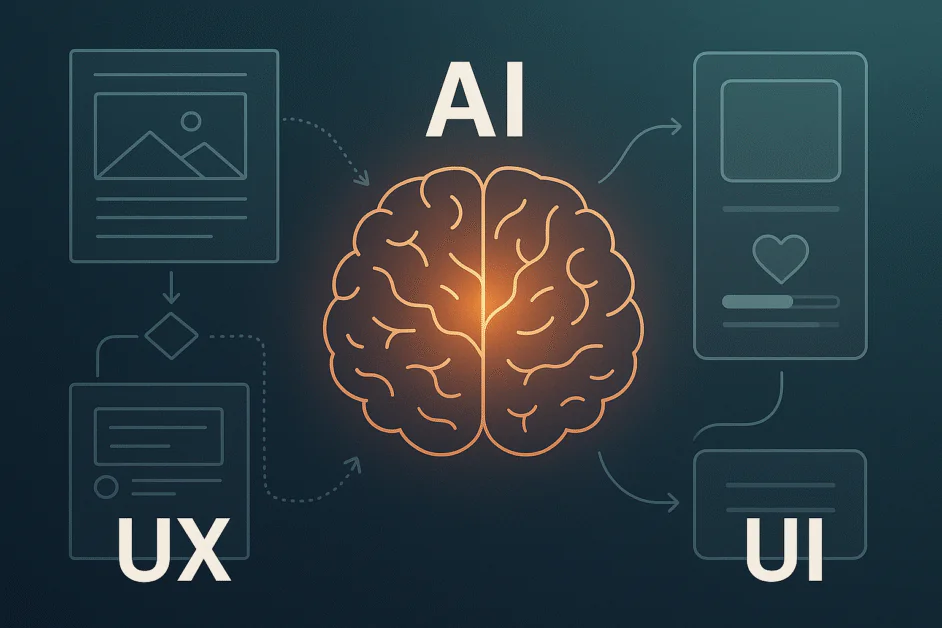
Designing user interfaces has always required a blend of creativity, technical skill, and countless iterations. But with the rise of AI-powered design tools, the early stages of UX/UI work have become dramatically faster and more accessible. These new platforms can generate wireframes, produce full mockups, analyze user flows, and even transform simple text prompts into structured, modern interface designs — helping teams move from concept to prototype in minutes.
For founders, designers, and product teams, AI tools now serve as creative partners that accelerate ideation, reduce repetitive tasks, and provide fresh design directions that may not emerge from manual workflows alone. Whether you’re building a mobile app, refining a dashboard, or exploring new layout concepts, AI can help you visualize ideas faster and push projects forward with greater efficiency.
In this list, we highlight the most capable AI UX/UI design tools available today — platforms that combine intelligent generation, flexible editing, and practical workflows to support modern product development.
Comparison Table of Best AI UX/UI Design Tools
| AI Tool | Best For | Price (USD) | Features |
|---|---|---|---|
| UX Pilot | AI-generated UI layouts | Free + paid plans | Text-to-UI, wireframes, mockups, screen flows, design variations |
| Banani | Fast UI and landing page concepts | Free + paid plans | Prompt-to-design, responsive layouts, editable screens, Figma export |
| Uizard | Non-designers and quick prototypes | Free + paid plans | Text-to-UI, sketch conversion, screenshot import, templates, collaboration |
| Google Stitch | Early UX flow ideation | Experimental / free access | Prompt-based screen flows, layout suggestions, multi-screen scenarios |
| Visily | Low-code mockups and team collaboration | Free + paid plans | AI mockups, templates, screenshots, comments, prototypes, handoff |
| Relume | Website sitemaps and wireframes | Free + paid plans | AI sitemap generation, wireframes, content blocks, Figma and Webflow export |
| Lovable | UX-first app and product flows | Free + paid plans | Prompt-based app generation, user flows, reusable patterns, product logic |
1. UX Pilot
UX Pilot is an advanced AI-powered design assistant built to generate UI layouts, wireframes, and high-fidelity mockups from simple text prompts. It streamlines the early stages of product design by quickly transforming ideas into structured screens, making it ideal for founders, designers, and teams who need rapid visual direction without starting from a blank canvas. With support for screen flows, multi-page app concepts, and design variations, UX Pilot helps users accelerate ideation and iterate visually in just minutes.
The platform focuses on practical design output. Users can create mobile apps, dashboards, landing pages, and full interface structures with AI-generated components that follow modern design principles. It also supports refinements such as layout adjustments, style changes, and faster exploration of alternate UI directions. For product teams, UX Pilot improves collaboration by translating written requirements into concrete, visual mockups that can be reviewed, refined, and handed off into the next stage of development.
UX Pilot continues to evolve with smarter layout generation, more design styles, and expanded export capabilities. By reducing the time spent on early design phases, it enables rapid prototyping and makes it easier for teams to validate ideas, pitch concepts, and move faster from concept to execution.
Pros and Cons
- Generates UI layouts, wireframes, and mockups quickly from text prompts
- Useful for mobile apps, dashboards, landing pages, and multi-screen concepts
- Strong fit for founders and product teams that need fast visual direction
- Supports design variations for exploring multiple interface approaches
- Helps reduce early-stage design time before moving into detailed refinement
- Still requires designer review before final production use
- Less suitable for highly customized enterprise design systems
- Generated layouts may need manual refinement for brand consistency
- Best for ideation and prototyping rather than final design handoff alone
2. Banani
Banani is an AI-powered design tool that generates user interfaces, landing pages, and product screens directly from plain-language prompts. Built for speed and simplicity, Banani helps founders, marketers, and product teams turn written ideas into high-fidelity layouts in seconds. Whether you’re designing a dashboard, onboarding flow, or marketing page, Banani eliminates the need for traditional design tools during early concepting.
Banani’s core strength lies in its ability to create structured, responsive designs with logical layout flow, placeholder content, and customizable components. Users can modify designs inside Banani’s editor or export them directly into Figma for further refinement. This makes it especially useful for MVPs, sales collateral, demo concepts, and pitch visuals where clarity and speed are essential.
Pros and Cons
- Quickly turns plain-language prompts into usable UI and landing page layouts
- Good fit for MVP screens, pitch visuals, and early product concepts
- Responsive layouts help speed up desktop and mobile design exploration
- Editable interface allows teams to adjust copy, structure, and styling
- Figma export makes it easier to continue refinement in a professional workflow
- Less mature than long-established design platforms
- Best suited for early-stage concepts rather than complex design systems
- Generated layouts can still require cleanup before client or developer handoff
- Advanced customization may be limited compared to Figma-native workflows
3. Uizard
Uizard is a fast, AI-powered design platform that helps users create app mockups, wireframes, and UI designs from text prompts, screenshots, or hand-drawn sketches. Built with simplicity in mind, it streamlines the early stages of interface design by enabling non-designers, founders, and product teams to quickly turn ideas into polished screen layouts. Its drag-and-drop builder and intelligent components make it easy to iterate visually, without the need for manual UI work.
At the heart of Uizard is its ability to understand context from text and visuals — transforming sketches into digital wireframes, generating interface elements from simple prompts, and applying consistent design patterns across multi-screen flows. It also supports theme customization, real-time collaboration, and interactive previewing, making it ideal for fast-paced prototyping and stakeholder feedback. With its intuitive interface and wide range of use cases, Uizard bridges the gap between idea and execution for teams of any size.
Uizard continues to expand its capabilities with better prompt understanding, more UI templates, and deeper layout intelligence. It serves as a powerful tool for those looking to generate and iterate on digital product designs without the complexity of traditional design software.
Pros and Cons
- Converts text prompts, screenshots, and sketches into editable interface mockups
- Very approachable for founders, product managers, and non-designers
- Drag-and-drop editing makes quick iteration simple
- Theme and style tools help create more consistent screens
- Real-time collaboration and preview links support stakeholder feedback
- Advanced designers may find the customization depth limited
- Generated mockups can feel template-driven without manual refinement
- Not a full replacement for detailed product design systems
- Complex workflows may still require more specialized tools
4. Google Stitch
Google Stitch is an experimental AI-powered tool designed to assist UX designers in rapidly creating app screen flows, wireframes, and interface structures based on written descriptions. Developed within Google’s experimental Labs ecosystem, Stitch allows users to describe a product experience in plain language, which it then transforms into multi-screen UI suggestions and interaction maps. Its goal is to simplify early ideation by translating intent into tangible visual artifacts, making it easier for teams to explore UX directions quickly.
While still in early stages, Stitch emphasizes speed, structure, and screen logic. It’s built to help product teams sketch out flows before committing to full design, focusing more on architecture than styling. Users can revise flows, swap components, and experiment with branching paths — making it ideal for early-stage concepting, user journey visualization, and pre-wireframing collaboration. It integrates with Google’s broader design ecosystem, positioning it as a future-facing UX assistant for enterprise and cross-functional teams.
Pros and Cons
- Useful for quickly turning product descriptions into structured screen flows
- Strong fit for early-stage UX ideation and journey mapping
- Focuses on interaction logic and screen architecture rather than only visuals
- Can help teams explore multiple product directions before full design work
- Backed by Google’s experimental AI design ecosystem
- Still experimental and may not be suitable for production workflows
- Less focused on polished visual design than other tools on this list
- Availability and feature set may change over time
- Likely requires follow-up work in dedicated design platforms
5. Visily
Visily is a low-code AI-powered UI design tool that helps teams and non-designers create full app mockups, wireframes, and prototypes quickly and visually. It’s especially suited for product managers, startup founders, and developers who want to collaborate on interface design without needing professional design experience. Users can start from prebuilt templates, upload screenshots, or describe their app concept in plain text — and Visily will generate screen layouts ready for refinement.
Its smart features include text-to-design prompts, theme customization, screen linking, and component editing — all managed through an intuitive drag-and-drop interface. Visily’s collaboration tools allow teams to work together in real time, comment on screens, and iterate across multiple versions. Whether you’re mocking up a web app, mobile product, or dashboard, Visily simplifies the design process with a focus on clarity, speed, and flexibility.
Pros and Cons
- Creates wireframes and mockups from prompts, screenshots, and templates
- Accessible for product managers, founders, developers, and non-designers
- Drag-and-drop component editing makes layout refinement straightforward
- Real-time collaboration supports comments, sharing, and team iteration
- Useful for dashboards, SaaS interfaces, mobile apps, and web products
- Less powerful than advanced professional design environments
- Some outputs may require polishing for high-end visual presentation
- Template-driven workflows can limit originality without customization
- May not fully replace designer-led systems for complex products
6. Relume
Relume is an AI-powered website builder that helps users create full sitemap structures, page wireframes, and high-fidelity web designs from simple prompts. Built with agencies, freelancers, and product teams in mind, Relume uses structured workflows to turn ideas into editable layouts, complete with content, design blocks, and responsive behavior. It eliminates the need to start from scratch by generating entire page flows and sections that follow modern web standards.
Users begin by describing their product or business, and Relume outputs a complete site structure with homepage, subpages, and matching components. From there, it offers editing, previewing, and seamless export to Figma or Webflow — making it ideal for handoff, iteration, or launch. With tools for adjusting layout, copy, and style, Relume combines the power of AI generation with creative control, saving hours in design and planning.
Pros and Cons
- Generates full website sitemaps and page wireframes from prompts
- Strong fit for agencies, freelancers, marketers, and web design teams
- Figma and Webflow export supports practical design-to-build workflows
- Creates structured content blocks and responsive page layouts
- Saves time during planning, wireframing, and early website architecture
- Primarily focused on websites rather than complex mobile or SaaS apps
- Generated content and layouts still require brand-specific refinement
- Less suitable for deeply custom product interfaces
- Best results depend on clear prompts and follow-up editing
7. Lovable
Lovable is an AI design assistant built to enhance the UX design process by helping teams generate full product flows, interface layouts, and interaction models from simple prompts. Rather than focusing solely on visuals, Lovable is optimized for clarity of experience — assisting designers in mapping out user journeys, screen logic, and feature architecture early in the product planning phase. This makes it especially valuable for startups and product teams looking to move from abstract ideas to structured UX documentation quickly.
The tool supports various workflows including app layout generation, persona-based screen flows, and modular UI patterns that align with best practices in usability. Lovable also allows editing of journeys, interactions, and design states, helping teams iterate on how users experience the product before diving into UI polish. With an emphasis on function, logic, and narrative, Lovable gives UX teams a fast way to visualize and refine their product’s core experience.
Pros and Cons
- Strong for turning product ideas into structured app and UX flows
- Useful for startups and teams planning product logic before final UI polish
- Supports multi-screen layouts, user journeys, and reusable interaction patterns
- Good fit for rapid product prototyping and experience mapping
- Helps bridge the gap between idea, UX documentation, and early build direction
- Less focused on traditional static UI mockups than some design-first tools
- Outputs still require review before production use
- May be too broad for teams only needing simple wireframes
- Best suited to product logic and app flow generation rather than visual polish alone
Summary
AI-powered UX/UI design tools are transforming how teams approach product development. From idea to interface, these platforms help designers, founders, and product teams generate wireframes, mockups, and user flows in a fraction of the time. Whether you’re building a mobile app, website, or dashboard, these tools streamline early-stage design, improve collaboration, and enable faster iteration while maintaining strong usability and design quality.
Some tools excel at rapid prompt-based interface generation, allowing teams to move from concept to visual layout almost instantly. Others are better suited for non-designers and cross-functional teams, offering intuitive, collaborative workflows that make it easy to create and refine mockups without deep design expertise. There are also solutions focused on early-stage UX ideation, helping teams map user journeys, structure flows, and validate concepts before investing in detailed design work. Meanwhile, certain platforms specialize in website architecture, sitemaps, and structured layouts that can be easily handed off into development environments.
As AI design continues to evolve, these tools are becoming more than simple mockup generators. They are evolving into early-stage product thinking environments that help teams visualize, test, and refine digital experiences faster and more effectively than traditional workflows alone.



