
Artificial Intelligence
Apple Brings Agentic AI Coding to Xcode With Claude and Codex

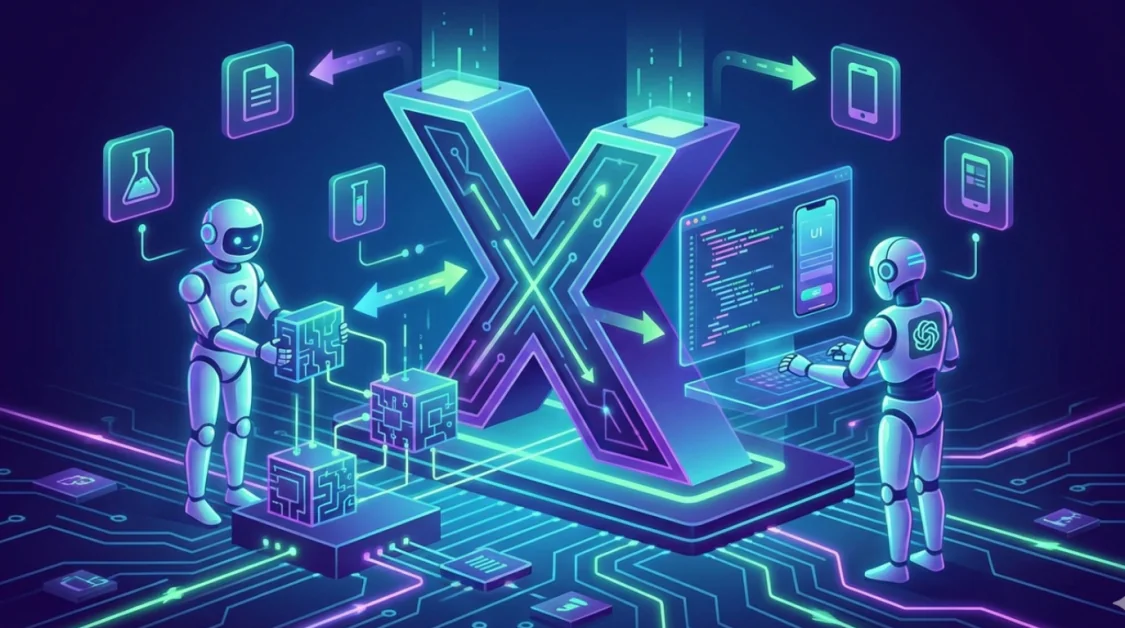
Apple is opening Xcode to autonomous AI agents for the first time, releasing Xcode 26.3 with built-in support for Anthropic’s Claude Agent and OpenAI’s Codex. The update marks a significant shift in how Apple approaches developer tooling — moving beyond autocomplete-style code suggestions into full agentic workflows where AI models can create files, build projects, run tests, and inspect visual output independently.
The release candidate is available now to Apple Developer Program members.
Xcode’s existing AI features, branded under Apple Intelligence, have offered inline code completion and chat-based assistance since Xcode 26. But the new agentic coding mode operates differently. Rather than responding to individual prompts, agents receive a task — “add a login screen with biometric authentication,” for example — and execute a sequence of actions autonomously: writing code, creating new files, building the project, running unit tests, and iterating on failures without manual intervention.
Apple built the integration on top of the Model Context Protocol (MCP), the open standard originally developed by Anthropic that defines how AI models interact with external tools. Through MCP, agents access Xcode’s core capabilities as structured tools — the compiler, test runner, Previews system, and Apple’s developer documentation all become callable functions the agent can invoke during a task.
How the Agents Work Inside Xcode
The two launch agents — Claude Agent and Codex — install with a single click from Xcode’s settings panel and auto-update independently of Xcode releases. Developers provide their own API keys from Anthropic or OpenAI to activate them.
Claude Agent brings the full Claude Code architecture into Xcode through Anthropic’s Agent SDK. This means Claude inside Xcode can spawn subagents to handle parallel tasks, run background operations, and use plugins — the same capabilities available in Claude Code’s standalone CLI. Anthropic says it worked closely with Apple to optimize token usage and tool-calling patterns specifically for Xcode’s environment.
One feature that distinguishes Xcode’s implementation from other AI code generators is visual verification through Previews. Agents can take snapshots of SwiftUI Previews during execution, letting them visually confirm that UI changes render correctly before moving on. This closes a loop that most AI coding tools leave open — the agent doesn’t just write code that compiles, it verifies the visual result.
Both agents can also query Apple’s developer documentation directly, grounding their suggestions in official APIs rather than relying solely on training data. For Swift’s rapidly evolving ecosystem, where APIs change across OS versions, this reduces the risk of agents generating calls to deprecated or nonexistent methods.
Competitive Implications
The move positions Xcode against a growing ecosystem of AI-native development tools. Cursor, GitHub Copilot, and Windsurf have all added agentic capabilities in recent months, pulling developers toward third-party editors. By embedding agents directly into Xcode, Apple aims to keep its developer community within its own toolchain — particularly for iOS and macOS development, where Xcode’s tight integration with simulators, Instruments, and Interface Builder gives it structural advantages that standalone editors can’t easily replicate.
The choice to support both Anthropic and OpenAI as launch partners reflects a broader pattern in Apple’s AI leadership strategy: offering multiple model providers rather than locking into a single vendor. This mirrors the approach Apple took with Apple Intelligence, which routes different tasks to different models based on capability and complexity.
Anthropic’s integration runs deeper than a standard API connection. The Claude Agent SDK — the same framework behind Claude’s skills framework and Claude Code — gives Anthropic’s agent the ability to reason across entire project structures, not just individual files. Anthropic described the Xcode integration as a reference implementation for how the Agent SDK can be embedded into existing professional tools.
For Apple, the timing aligns with WWDC 2026 preparation, where Xcode updates typically anchor the developer narrative. Shipping agentic coding as a mid-cycle release rather than waiting for a major version signals urgency — the competitive window for AI-assisted development tools is narrowing as developers form habits around whichever tool they adopt first.
The practical question now is whether agents operating inside Xcode can match the flexibility of standalone tools that work across multiple languages and frameworks. Xcode’s agents are optimized for Apple’s ecosystem — Swift, SwiftUI, UIKit — which is precisely where Apple’s developers work, but also where the addressable market is smallest compared to cross-platform alternatives. For the millions of developers building exclusively for Apple platforms, though, having agents that understand Previews, know the latest APIs, and can run builds natively removes friction that no third-party tool currently eliminates.



