
Funding
Aidoc Raises $150M Series E to Scale Clinical AI Across Health Systems

 Add Unite.AI to your preferred sources on Google
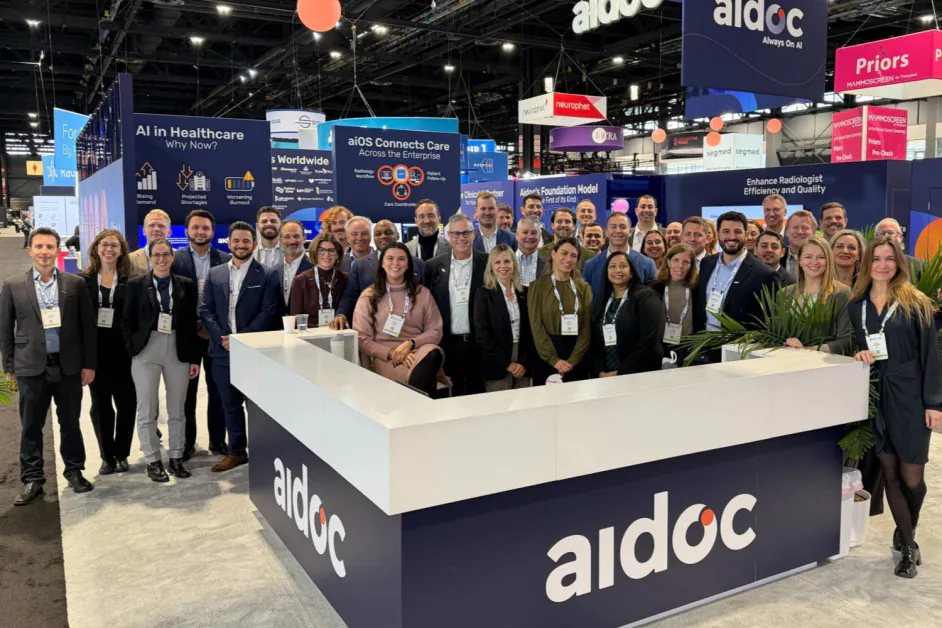
Clinical AI company Aidoc has secured $150 million in Series E funding, led by Goldman Sachs Alternatives (GS ), as healthcare systems increasingly look beyond isolated AI tools toward integrated, enterprise-wide platforms.
The round includes participation from General Catalyst, SoftBank Investment Advisors, and NVentures, bringing the company’s total funding to over $500 million. The raise comes amid rising pressure on hospitals to address diagnostic errors, staffing shortages, and growing imaging volumes—factors contributing to hundreds of thousands of preventable deaths annually in the United States.
From Point Solutions to System-Wide AI
For years, AI in healthcare has largely been deployed as single-purpose tools—algorithms designed to detect one condition at a time. That approach has limited impact, especially in environments where clinicians must interpret vast amounts of imaging data across multiple conditions.
Aidoc is part of a broader shift toward foundation model–driven systems that can operate across modalities and use cases. Its proprietary CARE™ foundation model is designed to analyze multimodal clinical data and expand AI coverage across numerous pathologies from a single architecture.
This shift mirrors what has already occurred in other areas of AI: moving from narrow tools to generalized systems capable of supporting complex workflows.
Building an Operating System for Clinical AI
At the center of Aidoc’s approach is its enterprise platform, aiOS™, which functions as a clinical AI orchestration layer. Rather than deploying individual algorithms in isolation, aiOS integrates AI directly into hospital infrastructure, including imaging systems and electronic health records.
The platform enables multiple algorithms to run simultaneously on a single scan, prioritizing urgent findings and surfacing both expected and incidental abnormalities. This orchestration layer is designed to reduce diagnostic gaps while improving workflow efficiency.
It also introduces governance mechanisms—such as validation, monitoring, and performance tracking—that are increasingly necessary as AI systems move into regulated clinical environments.
Scaling AI in Real Clinical Environments
Aidoc’s technology is already deployed at significant scale, analyzing tens of millions of patient cases annually and supporting care delivery across thousands of hospitals worldwide.
Its systems are used in real-time clinical settings, particularly in radiology, where AI can flag urgent findings and accelerate triage decisions. Recent reporting highlights use cases ranging from detecting internal injuries to prioritizing emergency cases based on imaging data.
This level of deployment reflects a transition from experimentation to operational reliance—where AI is no longer an add-on but part of core clinical infrastructure.
The Next Phase: End-to-End Clinical Workflows
The new funding will support expansion of Aidoc’s foundation model and push further into end-to-end workflows. One key area of development is automated draft report generation, aiming to move AI from detection toward full clinical workflow participation.
That direction suggests a future where AI systems do more than highlight abnormalities—they may increasingly structure, summarize, and contextualize findings for clinicians.
In practical terms, this could compress the time between scan, diagnosis, and treatment, while also reducing cognitive load on healthcare professionals.
Toward Autonomous Clinical Decision Support
What’s emerging is a transition from fragmented AI tools to unified systems that function as infrastructure within healthcare.
As these platforms mature, their value will increasingly come from how they coordinate across departments, standardize decision-making, and reduce variability in care. The technical challenge is no longer just building accurate models—it’s ensuring those models can operate reliably within complex hospital environments, under strict regulatory oversight.
Over time, the distinction between “AI-assisted” and “standard” care may begin to blur. Instead of being a visible tool, AI could become an underlying layer that continuously interprets data, flags risks, and supports clinicians in real time.
If that shift takes hold, improvements in diagnostic accuracy and patient outcomes may not come from any single breakthrough feature, but from the cumulative effect of AI quietly embedded across the entire clinical workflow.



