
Artificial Intelligence
AI vs. Authors: Why Copyright Lawsuits Are Just the Beginning

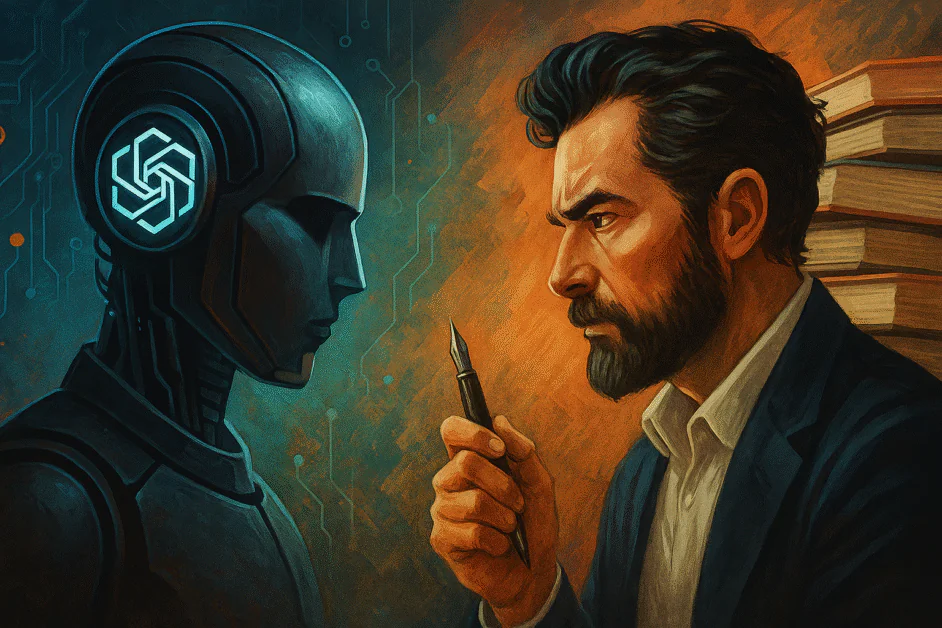
Generative AI has significantly changed the digital world. It lets anyone create text, images, and other forms of media quickly and easily. This progress relies on massive datasets, including books, news articles, websites, and other creative works. These datasets train Large Language Models (LLMs) to write, reason, and generate content that resembles human creativity.
However, this power has also given rise to significant disagreement. Authors, artists, and publishers are increasingly challenging the tech companies that develop these systems. They claim that their copyrighted work was used without their consent or payment. Courts have become the primary venue for the fight over creative ownership and copyright limits.
These lawsuits are not only about money or credit. They are the beginning of a broader debate about the ethics of AI and the responsibilities of companies that train these models. The results will affect both the rights of creators and how society defines originality and ownership in the age of machines.
This issue reflects the growing tension between technological progress and the need for protection. Generative AI offers new opportunities for creativity and collaboration. However, it also raises concerns about fairness, consent, and the use of human-created work in machine training. The upcoming legal decisions will play a crucial role in determining who holds control over creative content in this new technological era.
How Generative AI Uses Copyrighted Content
To understand the current legal disputes, it is essential to know how generative AI systems are trained. Models such as ChatGPT, Claude, and Stable Diffusion learn from massive datasets that include text, images, and other digital content collected from the Internet. By studying these materials, they recognize language patterns, artistic styles, and relationships between words and ideas. This process enables them to create new content that appears to be human-generated.
However, a significant portion of this training data comprises copyrighted material, including books, news articles, academic papers, songs, and artworks. Much of it is collected without the direct consent of the original creators. Datasets like Books3, The Pile, and Common Crawl, often referred to as shadow libraries, have frequently been linked to AI training. These collections contain millions of works that help AI systems learn how to write, paint, or compose in ways similar to humans.
This practice has become highly controversial. Many writers and artists argue that it amounts to large-scale data scraping, which exploits creative labor without recognition or payment. They believe it unfairly benefits technology companies while undermining the value of human creativity. On the other hand, AI developers claim that using such material is lawful under the principle of fair use. They compare machine learning to the way people learn by reading and observing the world around them.
This disagreement has sparked one of the most significant debates about whether training AI on copyrighted works should be viewed as innovation or infringement. The outcome of this debate will shape how societies balance human creativity with the growing influence of artificial intelligence.
Major AI Copyright Lawsuits and Their Legal Impact
Recent court cases indicate that the debate over AI and copyright is shifting from theoretical discussions to real legal action. Authors and artists are suing AI companies to protect their work. These cases concern whether AI systems have copied books, images, or other creative content without permission. Courts now require clear proof of copying, which limits the claims that can succeed. Each lawsuit highlights different parts of the law and raises questions about how creators’ rights are respected in the age of AI.
Tremblay v. OpenAI
Novelists Mona Awad and Paul Tremblay stated that OpenAI utilized their books without permission to train ChatGPT. They argued that ChatGPT’s summaries of their novels showed copyright infringement. They also claimed that OpenAI had broken the DMCA by removing copyright information.
In March 2024, Judge Araceli Martínez-Olguín dismissed most claims, including those under the DMCA, negligence, and unjust enrichment, because the plaintiffs could not demonstrate specific copied passages. A smaller direct copyright infringement claim is still allowed. The plaintiffs must prove that ChatGPT outputs are substantially similar to their books.
Authors Guild v. OpenAI and Microsoft
In September 2023, the Authors Guild and 17 authors, including George R.R. Martin, John Grisham, Jonathan Franzen, and Jodi Picoult, filed a class-action lawsuit in New York. They claimed that OpenAI and Microsoft copied millions of books, often from pirate sites, to train AI models without consent.
The complaint also highlighted the market substitution effect, saying that readers might use AI to create content instead of buying the original works. Microsoft became a co-defendant in December 2023. The case is still active, with no significant rulings yet.
Bartz v. Anthropic
In October 2023, authors Andrea Bartz, Charles Graeber, and Kirk Wallace Johnson sued Anthropic, the creator of Claude AI. They stated that Anthropic utilized pirated datasets, including Books3, LibGen, and Pirate Library Mirror, to train its models.
In June 2025, Judge William Alsup ruled that training on legally obtained books may count as fair use, but training on pirated books does not. In September 2025, Anthropic agreed to a $1.5 billion settlement covering around 500,000 works. This is one of the largest copyright settlements in U.S. history.
Andersen v. Stability AI
In January 2023, artists Sarah Andersen, Karla Ortiz, and Kelly McKernan sued Stability AI, Midjourney, and DeviantArt. They claimed that millions of images were copied without permission to train text-to-image AI models.
Their claims included copyright infringement, DMCA violations, unjust enrichment, and false endorsement, arguing that AI outputs copied their artistic styles. In August 2024, Judge William Orrick dismissed the DMCA claims but allowed direct copyright infringement and inducement claims to continue. The case is still ongoing.
These lawsuits show how courts are beginning to define the legal boundaries for AI training. The outcomes will impact both creators and AI developers, influencing how creative content is utilized in machine learning in the future.
The Gray Area of AI and Copyright
The big question in AI copyright cases is whether using creative work without permission is fair or not. The principle of fair use permits the limited use of copyrighted material for purposes such as research, education, or critique. But applying it to AI is complicated. Models like ChatGPT or Stable Diffusion copy, analyze, and learn from millions of works. This is very different from how humans use content, and it raises new legal challenges. Four points usually judge fair use:
- Purpose and character: Is AI training really creating something new, or just copying on a large scale?
- Nature of the work: Are the materials factual or highly creative?
- Amount and substantiality: How much of the work is used, and does it take the heart of the original?
- Effect on the market: Does AI reduce sales or the value of the original work?
AI companies argue that training is transformative. They say models do not read like humans. Instead, they detect patterns and recombine them in new ways. They compare this to how people learn from reading or observing. Critics question this. When AI can replicate an author’s style or an artist’s signature, the output can replace the original in the marketplace. Then it is hard to call it just learning.
Another problem is that copyright law was written for humans, not machines. Courts are now forced to decide whether copying for AI counts as learning or as infringement. There is minimal precedent. This means judges must reconsider fundamental concepts of creativity, authorship, and what constitutes a derivative work.
Some experts suggest creating licensing systems for AI. Rights holders could allow their works to be used in training in exchange for payment. This would be similar to music or photography licensing in the digital age. Such systems might balance fairness, compensation, and innovation—but they also challenge the assumption that fair use alone is enough to govern AI training.
The debate is not just legal. It raises a deeper question: should AI companies be allowed to use human creativity freely, or should creators retain control over how their work is used to teach machines? The answer will shape the future of both AI and human creative rights.
Ethical and Global Dimensions of the AI Copyright Debate
The discussion on AI and copyright extends beyond legality. It also involves ethical and global concerns. The key question is whether it is acceptable for machines to benefit from human creativity without permission or compensation.
For many authors and artists, this issue is not theoretical. Generative AI can now produce stories, images, and articles that compete with human work. This reduces potential income and weakens creative control. The concern is that much of the training data for these systems includes copyrighted materials collected without consent. This raises moral questions about ownership and respect for intellectual labor.
From an ethical view, such practices resemble a form of data extraction, where human ideas and expressions are treated as free resources for large technology companies. These companies derive value from the creative work of individuals but often fail to provide credit or payment in return. This imbalance increases the gap between global technology industries and independent creators.
There is also a cultural concern. As AI systems reuse existing material, they may limit originality and diversity in creative production. The internet risks becoming filled with repetitive content, reducing the space for genuine innovation and unique voices. Therefore, the ethical debate also includes how AI might influence the quality and direction of global creativity.
At the same time, the issue of fairness in AI training has become a global policy concern. While most legal cases are taking place in the United States, similar developments are appearing in other regions. In India, media organizations have challenged the use of their news content by AI companies. The European Union’s AI Act introduces stringent transparency requirements, mandating that companies disclose the datasets they use for AI applications. The United Kingdom is reviewing its policy on text and data mining, while Japan has adopted a more open approach, allowing for broader data use to drive innovation.
These contrasting positions illustrate that there is no global consensus on striking a balance between creativity and technological progress. Some countries favor the protection of creators, while others focus on promoting innovation. A shared international framework, such as a licensing or registry system, could help manage consent and compensation more fairly. The future of AI and copyright will depend on whether such coordinated measures can ensure both creative rights and responsible technological growth.
Next Steps for Fair Use and Creative Rights in the AI Era
Even if AI companies prevail in the current lawsuits, the broader debate about fairness and intellectual property rights will persist. Lawmakers and industry leaders are already working on new rules to make AI training more transparent and responsible. In both the United States and the European Union, proposed reforms aim to give creators more control over how their work is used.
One major proposal is to make AI developers disclose the exact sources of their training data. This would show whether copyrighted works were included without consent. Another idea is to create opt-out systems, allowing authors and artists to exclude their content from AI datasets. Some policymakers also suggest forming dataset registries or licensing platforms similar to those used in the music industry. These systems could help track data use and ensure fair compensation through organized licensing.
At the same time, technology companies are developing their own tools to promote ethical use of creative work. Methods such as attribution tagging, digital watermarking, and blockchain tracking can show when and how a creator’s work is used in AI training or output. These solutions could help maintain transparency and give creators more control over their contributions.
For individual artists and writers, personal action still matters. They should register their copyrights, use available opt-out tools, and join professional associations that advocate fair treatment.
The Bottom Line
The discussion around AI and copyright is ongoing and complex. While courts address specific cases, the broader challenge is to balance technological innovation with the protection of creative rights. Generative AI offers new possibilities for creativity, but it relies on works created by humans.
Fair use, transparency, and licensing frameworks are crucial in ensuring that creators receive recognition and compensation. The way these rules are developed will define the future of creative industries and AI applications. It is essential to design systems that allow technology to evolve without compromising human creativity. Protecting authors’ and artists’ rights will help maintain fairness and support sustainable innovation in the AI era.



