Robotics & Physical AI
AGIBOT Signals a Turning Point for Humanoid Robotics at APC 2026

 Add Unite.AI to your preferred sources on Google
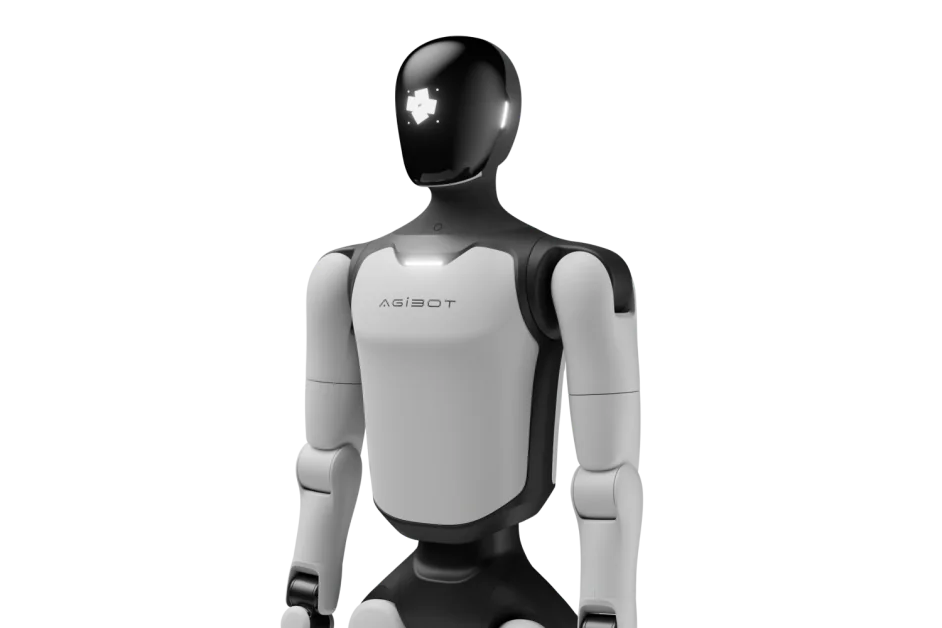
At its AGIBOT Partner Conference (APC) 2026, in Shanghai, AGIBOT made a clear statement about where robotics is heading: the industry is moving beyond experimentation and into large-scale, real-world deployment. Rather than focusing on isolated technical breakthroughs, the company is positioning robots as systems that can be deployed at scale and deliver measurable productivity across industries.
Who AGIBOT Is and Why It Matters
AGIBOT is a fast-rising robotics company founded in 2023 and headquartered in Shanghai. Despite being a relatively new entrant, it has moved quickly from early development to mass production and real-world deployment, positioning itself as a serious contender in the global humanoid robotics race.
The company was founded by Peng Zhihui, a well-known engineer and former Huawei technologist, with a vision centered on building general-purpose robots designed for the era of advanced AI. From the outset, AGIBOT has focused not just on building robots, but on creating a full ecosystem that combines hardware, AI models, and data infrastructure.
A Full-Stack Approach to Embodied AI
AGIBOT’s strategy is built around full integration. Instead of treating robots as isolated machines, the company is developing a system where hardware, AI models, simulation environments, and real-world data are tightly connected.
Its architecture links data collection, training, and deployment into a continuous loop. Robots are designed to improve as they operate, learning from real-world environments rather than relying solely on pre-programmed behavior. This approach is intended to make robots adaptable enough for complex, changing environments such as factories, retail spaces, and logistics networks.
The Technology Behind AGIBOT’s Platform
What emerges clearly from both press releases is that AGIBOT is not just launching robots, it is building a vertically integrated “physical AI stack” designed to solve the hardest problems in robotics: generalization, dexterity, and real-world reliability.
At the hardware level, the company is pushing toward human-like performance across multiple dimensions. Its humanoid systems emphasize long endurance, rapid battery swapping, and coordinated multi-robot operation, suggesting a focus on continuous uptime and scalability rather than isolated tasks. Meanwhile, its dexterous hand systems are designed with high degrees of freedom, tactile sensing, and rapid response times, targeting one of the most difficult challenges in robotics: fine manipulation.

Beyond hardware, AGIBOT’s AI layer is structured around three core domains: locomotion, manipulation, and interaction. These are not treated as separate capabilities but as interconnected systems trained together. Models can learn motion from minimal demonstrations, translate language or visual input into real-time actions, and execute multi-step tasks with consistency. This points toward a shift from scripted robotics to systems that can interpret and adapt in dynamic environments.
A key differentiator is the company’s simulation and data infrastructure. AGIBOT is building tools that can generate digital twins of real-world environments from natural language, allowing rapid training and testing before deployment. At the same time, its distributed learning systems enable robots in the field to continuously improve, turning real-world operations into training data.
Perhaps most notable is its approach to data collection. By decoupling data generation from robotic hardware and enabling human-driven capture of multimodal data, AGIBOT is dramatically accelerating dataset creation. This addresses a fundamental bottleneck in robotics and allows for faster iteration cycles.
Taken together, these elements form a closed-loop system where robots are not just deployed, but continuously evolving. This is the same principle that has driven progress in large-scale AI, now applied to physical machines.
Data, Not Hardware, Is the Real Battleground
The defining feature of AGIBOT’s approach is its focus on data. The company is investing heavily in systems that allow robots to learn continuously from real-world interactions, combining human-guided training, simulation, and live deployment feedback.
This is significant because robotics has long been constrained by limited training data. AGIBOT is attempting to solve that problem at scale, building a feedback loop where every deployed robot contributes to improving the overall system. This mirrors the trajectory of modern AI, where data pipelines have become more important than standalone model improvements.
How AGIBOT Compares to Western Robotics Leaders
Figure AI
Figure AI has focused on deploying humanoid robots into logistics and manufacturing environments, prioritizing real-world use cases over research prototypes. Its approach is centered on replacing or augmenting human labor in structured settings like warehouses. This targeted strategy has helped it gain traction quickly, but it remains largely focused on humanoids as a single category rather than building a broader multi-form robotics ecosystem.
Apptronik
Apptronik is also targeting industrial deployment with its Apollo humanoid robot, but distinguishes itself through its partnership with Google DeepMind (GOOGL ). This collaboration aims to combine advanced AI reasoning and planning models with humanoid hardware, potentially enabling robots that can handle more generalized tasks. The strength of this approach lies in AI capability, but its long-term success will depend on how effectively that intelligence translates into consistent, large-scale deployment.
Boston Dynamics
Boston Dynamics remains the global benchmark for mobility and mechanical engineering. Its robots demonstrate exceptional agility and control, particularly in complex environments. However, its strategy has historically focused more on hardware excellence than on building large-scale AI training ecosystems, which are becoming increasingly important as robotics shifts toward autonomy and continuous learning.
Tesla
Tesla’s Optimus program represents one of the most ambitious Western efforts to combine AI, manufacturing, and humanoid robotics. Tesla’s (TSLA ) advantage lies in its experience with large-scale production and AI systems developed for autonomous driving. However, its humanoid robots are still earlier in their deployment lifecycle, and widespread real-world rollout has yet to match the scale AGIBOT is targeting.
China’s Acceleration Toward Scaled Deployment
AGIBOT’s rapid rise reflects a broader trend in China’s robotics sector. The focus is shifting toward scale, integration, and speed, with companies prioritizing real-world deployment across multiple industries simultaneously.
By combining hardware, AI, and deployment into standardized solutions, companies like AGIBOT are reducing integration complexity and accelerating adoption. This approach allows for faster rollout and more predictable performance in real-world environments, particularly in industries such as manufacturing and logistics.
Robots Are Becoming a New Layer of Infrastructure
The most important takeaway is how AGIBOT frames the future of robotics. Robots are no longer being positioned as standalone tools. They are becoming a foundational layer of productivity, similar to how cloud computing reshaped software.
The industry is moving from proving what robots can do to proving what value they can deliver consistently at scale. This shift marks the beginning of a new phase where deployment, reliability, and economic impact matter more than isolated technical breakthroughs.
What This Means for the Future of Humanoid Robotics
The global race in humanoid robotics is entering a new phase. The central question is no longer whether robots can perform complex tasks, but whether they can do so reliably, economically, and at scale.
AGIBOT’s strategy suggests that success will depend on building integrated systems where hardware, AI, and data continuously improve together. Companies that can create these closed-loop ecosystems will have a significant advantage.
For Western players, this raises the stakes. Competing will require faster deployment, deeper integration between AI and physical systems, and a stronger focus on real-world data.
What is becoming clear is that humanoid robotics is approaching an inflection point. The field is rapidly transitioning from prototypes to production, and the companies that adapt to this shift will define the next generation of industrial and service automation.