
Thought Leaders
The Biggest Challenge Facing Physical AI May Be Physical, Not Artificial

 Add Unite.AI to your preferred sources on Google
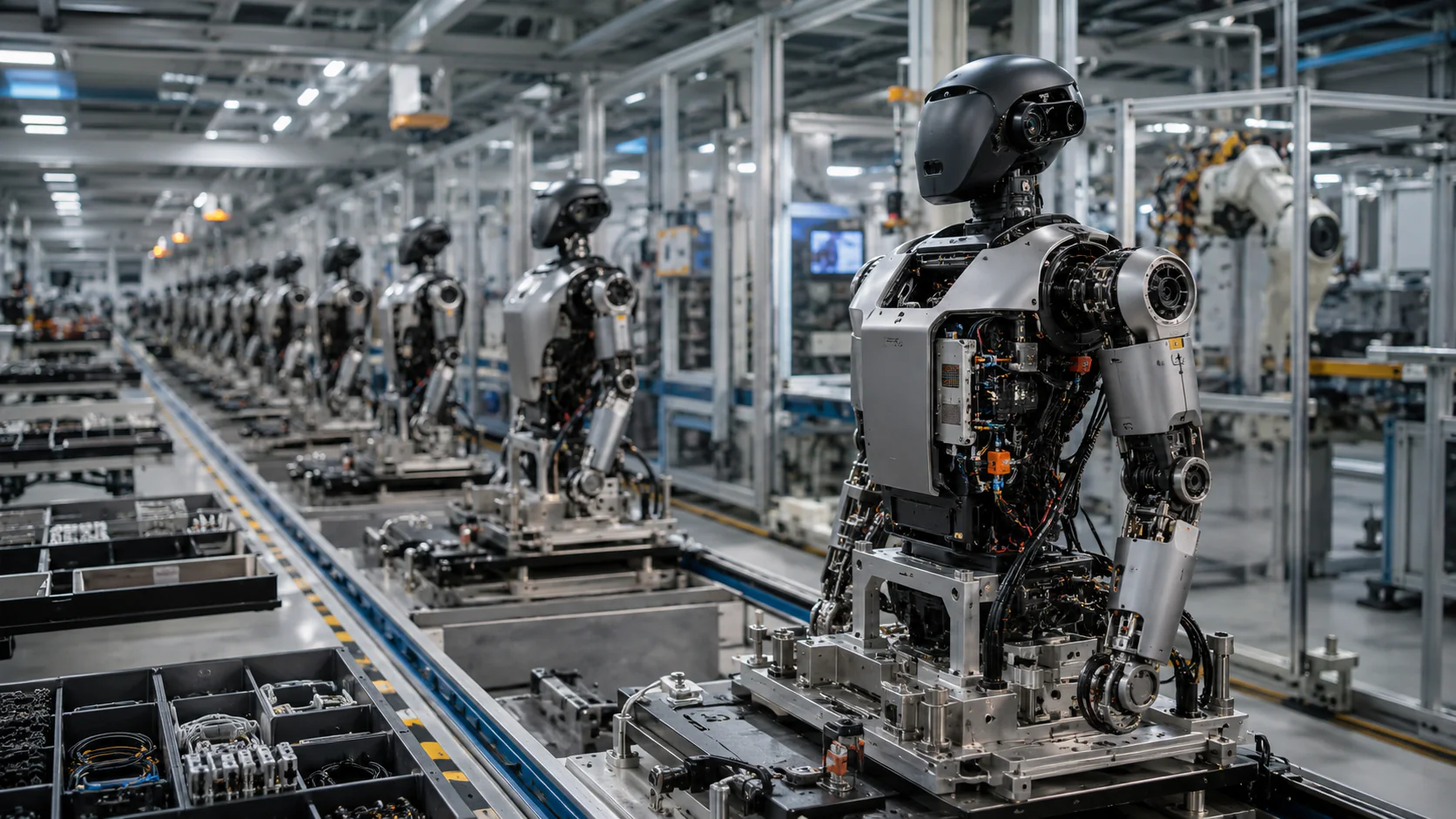
Behind almost every headline-grabbing demo in the Physical AI industry sits the same truth: the machine is a prototype, and prototypes are not products. Building one working robot is an engineering feat. Building the thousandth one, at a cost someone will pay, without a team of specialists standing by to nurse it through a malfunction, is a different challenge entirely, and it’s one the industry is only beginning to confront.
That gap, between demonstrating intelligence and manufacturing it at scale, is shaping up to be the real battleground of the Physical AI race. And increasingly, it looks less like an AI problem than an industrial one.
From One-Off to Assembly Line
Anyone who has taken a hardware product from prototype to production knows the first unit is the easy part.
A prototype robot might run on a custom actuator machined by hand, a sensor sourced from a boutique supplier with a two-month lead time, or a battery pack assembled by the same engineers who designed it. None of that matters when there’s only one unit. All of it becomes a serious liability at a scale of ten thousand.
Suppliers have to be qualified, and usually qualified twice over, so a single factory fire or shipping delay doesn’t halt production. Components engineered for peak performance in a lab often need to be re-engineered for tolerance, durability, and above all cost. Assembly processes that worked with a small team of PhDs troubleshooting by hand have to be simplified enough that a technician on a production line can do the job in minutes, not days.
This work is called design for manufacturability. It is slow, it is tedious, it’s where the engineering battle in Physical AI is increasingly being fought, and it’s a battle many well-funded, technically brilliant robotics companies have lost.
Impressive Demos Don’t Win Markets
There’s a natural instinct inherited from a decade of software-driven tech cycles to assume that whoever builds the smartest model or the most humanlike robot will come out on top. That instinct has served investors well in AI generally. It’s likely to mislead them in Physical AI.
Hardware businesses are not won on demo day but in the years afterward, on unit economics, supply chain resilience, and the ability to keep thousands of machines running in the field without a small army of engineers on call.
Solar power offers a useful precedent. The panels that ultimately dominated the market weren’t necessarily the most efficient ones in a lab; they were the ones companies could manufacture reliably, at falling cost, at growing volume. Electric vehicles followed a similar arc, where battery supply chains and manufacturing yield mattered as much as any single engineering breakthrough. Physical AI, with robots built from dozens or hundreds of components, each one a potential point of failure, may prove even less forgiving. A company fielding a merely good robot backed by dependable suppliers and a cost curve that bends downward every quarter is likely to out-compete a rival with a dazzling robot that can only be built a dozen at a time.
AI Can Speed Up the Engineering, Not the Physics
Won’t AI itself close this gap? To some extent, yes. Generative design tools are already exploring component geometries no human engineer would think to try. Simulation, sped up by machine learning, is compressing testing cycles that once took months. Predictive models can flag which suppliers or materials are likely to cause yield problems before a single part gets machined.
These tools are real accelerants, and the companies using them well in engineering and sourcing will move faster than those that don’t.
But there’s a hard ceiling on how much this compresses the timeline, because the physical world doesn’t iterate the way software does. A new alloy still has to survive fatigue testing measured in thousands of cycles. A factory line still has to be tooled, commissioned, and run through its own bumpy learning curve before yields stabilize. No simulation shortens the months it takes to qualify a new material or the quarters it takes to bring a new production line up to speed. Any company building its roadmap on the assumption that hardware timelines will collapse the way software timelines have is setting itself up for a rude surprise, and a very public one.
The Overlooked Bottlenecks
If there’s one lesson from previous hardware cycles, it’s that the components getting the least attention tend to cause the most delay.
In Physical AI, that likely starts with actuators, aka the motors and mechanisms giving a robot the torque and precision to actually do physical work. They remain in short supply from a small pool of qualified manufacturers, and standing up new capacity takes years, not quarters.
It continues with sensing. The cameras, force sensors, and proprioceptive systems that let a machine perceive its surroundings are still expensive and immature relative to what dense, real-world deployment will demand.
It extends to manufacturing itself. The industry has leaned heavily on a concentrated set of regions and suppliers, a structure increasingly seen as a strategic weakness, pushing companies toward more distributed, redundant manufacturing footprints even where that means sacrificing some efficiency.
And it ends with power: the batteries, power electronics, and charging infrastructure that will need to scale alongside fleets of machines running continuously in warehouses, homes, and job sites. None of these categories will headline a keynote. All of them will likely decide who actually ships.
A Preview of a Bigger Reckoning
The Physical AI boom is, in effect, a live test of an assumption the tech industry has grown comfortable with: that intelligence, once built, scales freely. That assumption largely holds for software. It does not hold for factories.
Compute can double overnight. Models can improve with a new training run. Deployment can happen at the push of a button. Supply chains cannot double overnight. Skilled technicians, qualified suppliers, and mature production lines take years to build, and no leap in model capability shortens that timeline.
None of this means Physical AI is overhyped or that the underlying technology isn’t real. It means the center of gravity is shifting from artificial intelligence to physical infrastructure. The companies, and the investors backing them, that grasp this shift early, and put real resources into manufacturing capacity and supply chain resilience rather than the next flashy demo, are the ones likely to still be standing when the current wave of viral videos gives way to the slower and harder work of actually deploying these machines at scale.



