Robotics & Physical AI
Hyundai Workers Stage First Auto Strike Over Humanoid Robots

 Add Unite.AI to your preferred sources on Google
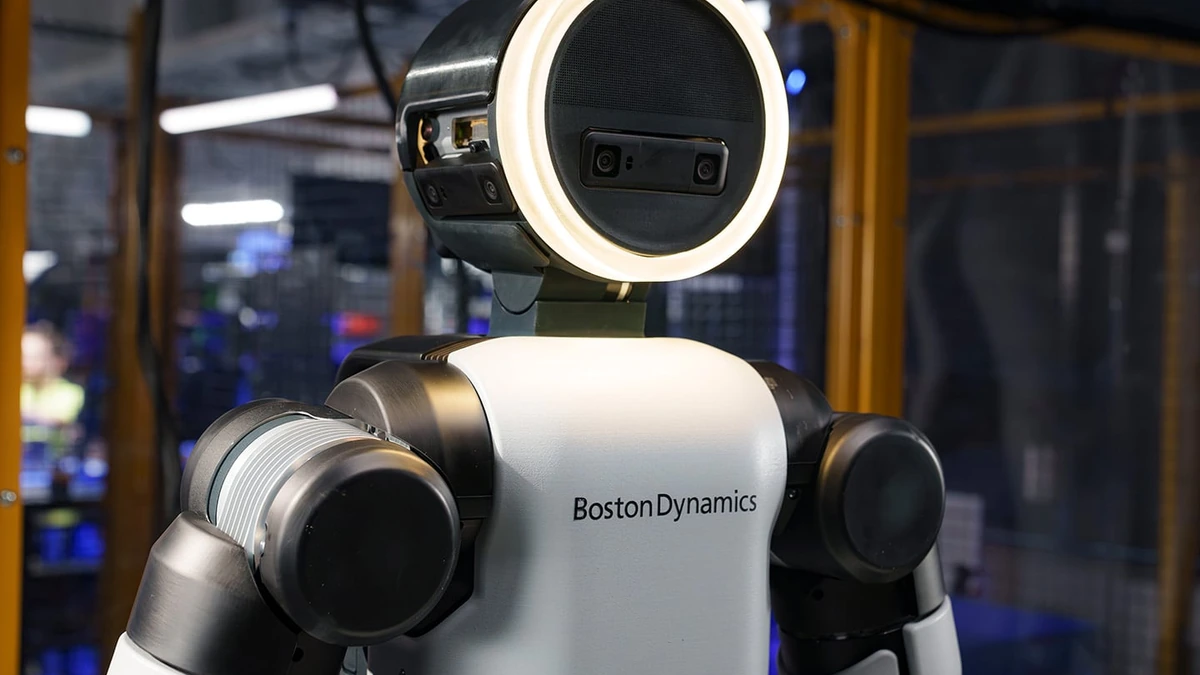
Thousands of unionized Hyundai Motor workers walked off the job at the automaker’s complex in Ulsan, South Korea, over a plan to put humanoid robots on the assembly line — the first factory stoppage in the car industry tied to humanoid automation, according to the Wall Street Journal, which reported the partial strike from Ulsan. The robot at the center of the fight, Boston Dynamics‘ Atlas, has not been assigned a single task at any Korean plant yet.
Workers ended day and night shifts two hours early from July 13 through July 15, 2026, and the union has set four-hour stoppages for July 20 to 22 after 15 rounds of wage talks failed. The demands run past pay: the union wants hourly production workers moved to fixed salaries so automation cannot quietly erode their hours, the retirement age raised from 60 to 65, and a bigger share of profit. The sharpest demand is a written one: a guarantee that no humanoid robot enters a Hyundai plant without a labor-management agreement signed first, a veto the union staked out months before a single Atlas had a Korean job to take. Underneath all of it is a claim the company has not yet deployed a robot to answer — that Atlas is being built to replace them.
What Hyundai has committed to
The plan is specific, and it is large. At a JPMorgan investor session, Hyundai Motor Group said it intends to deploy more than 25,000 Atlas robots across its own Hyundai and Kia plants — roughly 83 percent of the 30,000 units a year it aims to build by 2028. The first machines go to Hyundai Motor Group Metaplant America outside Savannah, Georgia, starting in 2028, with Kia’s Georgia plant following in 2029.
The rollout is staged by task difficulty rather than calendar ambition. Hyundai’s own roadmap starts Atlas on parts sequencing — moving and ordering components for the line — in 2028, extends to component assembly by 2030, and only later hands it repetitive, heavy-load work. That order matters: sequencing and material handling are the most forgiving factory jobs for a humanoid, because they tolerate slower cycle times and do not demand the fine force control that assembly does.
The strike also lands the same week Hyundai tightened its grip on the supplier. The group is buying SoftBank’s remaining stake of about 10 percent to make Boston Dynamics a wholly owned subsidiary, having taken majority control of the company in 2021. The integration runs deeper than ownership: Hyundai Mobis builds the actuators — the joints that account for roughly 60 percent of a humanoid’s material cost — and Boston Dynamics is pairing Atlas with Google DeepMind’s foundation models to widen the range of tasks it can learn.
The specs and the economics
The production Atlas is a capable machine on paper. Boston Dynamics’ commercial version has 56 degrees of freedom, fully rotational joints, a 2.3-meter reach, and lifts up to 50 kilograms (110 pounds); it swaps its own batteries and carries human detection and fenceless guarding so it can work without a safety cage. Those are the features that separate a general-purpose humanoid from the fixed robotic arms that have populated car plants for decades.
The economics are what worry the union. Each unit costs an estimated $130,000 to $140,000 in early production, a figure the Korea Herald reports could fall to about $30,000 once cumulative output passes 50,000 machines. Analysts have told reporters a robot at that price could pay for itself within roughly two years — a projection that rests on expected labor savings, not logged factory data. The union’s read is blunt: a machine that costs less than a salaried worker and never takes a shift off is a labor-cost tool, whatever the company calls it. It is the same calculation drawing money into rivals such as Apptronik.
What the robots cannot do yet
What Atlas has not done is work a full car-assembly shift. Boston Dynamics still describes its humanoid as a platform “currently in development,” and the load-carrying clips that drew crowds were trained largely in simulation and shown in controlled settings — not logged across months on a live line with uptime and intervention rates attached. The distance between a demo and a production fleet is exactly where humanoid programs have stalled before.
The safety rules have not caught up either. The main international standard for industrial robots assumes a machine that stays put when power is cut; a walking robot falls over. A dedicated standard for balancing robots, under development at the ISO, is still a working draft, written by a group that includes engineers from Boston Dynamics and Agility Robotics. Until it is published, factories deploying humanoids are applying older, stationary-robot rules by analogy.
None of that makes the union’s fear premature. The auto industry is already the world’s heaviest user of robots — in the US, carmakers installed 13,500 industrial robots in 2025 alone, more than any other sector — and rivals from Tesla (TSLA ) to BMW are running their own humanoid pilots on the factory floor. Hyundai’s US rollout even starts at a non-union plant, where the United Auto Workers is still trying to organize. The Korean workers have no deployment date to point to, which is precisely why they are bargaining now. Terms are easier to set while the robot is still a forecast than after it is on the line.