
Thought Leaders
10 Must-Ask Questions to Ensure an Effective AI Data Center Cooling Deployment

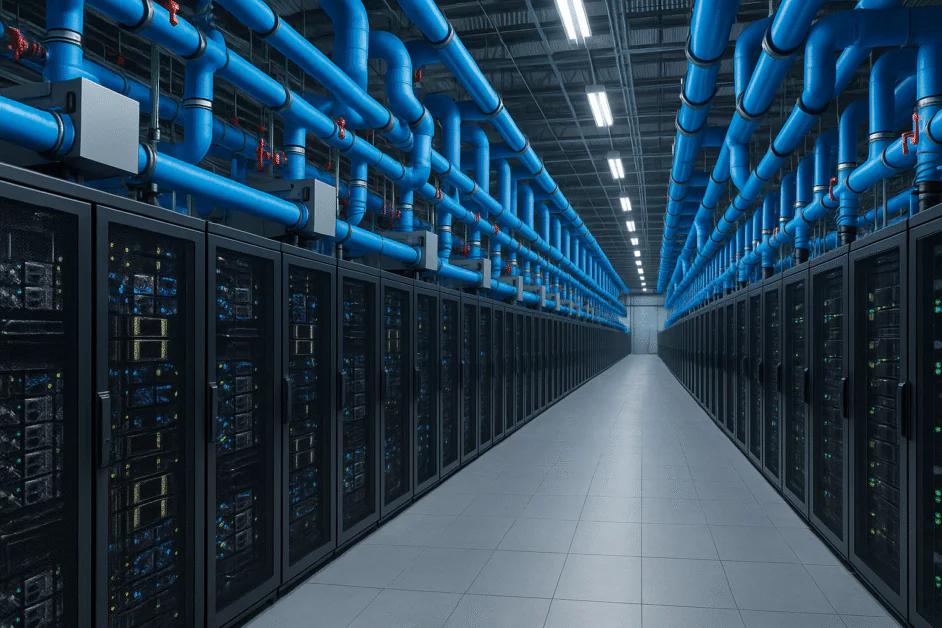
With the rise of AI and high-performance computing, data centers are proliferating at record speed. In fact, the amount of data-center capacity under construction at year-end 2024 more than doubled compared to year-end 2023 (6,350 MW under construction vs. ~3,078 MW). At the same time, the hardware being used and the workloads being handled at these data centers are increasingly intensive. Under these rapidly changing conditions, both the stakes and challenges are on the rise.
And with the average data center spending up to 40% of its entire energy budget on cooling, thermal management is quickly becoming one of the top challenges for the industry. On the bright side, data center operators have more options than ever to cool their facilities reliably, efficiently, and cost effectively.
Of course, when there are options, there are also decisions to be made. So, when considering your own data center deployment, here are 10 must-ask questions you should answer to get your operation up and running quickly, while also ensuring efficiency, reliability, and sustainability for the long haul.
Question 1: How quickly can I bring this cooling system online without compromising reliability?
In the AI arms race, the true differentiator for industry success isn’t who stockpiles the most GPUs — it’s who brings them online the fastest. Time-to-power (i.e., the time from initiating a deployment to it becoming operational) has become the new battleground, determining how quickly enterprises can turn AI investment into business impact. The leaders won’t just be those with massive compute resources, but those who unlock them first, accelerating innovation, revenue, and competitive advantage.
But rushing cooling deployment can backfire, leading to inefficiencies, downtime, or costly retrofits. Operators must ask whether their chosen system can be deployed quickly and stand the test of time. A strategy that balances implementation speed with robustness provides both immediate market readiness and long-term resilience.
Question 2: Which cooling method is best aligned with my project’s needs?
There’s no one-size-fits-all solution to every data center deployment. Air cooling has long been the standard, but it is quickly reaching its physical limits in handling the advanced hardware and high-density racks typical of AI data centers. Liquid cooling offers unmatched efficiency at scale and future-proofed performance for ever-more demanding workloads. Hybrid approaches can bridge the gap, but for the long haul, AI data centers will come to rely on liquid cooling solutions in order to manage increasingly intensive AI workloads. Choosing the right method of liquid cooling, however, depends on workload type, density, location, and other factors.
There are two primary liquid cooling methods in commercial use today: direct-to-chip (DTC) and immersion cooling. While DTC is currently more common, immersion cooling is expected to gain traction as chip power densities rise. DTC systems route coolant directly to heat-generating components like CPUs and GPUs through cold plates, offering quick efficiency gains with minimal infrastructure changes. Single-phase systems are simpler and retrofit-friendly, while two-phase systems use refrigerants to achieve higher heat transfer performance with lower pumping power but greater system complexity. Immersion cooling, by contrast, submerges entire servers in dielectric fluids—either circulated (single-phase) or boiled and condensed within sealed tanks (two-phase).
Which solution is right for your environment depends on the nature of your hardware, workloads, budget, and more. But, being aware of one’s options is vital to both near-term and long-term viability of your AI data center.
Question 3: Will my cooling system support today’s workloads and tomorrow’s AI-driven densities?
Which brings us to the next big question: will my system stand the test of time? Data center demand is accelerating beyond historical norms. AI training clusters, for instance, can require 10–20 times the power density of traditional enterprise racks. The question operators must ask is whether their cooling design can accommodate future densities without wholesale replacement.
The rise of AI, HPC (high-performance computing), and ever-denser rack architectures is already pushing air cooling to its limits. In Uptime Institute’s 2024 Cooling Survey, the majority of operators said air cooling becomes impractical and/or too expensive at any point above ~20 kW per rack. However, current industry reporting shows that AI racks already commonly push 100 kW per rack. And these figures are already trending upward. Nvidia recently unveiled plans for its Rubin Ultra GPUs with Kyber racks, which will surpass 600kW per rack by 2027.
Knowing that air cooling is on its way to obsolescence in AI data center deployments, operators can look to hybrid or phased approaches wherever full, greenfield liquid cooling deployments aren’t an option. Once again, given the immense time and cost put into these projects, long-term viability is of the utmost importance. So, when selecting cooling solutions, make sure they’re ready for the long haul.
Question 4: What are the total cost implications over the full lifecycle?
While upfront expenses can be eye-popping in the data center space, capital expenditure (CAPEX) is only part of the story. Operators should calculate the total cost of ownership (TCO), including operating expenses (OPEX) tied to power consumption, maintenance, and retrofits, when considering their cooling solutions. A system that seems costlier upfront may deliver long-term savings through energy efficiency, reduced downtime, and increased longevity. The right cooling strategy is seldom the cheapest upfront—it’s the one that optimizes costs over the 10–15-year facility lifecycle.
Remember, these aren’t short-term deployments. Moreover, the more life you get out of said deployment, the more value you stand to gain. Looking beyond CAPEX and thinking about your long-term costs and savings is mission-critical to ensure you get the most out of your data center project.
Question 5: How will this cooling strategy affect my sustainability profile?
As mentioned before, cooling can account for 40% or more of a data center’s total energy consumption. As regulations and ESG reporting requirements expand, operators must ask: how does this system impact my carbon footprint, energy use, and other sustainability commitments? Solutions that reduce energy or resource waste or align with global standards like the Green Grid framework are increasingly not just preferable but required for investor confidence and regulatory compliance.
Meanwhile, the public sector is increasingly crying out for reduced energy consumption. Monitoring Analytics, the independent market watchdog for the mid-Atlantic grid, produced research this June showing that 70% of last year’s increased electricity cost was the result of data center demand. Unsurprisingly, consumers are raising the alarm, and states are pondering some serious measures to address this concern, including the possibility of forced shut-offs during periods of high demand. By investing in more energy-efficient and sustainable cooling solutions, organizations can position themselves to navigate both the public perception and regulatory challenges that lie ahead.
Question 6: How much water will this cooling approach consume—and is that sustainable in my region?
Large data centers can consume up to 5 million gallons of water per day. It should come as no surprise, then, that water scarcity is becoming a defining issue for data centers, especially in regions like the American Southwest, and parts of Europe where water rights and scarcity issues are leading to increased scrutiny towards data centers. To get it right, operators must calculate the projected water use of their cooling system and assess whether it aligns with local and regional realities (in terms of both availability and regulatory requirements).
Don’t be fooled by the name—liquid cooling actually consumes significantly less water than traditional air cooling systems. According to a study published by Nature, liquid cooling reduces data-center “blue water” consumption by anywhere from 31–52% vs. traditional air cooling over its life-cycle. Cooling solutions that minimize or eliminate water consumption can help future-proof facilities against environmental and regulatory risks.
Question 7: What risks or limitations are associated with liquid cooling, and how can they be mitigated?
Although it offers unprecedented advantages around efficiency, sustainability, and life-time ROI, many myths persist about liquid cooling, especially around reliability, cost, and integration. In reality, advances in technology, materials, and design have made liquid cooling safe, reliable, and increasingly cost-effective. The key for operators is to evaluate these systems against real-world performance data, not outdated perceptions, and to design with proven best practices in mind.
When looking at liquid cooling, it’s equally important to be mindful of which solution is best for your facility. With different approaches (e.g., direct-to-chip [DTC], immersion) and a host of vendors offering a wide variety of solutions, one should always perform one’s due diligence when considering a liquid cooling deployment.
Question 8: How will my cooling design impact space utilization and rack density?
Space is just as valuable as power in modern data center facilities. High-density racks supported by efficient liquid cooling can dramatically reduce floor space requirements and facility footprints. This, in turn, allows operators to either scale workloads in existing footprints or minimize land and construction costs for new builds. Being able to do more with less space not only reduces costs, but it also opens the door to a much wider variety of viable sites for construction. With smaller footprints, developers can build more freely and even bring compute closer to the end-user. Asking these questions up front ensures the cooling design is aligned with both density and space utilization goals.
Question 9: What is my long-term resilience strategy if workloads spike or regulations tighten?
Data centers are not static. Unexpected demand surges, new AI applications, and tightening efficiency/sustainability mandates can quickly put strain on infrastructure. Operators must ask whether their cooling strategy is sufficiently adaptable to meet these often unexpected changes. Effective cooling systems must be ready for scaling capacity, meeting new compliance requirements, and integrating with future technologies.
Systems that offer modularity and vendors with robust supply chains will help insulate your data center from shifting demand, allowing you to scale more easily and upgrade and integrate more readily if and when needed.
Question 10: Am I treating cooling as a strategic enabler—or just an afterthought?
This final, overarching question is arguably the most important one. When considering your cooling system, first take a moment to reconsider cooling’s role in your overall data center operations. Too often, cooling is treated as background infrastructure when, in reality, it is a strategic enabler of performance, uptime, and sustainability. Companies that invest in thoughtful cooling strategies gain not just operational efficiency but also a competitive advantage in reliability, compliance, and long-term costs.
And as AI continues to put new, more intensive demands on data centers, it is critical to take a long view of cooling. Don’t simply think about what’s best, fastest, or cheapest for your deployment today. Think about how your cooling solution positions you 5, 10, or even 15 years down the road. If your cooling system is barely meeting requirements today, you can be sure it will no longer be cutting it just a few years down the road. Remember, cooling is central to your facility’s overall success throughout its entire lifecycle.
Cooling is Now Central to Long-Term Data Center Success—Choose Wisely
Cooling is no longer a back-of-house concern—it is central to every data center’s near and long-term success. By asking these ten questions at the outset, operators can reduce deployment time, minimize risks, and ensure facilities are built for resilience in an AI-driven world defined by change and flux.
The future of the industry will be defined not just by how fast operators deploy capacity, but by how intelligently they design for long-term sustainability and reliability. Those who treat cooling as a strategic enabler will be best positioned to lead in the years ahead.



