
Funding
Spacelift Secures $51M Series C to Transform AI-Powered Infrastructure Automation for the Enterprise

 Add Unite.AI to your preferred sources on Google
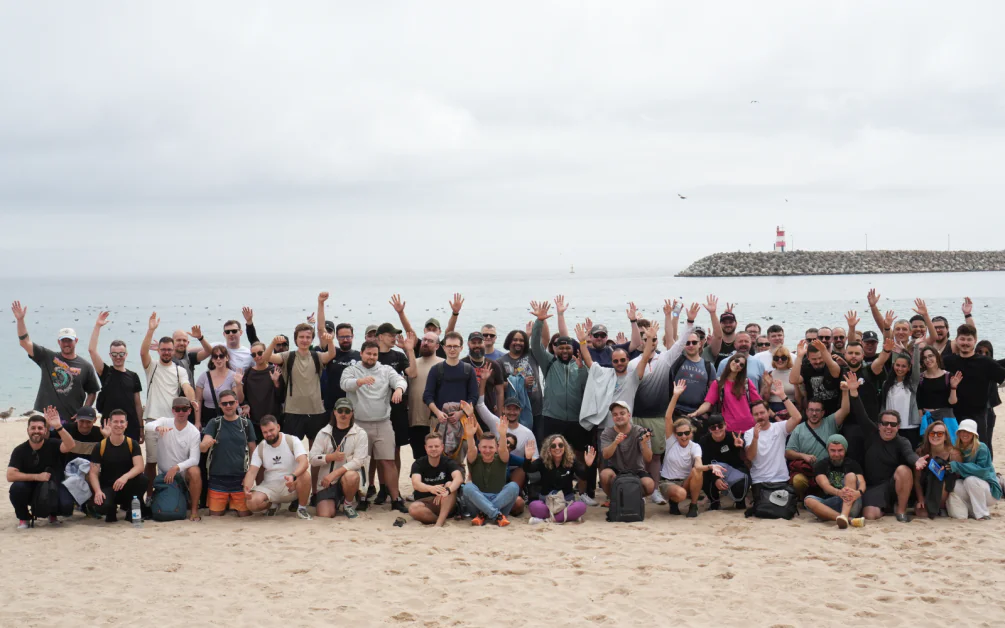
Spacelift, a fast-growing leader in infrastructure orchestration, today announced a $51 million Series C funding round to further its mission of simplifying enterprise infrastructure management through intelligent automation. The round, led by Five Elms Capital with participation from Endeavor Catalyst and Inovo VC, positions the company to scale its platform globally and further invest in artificial intelligence to meet the rising demands of platform engineering, compliance, and developer velocity.
Infrastructure Chaos, Orchestrated
Enterprises today face a growing storm of complexity as they juggle multi-cloud, hybrid environments, and fragmented toolchains. Infrastructure as Code (IaC) has become a necessary foundation for managing modern cloud-native systems—but without orchestration, it becomes unmanageable at scale. This is the gap Spacelift fills.
At its core, Spacelift is an infrastructure orchestration platform that empowers enterprises to provision, configure, and govern infrastructure securely and at scale—without compromising developer agility. It integrates with a wide range of infrastructure tooling including Terraform, OpenTofu, Pulumi, CloudFormation, Ansible, and more, unifying them into a single, automated pipeline.
“Our vision has always been to bridge the gap between human intent and infrastructure reality,” said Pawel Hytry, co-founder and CEO of Spacelift. “This new funding accelerates our ability to make infrastructure automation smarter, safer, and radically more accessible for the teams building the digital future.”
AI-Powered Governance and Automation
What distinguishes Spacelift is its deep investment in AI-driven infrastructure orchestration. The platform leverages automation not only to accelerate workflows, but to intelligently remediate drift, detect anomalies, enforce custom policies using Open Policy Agent (OPA), and guide developers through predefined Golden Paths—best-practice workflows that ensure speed without sacrificing control.
Key AI features include:
- Automatic drift detection and remediation, keeping infrastructure aligned with desired state
- Predictive policy enforcement that uses AI and rule-based logic to stop misconfigurations before deployment
- Dynamic credential management to reduce risk when accessing cloud services
- Cost estimation and guardrails, thanks to Spacelift’s native Infracost integration
In practice, Spacelift enables teams to run compliant, secure, and highly available environments—with less manual toil and fewer late-night firefights.
Trusted by the World’s Leading DevOps Teams
Spacelift’s momentum is underscored by a growing enterprise customer base that includes Moody’s, Redfin, Duolingo, SailPoint (SAIL ), Algolia, and Checkout.com—all of whom rely on the platform to automate infrastructure deployment and reduce DevOps bottlenecks.
Notably, Spacelift has also cemented its leadership in the open-source world as a founding member of OpenTofu, a community-driven alternative to Terraform. Since its launch in 2023, OpenTofu has surpassed 10 million downloads and now counts over 600 contributors, including engineers from Oracle (ORCL ), Cisco, and Fidelity.
Five Elms Capital partner Joe Onofrio echoed this sentiment: “Spacelift stands out by offering not just automation, but automation with intent. Their AI-powered workflows bring clarity to chaos, giving both developers and platform teams the ability to move faster with confidence.”
Developer Velocity Meets Enterprise Control
In the past, infrastructure management often forced a trade-off between speed and safety. Spacelift eliminates that tension. Through features like Spaces (for scoped access control), self-service provisioning, and multi-environment support, developers can spin up compliant infrastructure without waiting on overburdened ops teams. Meanwhile, platform engineers retain full governance via auditing, notification policies, and automated testing pipelines.
And for enterprises with heightened regulatory or data sovereignty concerns, Spacelift offers a self-hosted option—delivering full feature parity while allowing customers to operate within their own security perimeter.
A Glimpse Into the Future of Infrastructure Automation
The rise of intelligent infrastructure orchestration marks a major shift in how enterprises will approach cloud operations in the years ahead. As complexity continues to scale across multi-cloud, hybrid, and edge environments, manual workflows and siloed automation tools are proving insufficient. The future lies in unified, AI-powered platforms that can interpret infrastructure-as-code, automate configuration, enforce policy, and remediate drift—all without human intervention.
This evolution points toward a world where infrastructure behaves more like software: composable, version-controlled, auditable, and responsive. Platform engineering will increasingly resemble product development, with reusable templates, developer self-service, and pre-approved golden paths becoming standard. Meanwhile, governance and compliance will shift from reactive processes to proactive, real-time enforcement driven by intelligent policy engines.
In this context, solutions like Spacelift are not just workflow tools—they’re foundational layers enabling the next generation of autonomous infrastructure. As AI continues to reshape software development, the automation of infrastructure will be a critical pillar in achieving scalability, resilience, and speed across industries. Enterprises that embrace this shift early will be the ones best positioned to innovate without friction, govern without delay, and deliver with confidence.



