
AI Models & Platforms
How AI Helped Launch the Artemis II Moon Mission

 Add Unite.AI to your preferred sources on Google
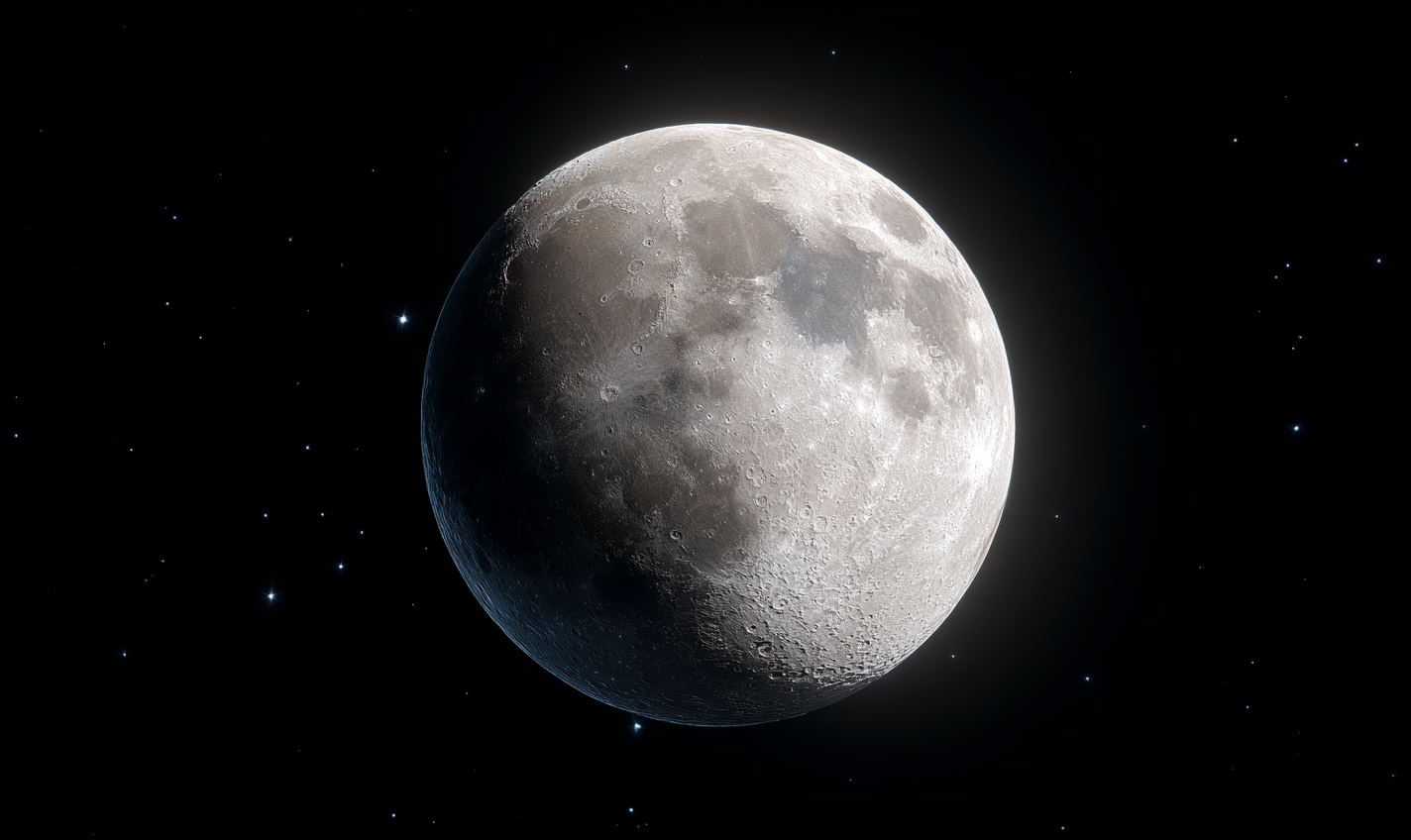
On April 1, 2026, four astronauts strapped into the Orion spacecraft and rode a rocket into history. Commander Reid Wiseman, pilot Victor Glover and mission specialists Christina Koch and Jeremy Hansen became the first humans to travel around the moon since the Apollo missions.
Their 10-day mission was a feat of human ingenuity and expertise. However, it also showcased AI as a partner in space exploration.
SIAT: The AI That Watches Everything
At the center of Orion’s onboard intelligence is a system called System Invariant Analysis Technology (SIAT), which was developed by NEC Corp. and integrated into Lockheed Martin’s (LMT ) spacecraft systems. SIAT is an analytics engine that monitors sensor data continuously, learning the normal behavior of complex systems and flagging deviations before they escalate into failures.
During evaluations, SIAT modeled billions of relationships across numerous system variables and sensors. Modern spacecraft systems like Orion generate large amounts of telemetry and test data, so SIAT had a lot to work with. That volume of information, as well as the speed it needed to be analyzed, is beyond the capacity of human operators alone.
This technology is embedded within Lockheed Martin’s Technology for Telemetry Analytics for Universal Artificial Intelligence (T-TAURI) platform, an analysis framework that creates a comprehensive picture of spacecraft health. This connection results in proactive anomaly detection that spans design, development, production and live mission operations.
SIAT is one of the many AI models that sit far from the limelight, but it is highly essential in a crewed spacecraft. It is quiet yet capable of catching problems that can be challenging to monitor manually.
Digital Twins and Autonomous Systems
Before any astronauts boarded Orion, engineers and crew members ran full simulations inside a replica of the spacecraft, rehearsing scenarios that couldn’t otherwise be tested in Earth’s regular conditions.
Digital twin simulations refer to AI-powered virtual models of the spacecraft’s physical systems. These tools allowed teams to stress-test vital elements of the spacecraft and the mission, such as life support, navigation and communication under conditions that are nearly impossible or dangerous to replicate in Earth-based laboratories.
Computers on board the craft were designed to keep essential systems running under the high-radiation conditions of space. This architecture, combined with autonomous algorithms managing trajectory in real time, allowed the spacecraft to sustain operations during the extended communication blackouts that are part of deep space travel.
Alexa in Orbit: The Callisto Technology Demo
One of the most visible AI applications aboard the Artemis missions has been Callisto, a technology demonstration developed collaboratively by Lockheed Martin and NASA.
Callisto has embedded Amazon’s Alexa voice assistant and Cisco’s Webex communication platform directly into the Orion capsule’s central console. It connects via NASA’s Deep Space Network. This integration gives both astronauts and flight operators at Johnson Space Center a hands-free interface for deep space operations.
One notable aspect of the Callisto project is its public-facing element. During the Artemis I mission, Lockheed Martin invited people on Earth to engage with the integration directly, collecting messages for humanity and the team behind the Artemis missions. It’s an early example of how AI can serve as a bridge between a mission hundreds of thousands of miles away and the broader public following it from home.
Deep Learning for Lunar Navigation
Getting to the moon is one challenge. Having astronauts know their location once they are there is another task. Since Apollo crews worked within a smaller area, they did not need precise wide-area navigation. However, Artemis missions targeting the lunar south pole will require astronauts to orient themselves across a larger and more complex terrain.
In 2018, researchers at the Frontier Development Lab built an AI navigation tool using a detailed simulation of the moon’s terrain. Astronauts can capture pictures of their environment, and deep learning models will compare them with the simulated surroundings to precisely determine their coordinates.
The system functions like a GPS that works with machine vision instead of satellites, which shows great promise as missions grow in scope and ambition. AI is already being used across missions to navigate and explore new terrains and exoplanets. With time, this technology can develop further and expand human knowledge of the universe.
The Governance Gap
As AI takes on more responsibility in crewed spaceflight, governments and institutions are raising questions about oversight and accountability. The United Nations Office for Outer Space Affairs has called for governance frameworks that hinge on these key objectives:
- Ethical and transparent AI for space operations: This calls for explainable AI systems, meaningful human oversight and robust fail-safes, especially for critical functions.
- Fairness, inclusivity and global capacity-building: To address biases in AI models and the uneven distribution of resources, UNOOSA advocates for diverse datasets, open-access to data and tools, and targeted training programs for developing countries.
- Responsible development and use of geospatial foundation models: While acknowledging the potential of large AI models, the organization stresses the need for comprehensive evaluation beyond accuracy. This includes factors such as energy consumption, robustness, and social and ethical impacts.
- Integration of climate resilience and sustainability: The office calls for the integration of climate considerations throughout the entire life cycle of AI and Earth observation technologies.
- Protection of data ownership and integrity: This objective focuses on the need for measures to prevent data manipulation and ensure the provenance of geospatial information.
A notable part of UNOOSA’s policy brief is the call for frameworks to create predeployment safety cases. These recommended policies preauthorize AI decisions within defined parameters for space missions where real-time human intervention is impossible.
AI will likely make decisions in space, especially in dire cases where communication systems are compromised. While teams are striving to prevent this from happening, it’s still crucial to prepare for these situations and determine under what conditions AI can make decisions and with what level of human oversight.
What Artemis II Proved
Artemis II successfully validated the Orion spacecraft’s systems, crew operations and mission procedures in conditions that cannot be replicated on Earth. Along the way, it has also validated the ways humans and AI can work together beyond the atmosphere.
The Apollo era demanded extraordinary human performance under pressure, primarily due to necessity. Artemis is taking a different, more distributed approach, which is the collaboration between human intuition and training and machine intelligence.
Here, AI handles the continuous, data-intensive monitoring that can be challenging for the crew to manage. This assistance has freed their time and effort, allowing them to focus on the decisions and processes that only humans can make.
For AI enthusiasts, the Artemis II moon mission is a proof of concept for what intentional and thoughtful AI integration can accomplish, especially with four lives depending on the technology getting things right.



