
AI Models & Platforms
Google Maps Gets a Gemini Upgrade: The Dawn of Conversational Navigation

 Add Unite.AI to your preferred sources on Google
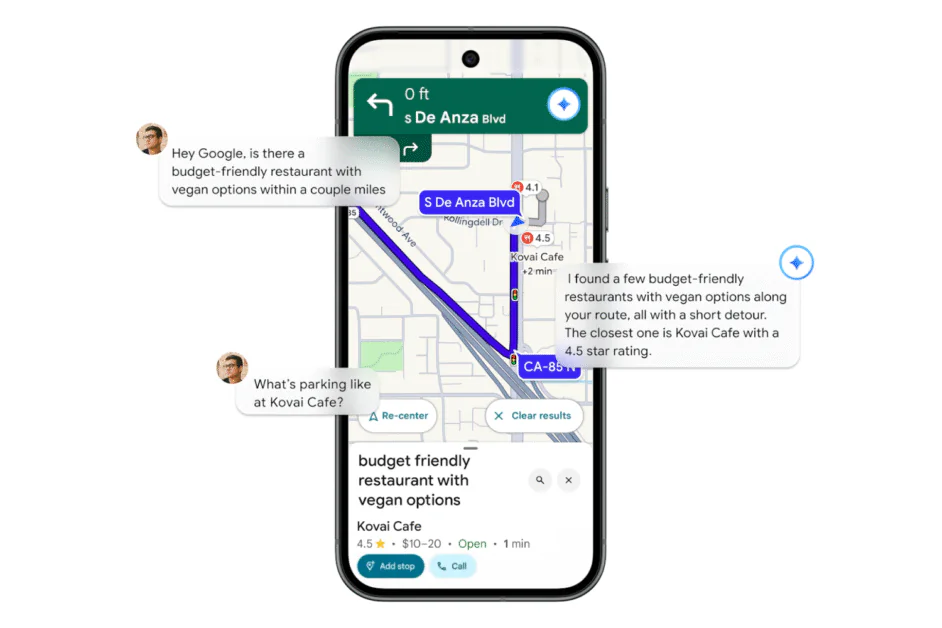
Google (GOOGL ) has just unveiled one of the most significant updates to Google Maps in years. In a blog post published today, the company announced that its navigation app is receiving a powerful AI boost from Gemini, Google’s next-generation multimodal model. The result is a more natural, conversational, and context-aware driving experience that feels less like following directions—and more like traveling with a knowledgeable companion.
The update introduces four major enhancements: hands-free conversational navigation powered by Gemini, landmark-based directions, proactive traffic alerts, and an upgraded Lens feature that lets you explore the world simply by pointing your camera. Together, they mark a defining step toward what Google calls “getting around made easier, thanks to Gemini capabilities and our trusted real-world information.”
A Conversational Co-Pilot for Every Journey
At the heart of this release is Gemini in navigation, which transforms Maps into a full-fledged AI assistant you can talk to naturally while driving. Instead of tapping screens or typing addresses, users can now ask complex, multi-part questions like:
“Is there a budget-friendly restaurant with vegan options along my route, something within a couple miles?”
Gemini instantly interprets the request, analyzing live traffic, location data, and Google’s vast Places database to surface relevant options. Drivers can follow up with, “What’s parking like there?” or “Can you add a calendar event for soccer practice tomorrow at 5 p.m.?”—and Gemini will handle it, syncing with Calendar automatically if given permission.
The integration also extends to real-time road reports. Drivers can say, “I see an accident,” or “There’s flooding ahead,” to flag issues instantly without taking their hands off the wheel. It’s a natural, conversational way to keep roads safer and journeys smoother.
This hands-free navigation experience starts rolling out over the coming weeks on both Android and iOS wherever Gemini is available, with Android Auto support arriving later.
Navigating by Landmarks, Not Just Street Signs
If you’ve ever been told to “turn right in 500 feet” and wondered where exactly that is, Google’s second upgrade is for you. Landmark-based navigation adds real-world context to directions by referencing visible, recognizable places.
Now, instead of numerical distances, Maps will guide you with cues like “Turn right after the Thai Siam Restaurant,” showing the restaurant highlighted on your route. This human-style direction system uses Gemini to analyze over 250 million places across Google Maps and cross-reference them with Street View imagery, ensuring that landmarks are both relevant and actually visible from the road.
By weaving environmental cues into the driving experience, Maps feels less robotic and more intuitive—much closer to how people naturally give directions in conversation. The feature is already rolling out to Android and iOS users in the U.S., with broader expansion planned.
Proactive Traffic Alerts: Help Before You Ask
A third enhancement focuses on awareness even before you start driving. With proactive traffic alerts, Maps now notifies users about disruptions like accidents, road closures, or sudden slowdowns—without requiring active navigation mode.
If you frequently commute on a certain highway and there’s a major delay, Maps will send a notification across your device so you can leave earlier or choose another route. The feature works seamlessly in the background, demonstrating Gemini’s predictive capabilities and Google’s shift toward anticipatory assistance.
These alerts are currently rolling out for Android users in the U.S., with iOS support coming soon.
Lens Built with Gemini: A New Way to Explore
Navigation doesn’t end when you arrive—and with Lens built with Gemini, Google is extending the power of AI into discovery.
By tapping the camera icon in the Maps search bar, you can simply hold your phone up to identify what’s around you—restaurants, cafés, shops, or famous landmarks—and ask questions like:
“What dishes are popular here?”
“What’s the vibe inside?”
“What is this place and why is it popular?”
Gemini combines visual understanding with conversational AI to deliver answers drawn from reviews, photos, and Maps’ extensive location data. It’s an entirely new layer of context that turns sightseeing into an interactive experience.
This capability begins rolling out later this month in the U.S. for Android and iOS users and represents one of the clearest glimpses yet of how Google’s AI will bridge the physical and digital worlds.
A Step Toward Ambient Intelligence
What’s striking about this release isn’t just the individual features—it’s how they work together. With Gemini now embedded across Maps, the app evolves from a navigation utility into a true ambient intelligence system, an AI that operates quietly in the background, anticipating needs and responding naturally to context.
You no longer have to switch between apps or issue rigid commands. Whether you’re finding a restaurant, checking parking, or learning about a new neighborhood, the interaction feels conversational and seamless. Gemini understands intent, adapts to tone, and connects your preferences across Google services—from Calendar to Search—without ever breaking flow.
It’s the culmination of nearly two decades of Google’s mapping efforts combined with its recent breakthroughs in generative AI.
What It Means for the Future of Navigation
The integration of Gemini into Google Maps doesn’t just make travel smarter—it redefines how humans interact with the world around them. The implications stretch far beyond turn-by-turn directions:
- Navigation Becomes Conversational
Soon, getting around won’t rely on fixed commands or menu selections. You’ll describe what you want in plain language—“Take the scenic route with a coffee stop along the way”—and Maps will plan accordingly. Navigation becomes personal, fluid, and context-driven. - The Rise of Semantic Search on the Go
Instead of typing “vegan restaurant near me,” users can ask nuanced, multi-variable queries: “Find a place for dinner that’s quiet, inexpensive, and still open after 9.” Gemini’s understanding of intent will power a new kind of mobile discovery. - Visual Discovery as the Interface of the Future
Lens built with Gemini points toward a world where cities become living search engines. You won’t need to look up information—you’ll simply look at it. Point your phone at a building, and Gemini will tell you what it is, what people love about it, and even whether there’s a line inside. - Safer, Smarter, and More Inclusive Mobility
Hands-free control and natural language processing make Maps more accessible for drivers with disabilities or those in motion who can’t safely interact with screens. It’s an upgrade in both convenience and safety. - A Bridge to Autonomous Vehicles
Perhaps the most far-reaching implication is how this conversational framework could shape the future of car interfaces. As autonomous vehicles become mainstream, systems like Gemini may form the foundation of human-AI dialogue—allowing passengers to simply tell their car what they want to do next.
The Road Ahead
By integrating Gemini, Google Maps isn’t just improving navigation—it’s reinventing it. This update reflects a deeper vision of AI as an invisible companion that enhances daily life through awareness, dialogue, and adaptability.
Today, Gemini helps you find a restaurant or report an accident. Tomorrow, it could help coordinate errands, manage schedules, and personalize routes based on your habits and preferences. The line between assistant and navigator is blurring, and with Gemini at the wheel, getting from place to place may soon feel as natural as having a conversation.



