
Partnerships
Flex and Teradyne Robotics Expand Partnership to Scale Intelligent Automation

 Add Unite.AI to your preferred sources on Google
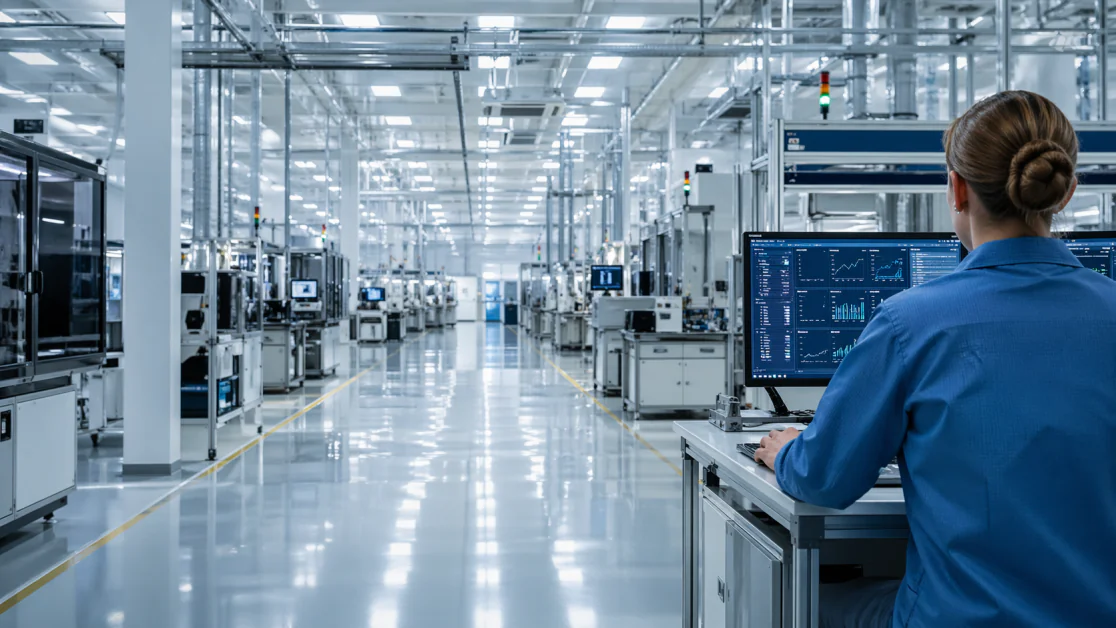
Global manufacturer Flex and automation leader Teradyne Robotics are deepening a long-standing relationship, moving beyond semiconductor test equipment into a broader push toward intelligent automation. The expanded collaboration reflects a wider industry shift. Manufacturers are no longer just experimenting with robotics. They are integrating it directly into core operations at scale.
At the center of this move is a dual-role strategy. Flex will not only manufacture key robotics components for Teradyne Robotics but will also deploy those same systems across its own global production footprint. That feedback loop, building and using the technology at the same time, allows both companies to validate automation systems in real-world conditions before scaling them globally.
From Semiconductor Roots to Factory-Wide Automation
The partnership builds on more than two decades of collaboration tied to semiconductor test equipment. Parent company Teradyne, Inc. (TER ) has long been a major supplier of automated test systems used in chip manufacturing, where precision, throughput, and reliability are essential.
What is changing now is the scope. Instead of focusing only on testing infrastructure, the collaboration now extends into factory operations. Flex, with manufacturing operations across more than 30 countries, provides a live environment where robotics systems can be deployed, refined, and standardized across different geographies and production lines.
This evolution reflects a broader trend in manufacturing. Production, testing, and logistics are increasingly merging into unified, software-driven systems that can adapt quickly to shifting demand.
The Technology Behind the Collaboration
Teradyne Robotics operates through two core platforms: Universal Robots and Mobile Industrial Robots.
Universal Robots focuses on collaborative robots, often called cobots, designed to work alongside human operators. Unlike traditional industrial robots that are isolated behind safety cages, cobots are built for flexibility and ease of use. They can be reprogrammed quickly for new tasks, making them well suited for production environments that change frequently.
Mobile Industrial Robots develops autonomous mobile robots, or AMRs, that handle internal logistics such as transporting materials between workstations. These machines rely on sensors, mapping systems, and real-time navigation software to move safely through dynamic factory environments without fixed infrastructure like conveyor belts.
Together, cobots and AMRs enable a more adaptive production model. Instead of rigid assembly lines, factories can operate as modular systems where machines and people collaborate dynamically.
The Rise of Physical AI in Manufacturing
A key element of this partnership is the integration of physical AI into robotics systems. Physical AI refers to artificial intelligence that interacts directly with the physical world through sensors, movement, and real-time decision-making.
In practical terms, this means robots that can adjust to variability. A cobot might change its grip based on the shape of an object, while an AMR can reroute itself instantly when encountering obstacles. These capabilities rely on advances in computer vision, machine learning, and edge computing, allowing decisions to be made locally without relying entirely on cloud systems.
By combining Flex’s large-scale manufacturing environments with Teradyne Robotics’ platforms, both companies gain access to continuous operational data. That data can be used to refine algorithms, improve performance, and accelerate the rollout of more intelligent systems.
Why This Matters for Global Manufacturing
Manufacturing is under increasing pressure from several directions. Labor shortages, supply chain disruptions, and rising complexity in electronics and data center infrastructure are forcing companies to rethink how factories operate.
Automation offers a path forward, but only if it is flexible and scalable. Traditional automation systems often require significant upfront investment and are difficult to modify once installed. The approach taken by Flex and Teradyne Robotics focuses instead on adaptability. Systems can be deployed incrementally, tested in real environments, and then replicated across facilities.
Flex also brings expertise in power and thermal management, which is becoming increasingly important as factories adopt more advanced computing and robotics systems. This is especially relevant in the context of AI-driven manufacturing, where processing demands continue to grow.
A Feedback Loop That Accelerates Adoption
One of the more interesting aspects of this partnership is the continuous feedback loop between manufacturing and deployment. Flex builds components for Teradyne Robotics systems while simultaneously using those systems in its own facilities.
This creates a cycle where real-world performance data feeds directly into product improvements. Successful automation workflows can then be standardized and rolled out across other sites more quickly.
For Teradyne Robotics, this provides a scalable validation environment. For Flex, it offers a way to continuously optimize operations while staying at the forefront of automation technology.
A Broader Shift Toward Intelligent Factories
The expanded collaboration points to a larger transformation taking place across global manufacturing. Factories are evolving into intelligent systems where hardware, software, and data are tightly integrated.
Rather than static production lines, the future factory is dynamic. Machines adjust to new tasks, logistics systems reroute in real time, and production can scale up or down without major reconfiguration.
By combining manufacturing scale with advanced robotics and AI, Flex and Teradyne Robotics are positioning themselves within this transition. Their partnership highlights how industrial players are moving beyond isolated automation projects toward fully integrated, intelligent production environments.



