
Funding
AIVC Launches With $112 Million to Turn Enterprise AI Projects Into Companies
AIVC plans to use most of its $112 million in strategic backing for a venture studio that builds companies around problems its enterprise teams have already worked on.

 Add Unite.AI to your preferred sources on Google
Key PointsAIVC bets that client work reveals viable products better than starting with an idea.
View more
- AIVC bets that client work reveals viable products better than starting with an idea.
- Turning one client's AI system into a product requires separating reusable software from local assumptions.
- AIVC's $1 billion enterprise value estimate is a projection rather than verified revenue.
AI Value Creation, or AIVC, emerged from stealth on November 23 with $112 million in strategic backing. A family office anchored the investment and members of AIVC’s leadership team participated, according to the company’s Business Wire announcement. Most of the new capital will go to its venture studio, which aims to form three to five independent companies a year. AIVC did not identify the family office or disclose a valuation.
Founder and CEO RC Willenbrock previously led the AI-in-private-equity practice at Boston Consulting Group. David Sukhin, formerly head of AI at Citadel, leads the studio. The pair is betting that working inside existing businesses gives AIVC a better starting point for finding viable new products than asking a studio team to start with an idea and look for buyers later.
How AIVC Plans to Turn Client Work Into Products
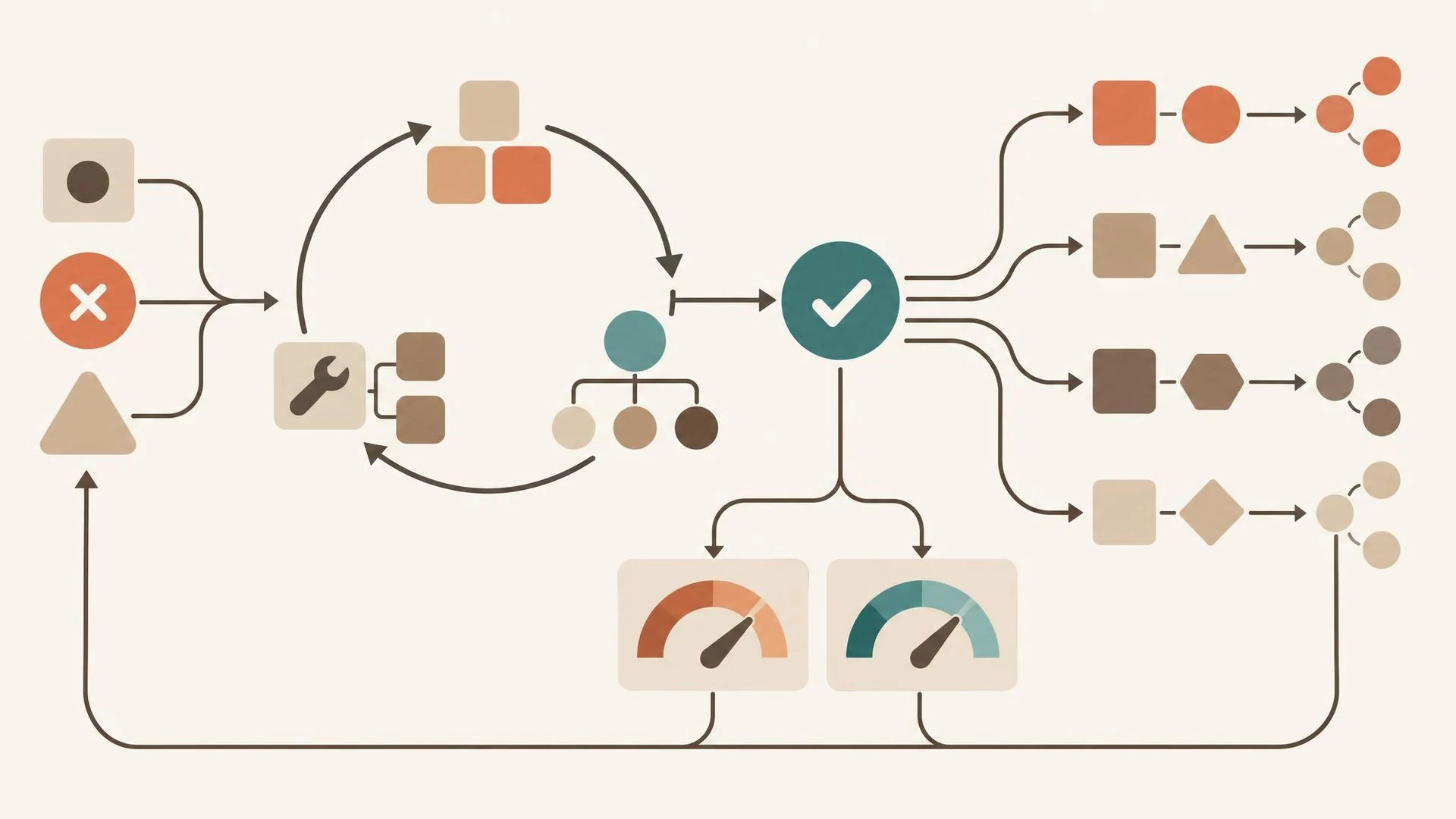
The company’s operating model separates the work into four parts: change how a client operates; develop reusable technology from those projects; build independent companies around the strongest opportunities; and participate in the value they generate over time. The studio therefore starts downstream of the work AIVC does for clients. Its job is to decide whether an observed problem is common enough to justify a separate company.
That distinction matters technically. An AI system that works inside one business may rely on that company’s documents, integrations, approval steps and staff knowledge. For it to become a product, engineers have to separate reusable software from those local assumptions. A workflow that helps one operations team, for example, might be worth adapting elsewhere if it can work across different sets of records and business rules. Ease of installation, evaluation against a baseline and a clear route for people to handle exceptions matter as much as the model behind it. This is the implementation challenge the model faces, not a claim that AIVC has shipped any particular architecture.
AIVC’s published manifesto argues that speeding up routine work is only the first step. A business also has to decide how to use the time freed up: serving more customers, doing work that previously sat in a backlog, or improving the quality of an existing service. That creates a different test from measuring the number of people using an AI tool. It also makes the starting baseline important, since a team cannot credibly measure a gain without knowing how the workflow performed before the change.
What the $112 Million Will Test
Other measures would make early results more useful: how long a deployment takes, whether time savings persist once the project team leaves, and how much of the original system can run at another customer without rebuilding it.
AIVC says it intends to link its own returns to the value created, but the launch did not specify commercial arrangements for individual clients. Its estimate that existing engagements are on pace to create more than $1 billion in enterprise value is a company projection, not booked revenue, cash proceeds or an independently verified return. Nor did the announcement name the studio’s first companies or disclose how many of the current engagements will translate into products.
The funding puts most of the financial weight behind that translation. AIVC will need to show that results observed with one client survive a second implementation without requiring the same amount of custom work. If they do, the studio can start with demand it has already seen. If not, it may still have a useful consulting business, but the path to several independent companies a year will be harder to prove.



