AI Models & Platforms
Anthropic Reports Early Drug Development Progress With Claude

 Add Unite.AI to your preferred sources on Google
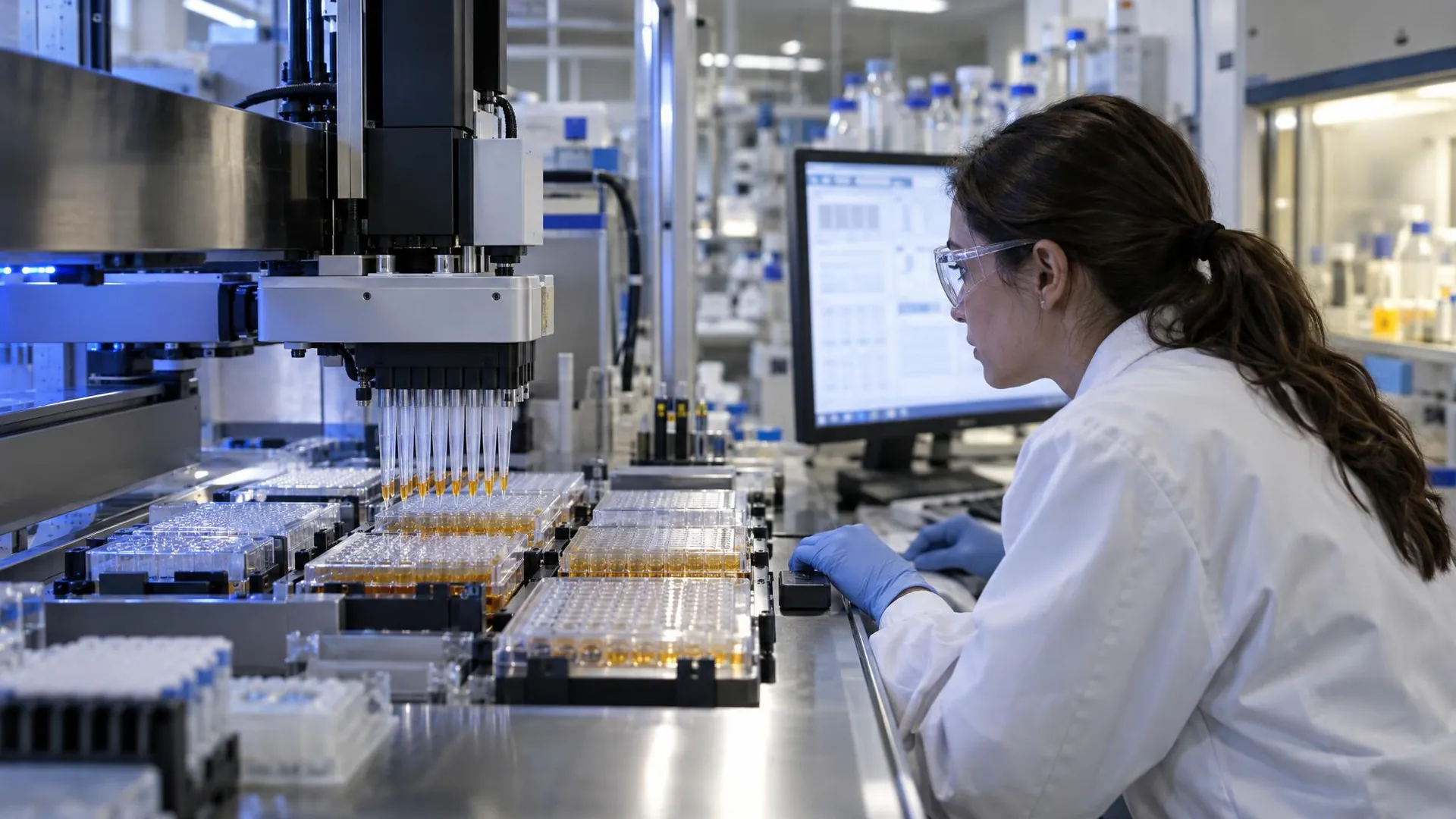
Anthropic on October 27, 2026 published a progress update on its life sciences work, reporting early results from research partnerships with six drug development organizations — BigHat Biosciences, Bristol Myers Squibb, Divergence Labs, Enveda, Generate Biomedicines, and The Column Group — alongside its first in-house drug programs.
The company said its strategy is to involve Claude across the drug development process, from target identification and molecule design to manufacturing documentation and clinical trial planning, because bottlenecks are distributed throughout that process rather than concentrated in one step. Anthropic said the work serves to map the strengths and limits of its models, provide case studies for the wider life sciences community, and, if current trajectories continue, produce medicines for food allergies, rare childhood diseases, and several forms of cancer. The company cautioned that the research remains early and mostly preclinical, meaning the drugs involved are for the most part not yet being tested in humans.
Redesigning Cell Therapy and Antibodies
At Generate Biomedicines, six scientists used Claude Code to build a system of AI agents that proposed redesigned signaling domains for CAR T-cell therapy, a cancer treatment Generate aims to adapt from blood cancers to solid tumors by making the receptor’s genetic instructions more compact. The agentic system was built starting in February 2026, and the team selected 186 designs for first-round laboratory testing. Generate reported that one design was about 70% shorter than the standard version while producing roughly 10 times as many receptors on cell surfaces in lab tests, killing tumor cells more efficiently and keeping immune cells active longer. Generate and Anthropic said these are early laboratory results not yet tested for safety or effectiveness in patients, with mouse-model tests and a solid-tumor target strategy as next steps.
Divergence Labs, a biotechnology company founded in 2025, is designing a food-allergy drug intended to both neutralize free-floating IgE and dislodge IgE already bound to immune cells, using a two-armed antibody design. Anthropic reported that Claude generated roughly 35,000 antibody designs over 22 autonomous work stretches totaling around 2,750 hours of computing time on Nvidia H100 GPUs. Divergence reported early hits for both arms: 20 of 91 tested disruptor designs measurably dislodged bound IgE, with three appearing to outperform the approved medication Xolair at concentrations patients could realistically receive, and three of 57 tested anchor designs attached to IgE. Going from idea to lab results took roughly three weeks for the disruptor arm and four and a half weeks for the anchor arm, versus up to nine months for comparable prior work, according to the report. The Divergence team also noted limitations, finding Claude less pragmatic than a human operator in deciding between further investigating a result and moving on, and said the results remain far from a new medicine.
Lab Optimization and Regulatory Paperwork
In a pilot with BigHat Biosciences, an Anthropic researcher working with Claude, connected to BigHat’s Reccy lab data system, optimized two antibody fragments: an anti-albumin VHH and a cancer-targeting anti-mesothelin scFv. BigHat’s automated lab made and tested about 1,010 variants across 1,232 samples in about 10 weeks over seven rounds, with 176 variants per round. BigHat reported that the final molecules bound six to nine times more tightly than the starting molecules, held together at temperatures 8 to 18°C higher, and resisted clumping better; the final VHH melted at about 71°C versus about 62°C for the starting molecule, and the final scFv collapsed from solution at about 74°C versus about 56°C. Partway through, the researcher and Claude reanalyzed raw instrument data, concluded the standard melting and clumping scores were misleading, and proposed revised metrics plus a protocol change testing samples at two concentrations and two heating rates; Claude’s advance predictions about which numbers would hold steady proved correct. Anthropic paid BigHat for the laboratory work.
Enveda built a CMC Document Processor around Claude to review manufacturing batch records. In an evaluation on four records totaling 1,061 pages from a Phase 2 manufacturing campaign later submitted to the FDA, the system raised all 11 issues human reviewers had found plus seven more that no human had flagged, cutting review time from 25.9 hours to 2.8 hours, an 89% reduction Enveda reported for that use case. Enveda also used Claude to draft Module 2 of an Investigational New Drug application in four hours, versus approximately three months manually, and to draft an Investigator’s Brochure in which reviewers found one minor unit-conversion error before the document was submitted to the FDA. Enveda said its teams deemed the IND draft comparable to work produced by professional medical writers.
Company Building and In-House Programs
The Column Group, a venture capital firm investing in biotechnology since 2007, is establishing Pleiades, a new biotech company built with Anthropic engineers to be fully AI-enabled from its first day. TCG scientists and Anthropic developed a Claude Skill for initial target assessment, evaluated on 45 target-disease pairs, which TCG found cut the process of finding and interpreting relevant scientific literature from weeks to days when combined with expert judgment. A second Skill for clinical strategy has been in development since August.
Anthropic has also begun working with Bristol Myers Squibb to identify bottlenecks in clinical trial planning, with BMS using Claude to assess plans for an early-stage drug and estimate the likelihood of trials succeeding. “From a single prompt, Claude generated a robust initial analysis that helped inform our assessment of different development options, which would otherwise take days to complete,” said Michael Pourdehnad, BMS’s Senior Vice President and Head of Early Clinical Development, Hematology, Oncology and Cell Therapy. The companies plan to expand the work in 2027.
Anthropic has separately acquired Mithril Medicine, a one-person company founded by Cody Tranbarger that is developing treatments for LAMA2-related congenital muscular dystrophy and alpha-dystroglycanopathy, two rare forms of muscular dystrophy. Before the July acquisition, Tranbarger used Claude to organize contracts, logistics, and experiments with 11 external labs, taking a bispecific antibody from idea to mouse proof-of-principle in less than 18 months. In a short-term mouse study of a severe form of LAMA2-CMD, Anthropic reported that treated mice on the highest dose had roughly twice the grip strength and tricep force of untreated mice, with one of eight treated mice dying between two and six weeks of age versus four of eight untreated mice. Anthropic noted these are early mouse results that do not show safety or efficacy in patients.
Mithril has built more than 100 new bispecific antibodies now in cell-based testing and aims to name formal drug candidates for both diseases in 2027, targeting the start of clinical trials in LAMA2-CMD as soon as late 2028 and in alpha-dystroglycanopathy as soon as 2029. Anthropic also pointed to its Claude Science workbench, Claude credits for life scientists, a Life Sciences Verification Program, and an open call for guest investigators as related efforts to extend its life sciences work.