Interviews
Olga Beregovaya, VP of AI at Smartling – Interview Series

 Add Unite.AI to your preferred sources on Google

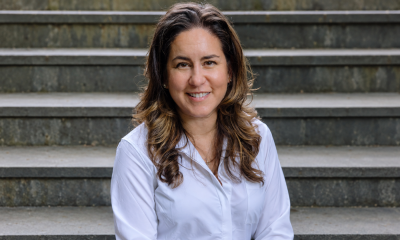
Olga Beregovaya is Vice President of AI at Smartling, where she leads AI strategy across translation, data, quality, and safety. She has worked in natural language processing since 1997, spanning rule-based systems, statistical models, neural networks, and large language models. Before joining Smartling, she served as VP of AI Innovation at Welocalize and CEO of PROMT Americas.
Smartling provides enterprise translation and localization software and services, combining AI and machine translation with human expertise. Its platform supports multilingual workflows for websites, applications, marketing, documents, and multimedia, with access to more than 20 LLMs and machine translation engines. In this interview, Beregovaya discusses the multilingual AI divide, translation quality, model selection, and the role of human oversight in automated localization.
How has that journey shaped the way you think about AI’s role in language, and what drew you to lead AI strategy at Smartling?
I studied how languages are structured and how language families work. That taught me that translation is about structure and meaning, not word-for-word substitution. I think about AI the same way.
I started working in natural language processing in 1997, when systems were built on hand-written rules. Since then, I’ve worked through statistical models, neural networks and today’s large language models. Each solved some problems and created others. I don’t believe any one model is the answer.
I joined Smartling because it was built to translate every kind of enterprise content, from websites and apps to legal documents, marketing and video. I started as VP of Machine Translation, but the role quickly expanded beyond translation into prompting, data, quality and safety. So the title became VP of AI.
What does that divide look like in practice, and why could it become more consequential as generative AI becomes a primary interface?
The divide used to be simple: either an AI system supported your language or it didn’t. That question is mostly settled now, but the divide has changed shape. What matters now is how well the model’s training data represents that language, its speakers and its culture. Most model training data is in English, so it carries English-speaking assumptions with it. A translation can be technically accurate and still impose an English-speaking perspective on another language.
AI is becoming the way people interact with banks, doctors, schools and other essential services. A language AI handles well gives you an advantage, and a language it handles poorly puts you at a disadvantage.
What surprised you most, and what explains cases where Swedish outperforms Hindi despite far fewer speakers?
Speaker count is a surprisingly poor indicator of translation quality. Swedish, with about 10 million speakers, produced some of the best results. Hindi, with about 600 million speakers, was among the weakest, along with Estonian and Thai.
Language structure and data quality matter much more. Swedish has relatively simple grammar and plenty of clean training data. Estonian constantly changes word endings to convey meaning, which creates more complexity for AI to handle. Hindi has hundreds of millions of speakers, but far less high-quality, varied training data than you might expect from its speaker count.
The other surprise was that progress wasn’t the same from lab to lab. Languages that started out weaker usually improved the most from one model generation to the next, but that pattern doesn’t always hold true.
Beyond the volume of training data, what factors most affect model performance?
Tokenization is one of the biggest factors. It’s how a model breaks text into pieces before processing it, which is especially important for languages that don’t use the Latin alphabet. Poor tokenization limits everything that follows.
Language structure counts too. Languages with complex word endings can be harder for models to handle. Or, for example, German stacks words together until a single word can run 40 characters, which places greater demands on a model than languages like Spanish or French.
Then there’s data quality. Bad data produces bad results. The accuracy, variation and representation of data is incredibly critical for AI translation performance.
And finally, measurement. We use TER, BLEU, CHRF3 and MetricX, and compare results with trusted human translations. A model can sound natural while getting the meaning wrong.
What responsibility do frontier labs have, and what would meaningful progress look like?
Frontier labs have the most responsibility because they control the most advanced language models. Their choices can either widen the divide or help narrow it. However, translation often competes with reasoning, coding and safety for attention, so few labs have dedicated teams focused on it.
Three things would make a meaningful difference:
- Build high-quality data across more languages and subjects.
- Improve tokenization for languages where current approaches fall short.
- And measure every new model against languages with less training data, not just the biggest languages.
A major opportunity is building training data for languages that have very little representation online. Much of that work happens outside the big labs. We work with groups like the African Language Lab to build data for African languages.
How does Smartling determine which of its 20-plus engines fits a given language, content type, or use case?
We test them instead of assuming one model is best. Every model is evaluated against trusted human translations using TER, BLEU, CHRF3 and MetricX. A customer can give us its marketing content, and within about a week we can show how each model performs by language and subject. The best model for Latin American Spanish marketing may not be the best model for another language or for sensitive content.
We also factor in risk. Lower-risk user content can go through a lighter review process. Regulated or brand-critical content gets more reviews and usually a human check. Because models can be added or removed as performance changes, we aren’t locked into one provider.
Where do specialized translation systems still outperform general-purpose LLMs, and how will the two converge?
Specialized machine translation still wins when predictability matters most. It is especially useful for sensitive content and certain languages. LLMs produce more natural writing, but they can also hallucinate with confidence.
At Smartling, we combine the two. A specialized translation model produces the first draft using the customer’s terminology and domain data. An LLM then edits it, restoring approved terminology, applying matches from previous translations and improving the writing.
The model is becoming just one part of the system. Now, prompting, data, customization and safety controls matter just as much.
What are the biggest risks enterprises should consider when using generative AI for multilingual content?
Hallucinations, hands down. My favorite illustration is someone asking an AI whether a mushroom is poisonous. It answers no with complete confidence, and the person’s tombstone proves it wrong. In translation, this shows up as writing that sounds perfect while getting the facts wrong, and that risk can be higher in languages with less training data.
Then there’s cultural and regulatory context. A translation can be technically correct and still be wrong for the market. German and Japanese, for example, require levels of formality that English doesn’t. Chinese advertising rules also restrict claims such as “the best.”
Consistency is another one. At scale, generic AI tools can create inconsistent terminology and brand voice. One executive told me his company has 300,000 employees and, thanks to generic AI, 300,000 different voices.
And the stakes can be physical. If a safety instruction about pulling a lever is mistranslated, a crane can fall on a construction site.
What does an AI agent look like in localization, and how much can become autonomous with human oversight?
An AI agent is one step in a localization workflow. One model translates, while another reviews, checks for hallucinations, restores approved terminology and adapts the content for the market. A quality check then decides whether it can publish, needs a quick human review or needs a full review.
How much can be automated depends on the risk. Much of our lower-risk work is already fully automated, but sensitive and regulated content still requires humans.
Full automation isn’t always the goal, because models need human feedback to improve. The goal is to reduce the human workload without removing human judgment.
In five years, will the gap narrow or widen, and what would make AI genuinely multilingual at global scale?
It could go either way. Languages that started out weakest are improving fastest, and more organizations are collecting data for languages with little online content, including spoken-language data.
But the divide is changing shape. AI can handle a language well while still importing English-speaking assumptions from its training data.
Genuine multilingual AI requires a different approach. That could mean smaller models tailored to specific languages and subjects, rather than one general model expected to do everything. It means more varied data across languages and domains. Better tokenization for languages where current approaches fall short. And synthetic data, plus transferring what a model learns from one language to related ones, so improvements aren’t limited to the languages with the most data.
The technology exists, but the question is whether the companies building these models make multilingual performance a priority.
Thank you for the great interview, readers who wish to explore AI translation, multilingual quality evaluation, and localization workflows with human oversight should visit Smartling.