Interviews
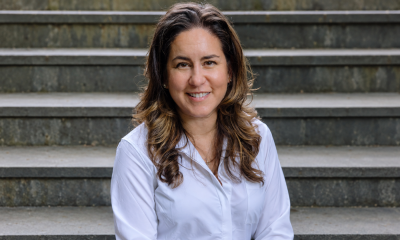
Will Bodewes, Co-Founder and CEO of Phonely – Interview Series

 Add Unite.AI to your preferred sources on Google

Will Bodewes is the Co-Founder and CEO of Phonely, a voice AI company focused on helping businesses answer calls and improve the outcomes of customer conversations. Before starting the company, he pursued a PhD at the University of Melbourne, researching applied artificial intelligence and systems that could follow instructions while communicating naturally. He previously founded an audio-technology startup and competed in NCAA cross-country skiing and ultra-endurance cycling. At Phonely, he brings that research background to the practical challenges of deploying voice agents, including conversational reliability, latency, integrations, and the continuous optimization of bookings, sales, and customer-service workflows.
Phonely is an AI voice-agent platform that enables businesses to automate phone conversations, schedule appointments, qualify leads, route calls, and connect customer interactions with existing software. Its tools combine customizable conversation workflows with call histories, analytics, and A/B testing so teams can measure performance and improve results over time. The company serves organizations ranging from small businesses to large enterprises and says it supports more than 10,000 businesses and handles over 120,000 calls per day. Phonely also develops its own conversational models, including Alma, with a focus on making automated calls faster, more reliable, and better suited to real-world business conversations.
You began building Phonely while pursuing a PhD in AI at the University of Melbourne, with an early focus on creating systems that could follow instructions while communicating naturally. What convinced you that voice AI had reached the point where it could support a standalone company, and what did you see in the market that others were missing?
There was no proof of voice AI being able to support a standalone company at the time. There were a couple of companies working on it that had around five or 10 users, but no one had successfully deployed voice AI that wasn’t an IVR system. So when we started Phonely, it was a bet. At the time, everything was focused on chat, so voice was a new medium. It was a problem that wasn’t solved, so we thought, “Why not go after it? Why not try to solve it?”
Your PhD research began with the goal of creating an AI that could “follow instructions like a robot and talk like a person.” What technical breakthroughs made you realize that this research could become the foundation for a commercial voice AI platform?
The research was valuable and important for understanding the fundamental technology of what was happening. It allowed me to see around the curve and see what was coming up in the pipeline. I had the technical understanding of what these models were and how they worked, and that gave me the ability to make a bet. Specifically, I wanted to build a company and make an impact, and this was the area most related to what I knew about and could see coming. I wanted to be a part of that.
You’ve described every phone call as a funnel that businesses historically haven’t been able to systematically optimize. What does optimizing a phone conversation actually look like, and how can AI improve conversion, resolution rates, or customer experience over time?
Let’s say you’re scheduling an appointment with a plumber. The person on the phone is trained to collect your details and schedule the appointment, but depending on how they ask the questions, they may be able to teach you about things you didn’t know were part of that business. So you might schedule an appointment for your plumbing issue, and it turns out you also needed to fix your sink. A voice AI agent that’s trained really well does the same thing and helps the business upsell customers and generate more money. It could upsell a product that a new receptionist wasn’t trained on and add another ticket to the order, making the customer happier and creating a better business outcome. A simple ChatGPT voice doesn’t know how to do that. You need a product that’s built and trained for it.
On top of that, humans can miss calls, may not answer the phone or may send calls to voicemail. That kills small businesses in America. They don’t have people answering the phone, lack consistent quality and have no way of optimizing it. With AI, if a call doesn’t get the outcome a business wants, we can optimize it with the data we have. Because of AI’s speed, we can change the conversation, which couldn’t happen nearly as fast with humans.
Right now, everyone looks at AI for cost savings. But we think people should look at AI as growth. Businesses can actually grow by adopting AI, enabling them to perform better than they did before.
Voice AI has to solve challenges that text-based AI can often avoid, including latency, interruptions, accents, background noise, emotional cues, and unpredictable conversations. Which of these problems has been the hardest to solve reliably at enterprise scale?
Latency is the biggest one. We solved the problem now, but in the early days, it was a huge headache for two reasons.
First, we were building on top of startups that weren’t reliable. A significant portion of API requests to OpenAI would fail, and we wouldn’t get a response back. If you’re on the phone, that’s the same thing as hanging up, so we had to build retries around that.
The second was capacity. When you sent a request to OpenAI, you’d get stuck in a queue behind hundreds or thousands of other requests, and you didn’t know where you’d be in that queue. It could take 30 seconds to come back. To get around it, we looked at where OpenAI had endpoints around the world and switched which endpoints we hit based on which countries were sleeping and had low demand. We had to build all this infrastructure just to find the endpoints with the lowest demand at that moment. It was a pretty interesting technical problem. Now, we train our own models, including Alma, so we don’t have to worry about that, because we manage the compute and the demand.
Phonely now handles more than 120,000 calls per day across thousands of businesses. What have you learned from operating voice agents at that scale that wasn’t obvious when you were building the first version of the platform?
It’s really important to be up 100% of the time. One of the toughest engineering challenges we’ve been solving is reliability and speed. The AI space is moving incredibly fast, and we’re moving fast even for an AI company. There’s a saying at Y Combinator: Move fast and break things. But when you have customers making 120,000 calls a day, you can’t afford to break things. So a lot of our process was figuring out how to ship with the velocity we need to stay relevant and iterate on the product, while keeping enterprise customers happy and stable as we keep building new features to stay ahead in the market. The reliability piece was probably one of the biggest challenges we dealt with when building the company.
Generative AI systems can behave unpredictably, but a customer-facing phone agent may be handling payments, bookings, healthcare questions, or other high-stakes interactions. How do you design voice agents that remain flexible and conversational without hallucinating or acting outside their authorized boundaries?
We figured this out the hard way about two years ago, and now, it’s pretty widely adopted across the industry. We realized the biggest issue with LLMs is context. When you put too much into a prompt, like pages of instructions, the chances of something going wrong increases.
So we designed an eight-agent orchestration system that transfers from one agent to another, with each agent having localized context. It’s similar to how a human follows a script on a call: You get some information, you move on to the next stage and so forth. That lets us separate the steps at the code level. If I needed to gather your name, email, phone number and date of birth before giving you a refund, I could guarantee that information was gathered at the code level before moving on. You can’t guarantee that if you just rely on an LLM. By building this agent orchestration layer, you can get reliability to 100%, because all the steps are captured before transferring to a new agent that still has context but is isolated to its own instructions.
One Phonely deployment reportedly generated $10 million in net-new revenue for a customer in just three months. What allowed AI to create that level of measurable business impact, and where do you see voice AI producing the strongest ROI today?
We could do that because we had the customer’s metrics. They were optimizing for sales since they were inbound calls, and they were qualifying callers, so we could track the output. Depending on the day, their call center was doing about a 35% to 42% sell rate. After getting that information from the customer, we took their flows and optimized the agent. We started at about a 20% sell rate. The following months, we iterated, tweaked things and optimized to the point where we were outperforming their call center in the majority of cases. Our sell rate kept increasing because we figured out the issues and made sure the experience was consistent and perfect every single time. We were able to outperform a call center.
As voice agents become more capable, where should businesses draw the line between conversations that can be fully automated and situations where a human should remain involved?
Businesses should be able to automate anything that’s a repeatable process they want followed, and that’s defined well enough.
But automation becomes challenging in a few areas. One is integrations without APIs: Let’s say you need an integration, but that software doesn’t have an API. That’s difficult to get around, though there are some browser automations you can do. Another is when there are multiple handoffs that go from an agent to a human and back to an agent. The third is context gaps. Say I left my wallet at a restaurant. That’s something AI is never going to be able to solve, because it doesn’t know if you have your wallet, and it can’t go check whether the wallet is at the restaurant.
Some situations will always need a human, along with more complicated work that threads across multiple systems. Avoid using an agent for those.
Phonely recently raised a $16 million Series A after growing to more than 10,000 businesses. What does the next stage of the company look like, and which technical capabilities do you believe will differentiate the next generation of voice AI platforms?
The next stage is building out the team and continuing to invest in it. We’re going all in on this idea. A lot of businesses are venturing into voice AI, and they’ll probably do it decently in different areas. But for us, we’re not just building a voice agent. We’re building an optimization platform, and we’re using voice as a channel. For businesses that care about leads and their phones generating revenue, our whole focus is optimizing AI agents to accomplish the outcomes customers want. Think of Phonely as an optimization company, where people want to optimize their agents to do better.
Your academic research has also explored using AI and smart-meter technology to expand energy access and clean cooking in developing economies. Looking beyond Phonely, how do you see AI being applied to large physical-world problems such as energy access, and is that an area you ultimately hope to return to?
There’s a lot of good that can be done with AI, but a lot of problems that exist are people-inflicted, so there needs to be change from that side. All problems can’t be solved with technology. But allowing technology and human change to happen simultaneously is what will be net positive for the world.
Thank you for the great interview, readers who wish to learn more should visit Phonely.