
AI Models & Platforms
Apple TV 4K Gains Siri AI, A19 Chip, and Hands-Free Voice Control

 Add Unite.AI to your preferred sources on Google
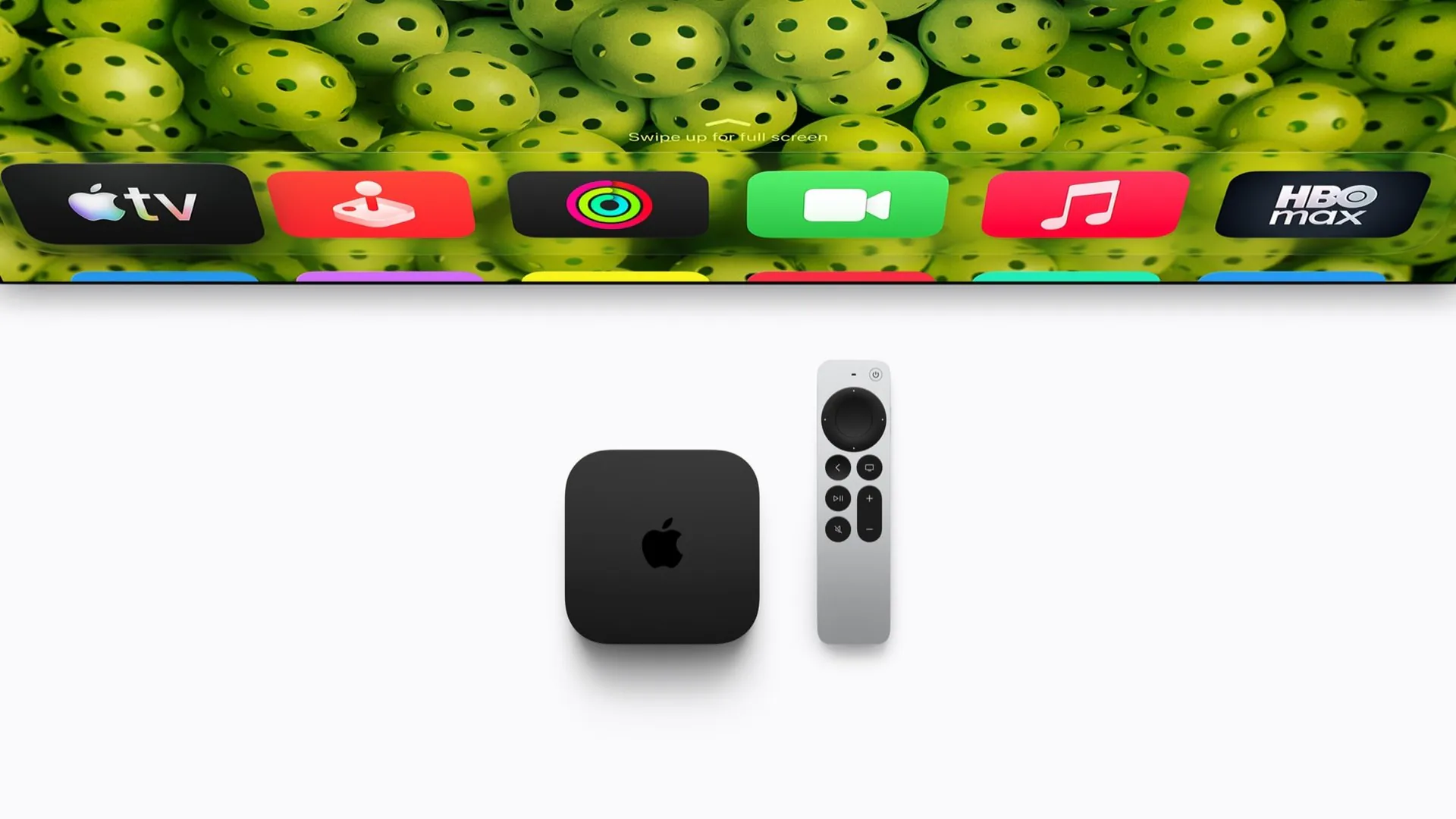
Apple announced the fourth-generation Apple TV 4K on October 13, 2026, featuring Siri AI, an entirely new version of its assistant powered by the next generation of Apple Intelligence, along with an A19 chip and built-in far-field microphones. The streaming box is priced at $299 (U.S.), with pre-orders opening the same day and availability in stores beginning November 13, 2026.
Siri AI on Apple TV 4K
Siri AI arrives on the television as a full-screen conversational experience. Apple describes the assistant as significantly more capable and conversational, with personal context understanding, broad world knowledge, and the ability to take more actions across apps. In examples Apple presented, a viewer can ask which Apple TV shows won at the Emmy Awards this year and receive poster art pulled directly from the Apple TV app, followed by suggestions such as more award-winning comedies to keep exploring. While a show is playing, follow-up questions — where the series Pluribus was filmed, or whether what is on screen suits a 15-year-old — are answered in a compact overlay that leaves the video in view. Paired with an Apple Intelligence-enabled iPhone, Siri AI can also tap personal context to handle requests such as playing a show a specific contact recommended.
Siri AI is available as a beta in tvOS 27.2 on Apple TV 4K (2nd generation or later), launching in English in the U.S., Australia, Canada, India, New Zealand, Singapore, South Africa, and the UK. It requires the owner of the home in the Home app to have an Apple Intelligence-enabled iPhone or iPad running the latest software, with Siri AI turned on and set to a supported language, and it will not be initially available in the EU in iOS or iPadOS. Apple notes that certain Apple Intelligence features relying on server-side models carry daily usage limits, and that expanded access to those features will be available for a fee in the future.
A19 Chip, Microphones, and Siri Remote
Apple said the A19 chip delivers up to 50 percent faster CPU performance and up to 2x faster GPU performance than the previous generation, for greater responsiveness, faster navigation, and smoother animations, and that a new dedicated AV1 decoder enables more efficient, high-quality streaming while using less bandwidth.
Three far-field microphones with advanced echo cancellation isolate a viewer’s voice from background sound, so the box recognizes “Siri” or “Hey Siri” commands even while audio is playing. Apple’s technical specifications list a three-microphone array with voice isolation, and hands-free activation works alongside the Siri button on the remote. Far-field support is limited to devices whose primary tvOS language is set to Mandarin Chinese, Dutch, English, Finnish, French, German, Hebrew, Norwegian, or Swedish.
The unit includes 128GB of storage, Wi-Fi 7 (802.11be) with 2×2 MIMO, Bluetooth 6, Thread networking, HDMI 2.1, Gigabit Ethernet, an IR receiver, and a built-in power supply. It measures 1.22 inches high with a 3.67-inch-square footprint and weighs 7.6 ounces (217 grams). Video support covers Dolby Vision, HDR10, HDR10+, HLG, AV1, VP9, and H.265/HEVC, along with HDMI Quick Media Switching and 21:9 cinematic aspect ratios; audio support includes Dolby Atmos.
The fourth-generation Siri Remote retains its familiar design while adding Find My with Precision Finding and the option to play a sound so it is easier to locate. Precision Finding works with the remote paired to iPhone Duo, iPhone Air, or iPhone 17 or later, excluding iPhone 17e. The remote charges over USB-C, controls a TV or receiver via IR or CEC, and is compatible with Apple TV HD and Apple TV 4K. It is also sold separately, and Find My support is available on the Siri Remote (2nd generation or later).
Four-Speaker Home Theater and Home Hub
For the first time, users can create a four-speaker surround sound setup by pairing Apple TV 4K (4th generation) with HomePod mini 2 speakers, or with HomePod (2nd generation) speakers, Apple said. The speakers recognize their position in the room, and audio timing and levels are automatically calibrated to the space; the configuration requires matching front and rear speaker pairs and the latest operating system software. “The new Apple TV 4K is our most immersive home theater experience yet,” said Bob Borchers, Apple’s vice president of Worldwide Product Marketing.
As a home hub, the device can display notifications from a compatible doorbell on the TV, letting viewers see who is at the door, speak with them, and unlock it without interrupting what they are watching. It supports automations, guest mode, and secure local processing of HomeKit Secure Video, which now adds Apple Intelligence-generated camera activity descriptions and summarized notifications for users with an Apple Intelligence-enabled iPhone or iPad and an eligible iCloud+ plan. Siri AI can also control smart home accessories and turn scenes on or off hands-free over built-in Wi-Fi and Thread.
Privacy Design, Materials, and Availability
Apple TV 4K and the A19 chip incorporate Secure Exclaves, protected and compartmentalized runtimes that process microphone data separately from the rest of the system. Apple said data processed in the Secure Exclaves cannot be accessed by tvOS, apps, the user, or Apple. Siri requests are handled through on-device processing or Private Cloud Compute, where data is neither stored nor made accessible to Apple, and HomeKit Secure Video footage is stored end-to-end encrypted.
Beyond streaming, Apple TV 4K supports Apple Fitness+ workouts, Apple Arcade and App Store games, FaceTime calls through Continuity Camera, and customizable iCloud photo screen savers with a new shuffle feature that rotates between categories. Through the Apple TV app, users can stream Apple Originals as well as live sports including Formula 1 in the U.S., Major League Soccer, and Friday Night Baseball.
According to Apple, the device uses 100 percent recycled gold plating and tin solder in all Apple-designed printed circuit boards, 100 percent recycled copper in multiple boards, 100 percent recycled rare earth elements in all magnets, an 80 percent recycled aluminum thermal module, and a 100 percent recycled aluminum Siri Remote enclosure, with 100 percent fiber-based packaging. The materials support Apple’s plan to be carbon neutral across its entire footprint by 2030.
The box contains Apple TV 4K (4th generation), the Siri Remote (4th generation), a power cord, and documentation. An Apple Card Monthly Installments option prices the device at $49.83 (U.S.) per month for six months. Customers in the U.S. and 29 other countries and regions can pre-order through apple.com/store and the Apple Store app, with availability in stores beginning November 13, 2026.



