
Healthcare
Momentis Anovo Robot Gains FDA Clearance for Multiport Surgery

 Add Unite.AI to your preferred sources on Google
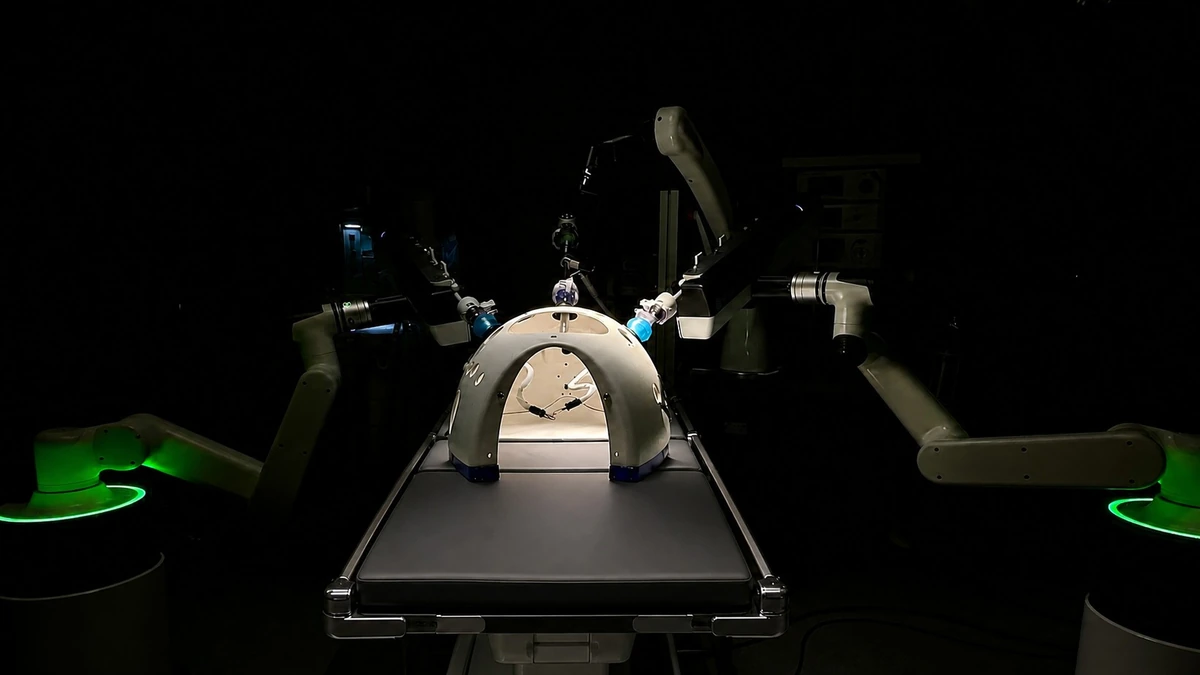
Momentis Surgical said on July 23, 2026 that the US Food and Drug Administration cleared its Anovo robot for multiport surgery, the conventional multi-incision technique that anchors most of the robotic-surgery market and the one access route the compact platform previously could not offer. With it, the company says Anovo can now handle all three minimally invasive approaches (through a natural body opening, through a single incision, and through several small ports) on one system, which it calls the first robotic platform to cover all three.
For a general surgeon, the clearance means the choice of a single-incision or a multiport route for ventral hernia repair; for a gynecologic surgeon, it adds a multiport option alongside the single-site and transvaginal approaches Anovo already had. Momentis’s chairman, Maurice Ferré, a co-founder of the orthopedic-robotics maker MAKO Surgical, framed it as letting surgeons pick the technique that fits each patient instead of committing a hospital to one access method when it buys a robot.
Why the instruments matter
Robotic surgery is organized around access, and the dominant approach is multiport: several separate incisions, each admitting a rigid, straight-shaft instrument carried on its own robotic arm. That is the model Intuitive Surgical’s (ISRG ) da Vinci systems established and still lead. Anovo takes a different mechanical route, using flexible instruments with internally articulated joints that Momentis describes as shoulder-, elbow-, and wrist-like, the “humanoid-shaped” design its Anovo Surgical System has carried since launch.
Putting those flexible instruments into a multiport procedure is the engineering point. A conventional straight instrument pivots around the incision, so moving its tip swings the arm through a wide arc outside the body; with several arms over one table, that motion is what drives bulky hardware and the risk of collisions. Anovo moves the point of articulation inside the patient, which the company says keeps external arm movement small while preserving a full range of motion at the surgical site. Momentis lists the control unit at about 13 pounds, and the console is open rather than an enclosed viewer, so the surgeon keeps a direct line of sight to the room.
Taking aim at da Vinci
Multiport is the first clearance that puts Anovo directly against da Vinci in the high-volume general and gynecologic procedures that make up the bulk of robotic caseloads. Until now Momentis worked the edges of that market. It won its first FDA authorization in 2021 through the De Novo route, reserved for devices so novel they have no existing equivalent, making Anovo (then sold as Hominis) the first robotic system the agency cleared for transvaginal surgery. In October 2024 it entered general surgery with a single-port ventral hernia indication, then weeks later added force feedback the surgeon can feel through a second-generation system.
One notable backer of that bet is Frederic Moll, the founder of da Vinci maker Intuitive Surgical, who sits on Momentis’s board. When Anovo reached general surgery, Moll said he believes “the future of soft tissue robotics is flexible instruments,” an unusual endorsement of a challenger’s architecture from the person who built the incumbent. Momentis’s own pitch rests on footprint and cost: a system small and cheap enough for an outpatient surgery center, not only a large hospital’s robotics suite, as more robotic procedures move to ambulatory sites. That compact, cost-first approach runs through much of the newer wave of surgical robotics, from single-port abdominal systems to endovascular platforms that thread catheters through blood vessels.
The adoption question
What Momentis has not put behind the pitch is numbers. The company says surgeons are shifting most of their benign gynecologic cases to Anovo from legacy robotic systems and that commercial uptake of the second-generation platform is strong, but it disclosed no installed base, procedure volume, or named-center counts to size that adoption. Momentis is privately held (its backers include Peregrine Ventures, OurCrowd, and Accelmed), so it reports none of the quarterly system-placement and utilization figures Intuitive publishes.
The clearance is also a capability, not a track record. Anovo is a teleoperated tool: a surgeon drives every motion from the console, and the multiport indication widens the procedures that surgeon can choose rather than adding any autonomy. The testable claim is narrower than the “three approaches” framing: whether a compact, lower-cost platform can win multiport volume against an incumbent with more than two decades in the market, and whether the surgeon adoption Momentis describes turns up as disclosed procedure counts rather than commentary.



