Python Libraries
10 Best Python Libraries for Natural Language Processing

 Add Unite.AI to your preferred sources on Google
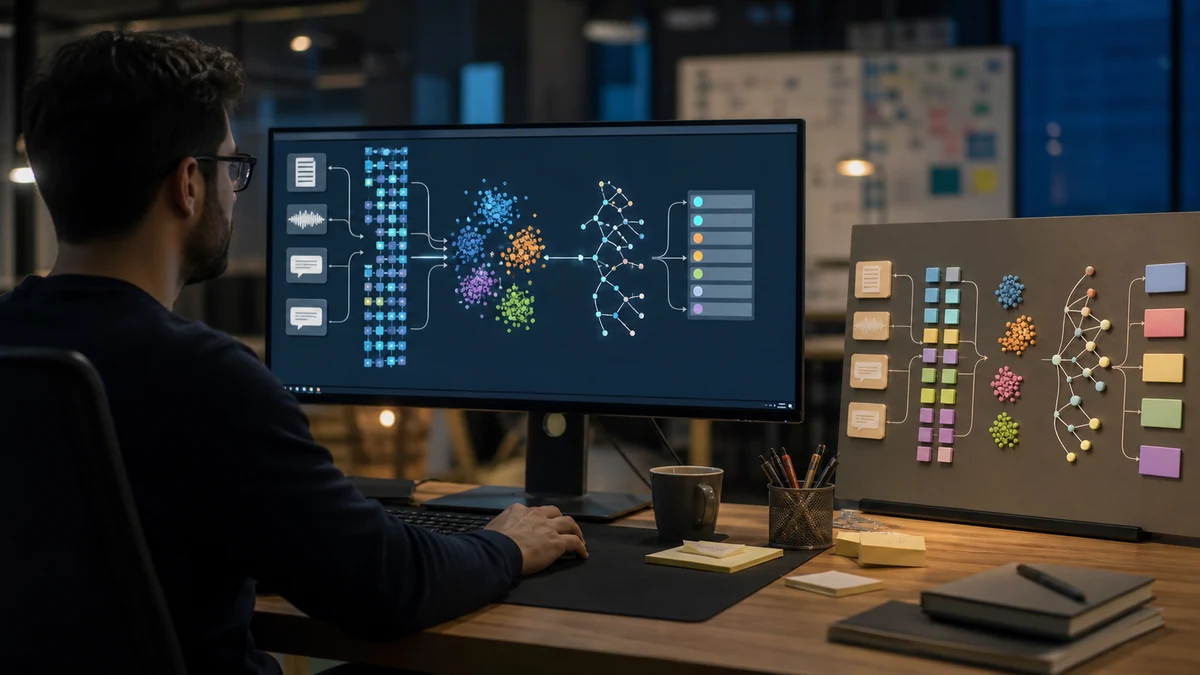
Python NLP now has two complementary layers: modern pretrained model libraries for contextual understanding and generation, and mature linguistic toolkits for tokenization, parsing, entities, rules, corpora, and classic statistical methods. The right library depends on whether the task is generative, retrieval-oriented, linguistically structured, or constrained by latency and compute.
Transformers ranks first because it provides the broadest access to current language models. spaCy is the best production pipeline framework, Sentence Transformers leads for embeddings and retrieval, and Stanza is the strongest choice for multilingual linguistic analysis. Older libraries such as NLTK and Gensim remain valuable where transparency, education, topic models, or classic embeddings are the actual requirement.
Last reviewed July 2026. Rankings reflect current maintenance, ecosystem adoption, documentation, capability, licensing, and fit for the stated use case.
| Rank | Library | Best for |
|---|---|---|
| 1 | Transformers | Pretrained transformer models for generation, classification, extraction, and multimodal NLP |
| 2 | spaCy | Fast production pipelines for tokenization, entities, rules, and custom NLP components |
| 3 | Sentence Transformers | Embeddings, semantic search, clustering, retrieval, and reranking |
| 4 | Stanza | Accurate multilingual linguistic analysis and Stanford CoreNLP access |
| 5 | NLTK | Education, corpora, classic NLP algorithms, and linguistic experimentation |
| 6 | Gensim | Topic modeling, Word2Vec/FastText training, and streaming semantic analysis |
| 7 | Flair | Flexible sequence labeling and embedding research |
| 8 | Tokenizers | Training and running fast subword tokenizers |
| 9 | Datasets | Loading, processing, streaming, and sharing NLP datasets |
| 10 | fastText | Compact word vectors and efficient supervised text classification |
1. Transformers
Transformers is the central Python library for loading, training, and running modern pretrained language models. It supports text generation, classification, question answering, summarization, translation, token classification, embeddings, and multimodal models across PyTorch, TensorFlow, and JAX ecosystems. Its value comes from both the library APIs and the enormous Hub—but users must evaluate each model card, license, language, and benchmark rather than assuming every checkpoint is interchangeable.
Best for: Pretrained transformer models for generation, classification, extraction, and multimodal NLP
- Strengths: Largest modern model ecosystem; standardized Auto classes and pipelines; training and inference tooling; broad hardware support
- Considerations: Model quality, safety, and licenses vary; large checkpoints demand substantial compute; APIs evolve faster than traditional NLP libraries
View Transformers Documentation
2. spaCy
spaCy combines industrial-strength tokenization and linguistic annotations with trainable components, transformer integration, rule systems, project templates, packaging, and deployment-oriented configuration. It is the strongest all-around choice for a production pipeline that mixes deterministic business rules with named entities, classification, parsing, or custom components.
Best for: Fast production pipelines for tokenization, entities, rules, and custom NLP components
- Strengths: Fast and production-focused; excellent pipeline composition; strong rule-based and trainable components; clear packaging and configuration
- Considerations: Language pipelines vary in coverage and size; generative NLP is not its focus; custom accuracy still depends on good training data
3. Sentence Transformers
Sentence Transformers provides models and training tools for text embeddings, sparse encoders, cross-encoder rerankers, semantic similarity, retrieval, clustering, and paraphrase mining. It is often the most direct library for retrieval-augmented generation, duplicate detection, recommendation, and semantic search because it exposes task-oriented embedding workflows rather than only raw transformer outputs.
Best for: Embeddings, semantic search, clustering, retrieval, and reranking
- Strengths: Purpose-built embedding and reranking APIs; efficient pretrained models; strong evaluation and training support; multilingual options
- Considerations: Not a full linguistic pipeline; vector databases and retrieval infrastructure remain separate; embedding quality is task and domain dependent
View Sentence Transformers Documentation
4. Stanza
Stanza supplies pretrained neural pipelines for tokenization, lemmatization, part-of-speech and morphology, dependency parsing, named entities, and selected sentiment and constituency tasks across many languages. It also provides the official Python client for Stanford CoreNLP. This makes it especially useful in research and multilingual projects that need rich, consistent linguistic annotations.
Best for: Accurate multilingual linguistic analysis and Stanford CoreNLP access
- Strengths: Broad multilingual linguistic coverage; Stanford-maintained models; deep syntactic analysis; CoreNLP integration
- Considerations: Heavier than lightweight tokenizers; model coverage differs by language and processor; not aimed at generative model workflows
5. NLTK
NLTK remains the most comprehensive teaching and experimentation toolkit for classic NLP. It includes tokenizers, stemmers, taggers, parsers, classifiers, lexical resources, corpora interfaces, metrics, and VADER sentiment. Its transparent implementations are excellent for learning and research prototypes, even though newer libraries are usually preferable for high-throughput production services.
Best for: Education, corpora, classic NLP algorithms, and linguistic experimentation
- Strengths: Exceptional educational breadth; many corpora and lexical resources; transparent classic algorithms; long-lived community
- Considerations: Not optimized for modern production throughput; resource downloads require setup; pretrained neural and generative workflows live elsewhere
6. Gensim
Gensim specializes in scalable unsupervised semantic modeling. It can train Word2Vec, FastText, LDA, LSI, and related models, stream corpora that do not fit in memory, and index documents for similarity. It remains a strong specialist tool when interpretable topic models or locally trained classic embeddings are more appropriate than a hosted or transformer-based model.
Best for: Topic modeling, Word2Vec/FastText training, and streaming semantic analysis
- Strengths: Efficient streaming corpora; mature topic-modeling tools; optimized classic embeddings; useful similarity indexes
- Considerations: Classic representations may underperform modern encoders on contextual tasks; API compatibility with scientific dependencies should be tested; narrower scope than spaCy or Transformers
7. Flair
Flair provides a simple interface for named-entity recognition, part-of-speech tagging, text classification, relation extraction, and embedding experiments. It is known for combining or stacking different embedding types and for making custom sequence-labeling training approachable. It fits research and specialized extraction projects that benefit from swapping representations without rebuilding the entire pipeline.
Best for: Flexible sequence labeling and embedding research
- Strengths: Flexible embeddings; approachable trainers; strong sequence-labeling focus; pretrained model collection
- Considerations: Smaller production ecosystem; performance depends on the selected embeddings; less comprehensive rule and packaging support than spaCy
8. Tokenizers
Tokenizers is a Rust-backed library for BPE, WordPiece, Unigram, and related tokenization pipelines. It supports normalization, pre-tokenization, training, post-processing, padding, truncation, decoding, and alignment back to original text. It is the right specialist library when teams need to train a vocabulary, reproduce a model tokenizer, or process very large corpora efficiently.
Best for: Training and running fast subword tokenizers
- Strengths: Very high throughput; customizable tokenization pipeline; precise alignment tracking; shared foundation with Transformers
- Considerations: Tokenization is only one stage of NLP; low-level configuration can be subtle; normalization choices can permanently affect model behavior
9. Datasets
Datasets offers a standardized interface to community and private datasets with memory-mapped Arrow storage, transformations, streaming, caching, and integration with model training. It reduces the repetitive engineering around dataset download and preprocessing and is especially useful for large text corpora and reproducible benchmark workflows.
Best for: Loading, processing, streaming, and sharing NLP datasets
- Strengths: Large dataset catalog; efficient Arrow-backed processing; streaming and caching; direct integration with training libraries
- Considerations: Dataset cards and licenses require careful review; community data quality varies; cached artifacts and revisions must be managed for reproducibility
10. fastText
fastText provides efficient word representations and supervised text classification using subword information. It remains useful for language identification, baseline document classification, and resource-constrained multilingual systems where a small CPU-friendly model is more important than transformer-level contextual accuracy.
Best for: Compact word vectors and efficient supervised text classification
- Strengths: Fast training and inference; compact CPU-friendly models; handles rare words through subwords; simple supervised classifier
- Considerations: Limited contextual understanding; Python packaging can be less smooth than pure-Python libraries; newer embeddings usually perform better on semantic retrieval
How to choose the right NLP library
Choose by task rather than brand. Use Transformers for pretrained contextual models and generation, Sentence Transformers for semantic retrieval and reranking, spaCy for production pipelines that combine rules and trainable components, and Stanza for rich multilingual syntax. Use Tokenizers when vocabulary construction or preprocessing throughput is the bottleneck, and Datasets when repeatable data ingestion is the main problem.
For every pretrained model or dataset, inspect its model card or dataset card, license, supported languages, training data, intended uses, and limitations. Benchmark on a held-out set drawn from real inputs, including long documents, adversarial phrasing, dialects, code-switching, and sensitive categories. Measure latency and memory alongside accuracy, and add human review where errors could materially affect people.