Python Libraries
10 Best Image Processing Libraries in Python

 Add Unite.AI to your preferred sources on Google
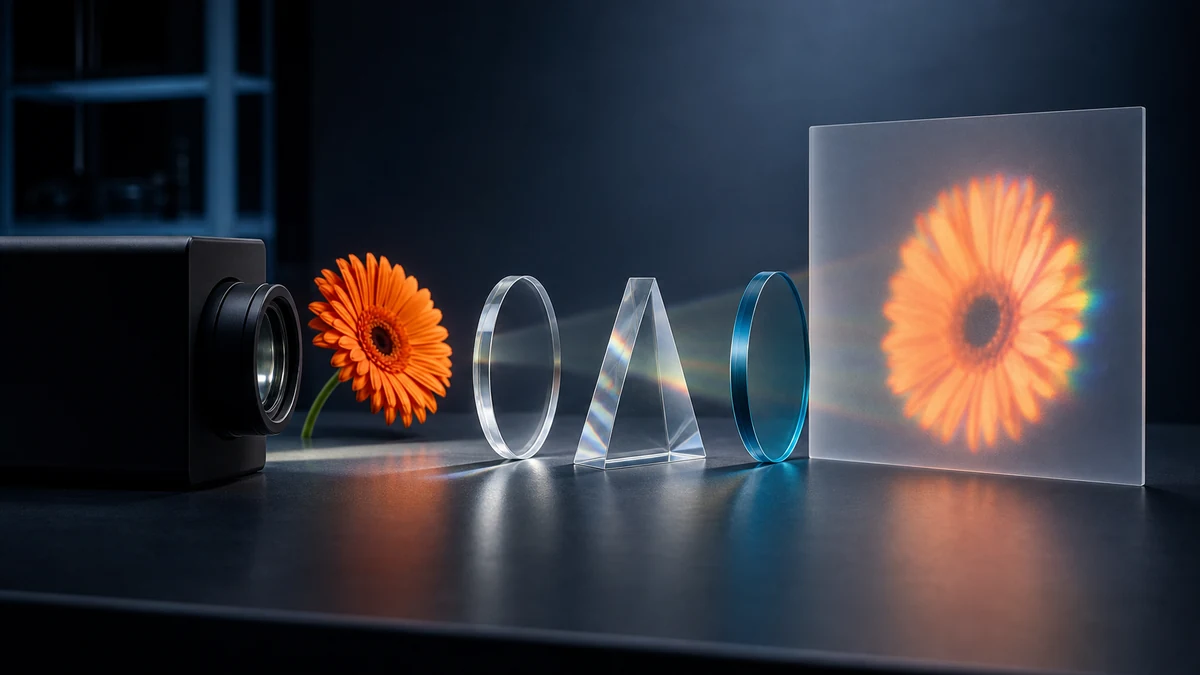
Image processing in Python covers very different workloads: web thumbnails, scientific measurement, real-time video, deep-learning augmentation, medical registration, and gigapixel imagery. The best library is therefore the one whose data model, algorithms, and deployment profile match the work—not simply the project with the most functions.
OpenCV ranks first for overall computer-vision breadth, while Pillow is the best everyday image library and scikit-image offers the clearest scientific-analysis experience. torchvision and Kornia lead inside PyTorch workflows. Albumentations remains technically strong for augmentation, but its current licensing options must be evaluated before adoption.
Last reviewed July 2026. Rankings reflect current maintenance, ecosystem adoption, documentation, capability, licensing, and fit for the stated use case.
| Rank | Library | Best for |
|---|---|---|
| 1 | OpenCV | General computer vision, video, camera pipelines, and high-performance image operations |
| 2 | Pillow | Everyday image file handling, resizing, compositing, and web pipelines |
| 3 | scikit-image | Scientific image analysis with a NumPy-native API |
| 4 | torchvision | PyTorch image transforms, datasets, pretrained vision models, and training pipelines |
| 5 | Kornia | Differentiable computer vision and GPU-accelerated transforms in PyTorch |
| 6 | AlbumentationsX / Albumentations | High-performance, target-aware data augmentation for vision models |
| 7 | ImageIO | A unified interface for images, animation, video, volumes, and scientific formats |
| 8 | SimpleITK | Medical imaging, registration, segmentation, and physical-coordinate-aware analysis |
| 9 | pyvips | Very large images, tiled processing, and memory-efficient servers |
| 10 | Mahotas | Compact, fast morphology and feature extraction on NumPy arrays |
1. OpenCV
OpenCV is the broadest general-purpose computer-vision library available from Python. It covers image and video I/O, color conversion, filtering, morphology, geometry, calibration, feature detection, tracking, optical flow, classical machine learning, neural-network inference, and real-time camera workflows. Python bindings expose a highly optimized C++ core, making OpenCV the best default when the project extends beyond simple file editing.
Best for: General computer vision, video, camera pipelines, and high-performance image operations
- Strengths: Exceptional algorithm breadth; fast native implementation; real-time video and camera support; large community and platform coverage
- Considerations: Arrays use BGR ordering in many common paths; APIs reflect C++ conventions; binary wheels and optional codecs vary by platform
2. Pillow
Pillow is the maintained fork of the Python Imaging Library and the most practical choice for common raster-image work. It reads and writes many formats and provides resizing, cropping, rotation, color conversion, filters, drawing, text, metadata access, and compositing. It is lightweight enough for scripts and web services and interoperates easily with NumPy and machine-learning libraries.
Best for: Everyday image file handling, resizing, compositing, and web pipelines
- Strengths: Simple Pythonic API; broad format support; excellent for web and document workflows; actively maintained
- Considerations: Not a full computer-vision system; performance can lag specialized vectorized libraries on heavy pipelines; untrusted images require decompression-bomb and codec safeguards
3. scikit-image
scikit-image is a curated collection of algorithms for filtering, segmentation, feature extraction, morphology, measurement, exposure, restoration, transforms, and image-quality metrics. Its NumPy-based interface and educational examples make it especially strong for research, microscopy, and reproducible scientific analysis where readable code matters.
Best for: Scientific image analysis with a NumPy-native API
- Strengths: Clear NumPy integration; excellent scientific algorithms and examples; consistent conventions; strong measurement and morphology tools
- Considerations: Primarily CPU-oriented; not designed for camera capture or application UI; users must track dtype and intensity-range conventions carefully
View scikit-image Documentation
4. torchvision
torchvision is the official vision library in the PyTorch ecosystem. It supplies datasets, model architectures and weights, image and video operations, and recommended v2 transforms that can keep images, videos, masks, keypoints, and bounding boxes synchronized. It is the natural choice when image processing is part of a PyTorch training or inference pipeline.
Best for: PyTorch image transforms, datasets, pretrained vision models, and training pipelines
- Strengths: Official PyTorch integration; pretrained models and datasets; tensor-native transforms; support for boxes, masks, keypoints, and video
- Considerations: Best value depends on PyTorch; some features carry beta or prototype status; traditional computer-vision coverage is narrower than OpenCV
View torchvision Documentation
5. Kornia
Kornia implements filtering, morphology, geometry, augmentation, feature detection, depth, color, and other vision operations as differentiable PyTorch modules. This lets classical image-processing steps run on batches and accelerators inside a neural network while remaining part of the autograd graph. It is the leading option when preprocessing itself must be trainable.
Best for: Differentiable computer vision and GPU-accelerated transforms in PyTorch
- Strengths: Differentiable operations; native PyTorch tensors and autograd; GPU batching; bridges classical and deep computer vision
- Considerations: Requires the PyTorch stack; API is more specialized than Pillow or OpenCV; benefits are greatest when differentiation or accelerator batching is required
6. AlbumentationsX / Albumentations
Albumentations is known for rich augmentation pipelines that synchronize spatial changes across images, masks, bounding boxes, keypoints, and volumes. It is powerful for classification, detection, segmentation, pose, and medical imaging. Licensing now needs explicit attention: the maintained AlbumentationsX package from 2.3.2 onward is AGPL-3.0-only or available under separate commercial terms, while the archived albumentations 2.0.8 package remains MIT-licensed.
Best for: High-performance, target-aware data augmentation for vision models
- Strengths: Large transform catalog; correct multi-target synchronization; strong performance guidance; 2D, video, and volumetric workflows
- Considerations: Current maintained-package licensing may not fit every product; augmentation policies can corrupt labels if misconfigured; always visualize and test transformed samples
View AlbumentationsX / Albumentations Documentation
7. ImageIO
ImageIO focuses on reading, writing, iterating, and inspecting image resources. Its v3 API can load a wide range of files and URIs into arrays, write arrays back through format-specific plugins, and handle animations, video, medical data, and volumetric images. It is an excellent I/O companion to NumPy, scikit-image, OpenCV, and scientific pipelines.
Best for: A unified interface for images, animation, video, volumes, and scientific formats
- Strengths: Simple v3 read/write interface; broad plugin-based format support; handles sequences and volumes; NumPy-friendly
- Considerations: Processing algorithms are outside its scope; behavior depends on installed backends such as FFmpeg or Pillow; new code should avoid the legacy v2 API
8. SimpleITK
SimpleITK exposes a simplified interface to the Insight Toolkit for multidimensional scientific and medical images. It includes filters, resampling, segmentation, registration, transforms, DICOM workflows, and careful handling of origin, spacing, and direction. It ranks highly for clinical and volumetric work even though it is more specialized than general image libraries.
Best for: Medical imaging, registration, segmentation, and physical-coordinate-aware analysis
- Strengths: Strong registration and segmentation; supports 2D, 3D, and medical formats; preserves physical image metadata; cross-language ITK foundation
- Considerations: Steeper conceptual learning curve; array axis conventions require care; not intended for consumer photo editing or generic web graphics
9. pyvips
pyvips binds the libvips demand-driven image-processing library. Operations can be evaluated lazily and streamed through pipelines, often using far less memory than libraries that materialize every intermediate image. It is a strong specialist choice for huge photographs, pyramidal images, thumbnails, format conversion, and high-throughput image services.
Best for: Very large images, tiled processing, and memory-efficient servers
- Strengths: Low memory use; fast threaded pipelines; handles huge and tiled images; broad format and color-management support
- Considerations: Requires the libvips native library; lazy execution differs from array-first workflows; smaller Python community than Pillow or OpenCV
10. Mahotas
Mahotas is a focused computer-vision library implemented in optimized C++ with a NumPy interface. It provides morphology, thresholding, filtering, distance transforms, connected components, texture features, and interest-point tools. It remains useful for established scientific pipelines that need these algorithms without adopting a larger framework.
Best for: Compact, fast morphology and feature extraction on NumPy arrays
- Strengths: Fast native routines; straightforward NumPy arrays; strong morphology and feature extraction; lightweight dependency profile
- Considerations: Smaller and less frequently updated ecosystem; narrower algorithm coverage; documentation and community resources trail scikit-image and OpenCV
How to choose the right Python image-processing library
Use Pillow for common image-file operations, OpenCV for camera/video and classical vision, and scikit-image for scientific analysis. Choose torchvision for PyTorch datasets, transforms, and pretrained models, Kornia when transforms must be differentiable, ImageIO when format I/O is the core need, and SimpleITK for medical volumes and registration. pyvips is the specialist option for files too large to process comfortably in memory.
Before committing, test real files and edge cases: EXIF orientation, alpha channels, color profiles, bit depth, dtype ranges, corrupted inputs, very large dimensions, multiframe formats, and metadata preservation. For machine-learning augmentation, visualize boxes, masks, and keypoints after every spatial transform. Treat images as untrusted input in public services, impose pixel and file-size limits, keep codecs patched, and review every dependency’s license.