
Futurist Series
When AI Solves Open Math Problems, What’s Left for Genius?

Unite.AI is committed to rigorous editorial standards. We may receive compensation when you click on links to products we review. Please view our affiliate disclosure.
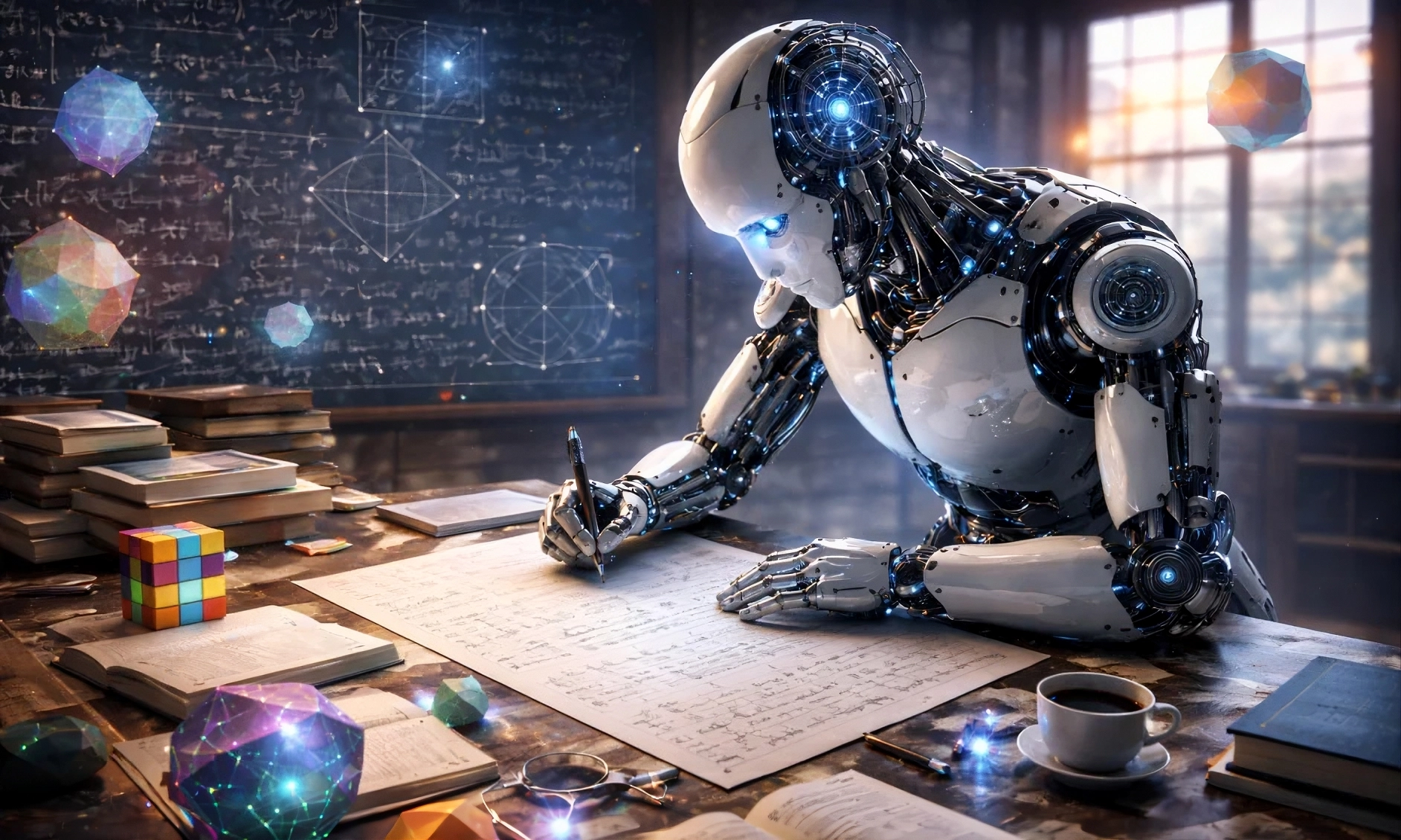
Mathematics has long been treated as the purest measure of intelligence. Unlike most sciences, it doesn’t depend on lab equipment, experimental noise, or measuring tools. A proof is either correct or it isn’t. That clarity is why the great unsolved problems—conjectures that resist every known technique—have become a kind of intellectual Mount Everest.
History tends to tell the same story: a question hangs in the air for decades or centuries until a rare mind arrives—someone with the unusual mix of patience, creativity, and technical power to see a path nobody else saw. We celebrate the “lone genius” because in mathematics, that narrative often fits.
But a new pattern is beginning to appear. In late 2025 and early 2026, online discussions around several Erdős problems (a well-known set of open problems collected by Paul Erdős) suggested that AI-assisted proofs may have resolved multiple items in unusually short order. Some of these proof sketches were reportedly reviewed by leading mathematicians, including Terence Tao, who has spoken publicly about AI’s growing role as a mathematical collaborator. Still, the most important caveat remains: mathematics doesn’t run on headlines. Wide acceptance typically requires time—independent verification, careful write-ups, and sometimes formalization in proof-checking systems.
Even with that caution, the broader point stands: the world is getting its first real look at what happens when AI is not merely calculating, summarizing, or pattern-matching, but participating in the act of reasoning. If AI can reliably help solve problems that humans have wrestled with for generations, it forces a deeper question:
What will human genius do next—when the machine can reach the summit first?
The Mechanics of “Silicon Reasoning”
To understand why this moment feels different, it helps to separate two versions of AI that people often blur together.
Earlier generations of language models were often described (fairly) as systems that predict the next likely word. They could look impressive, but they were also prone to “confident nonsense” because they had limited ability to slow down, test ideas, or self-correct.
Newer systems increasingly rely on a different approach: test-time reasoning (sometimes discussed as “test-time compute”). Instead of producing an answer immediately, the model can spend more time on a single problem—generating candidate approaches, checking whether steps follow logically, backing up when it hits contradictions, and exploring alternative routes. In human terms, it resembles what a mathematician does at a whiteboard: try something, break it, fix it, and repeat.
This matters in mathematics because progress is rarely a straight line. Most promising ideas fail. The ability to backtrack—without ego, fatigue, or discouragement—can turn an impossible search into a tractable one.
Modern AI systems have moved beyond mere calculation, offering four practical capabilities that make them feel less like calculators and more like collaborators. They excel at large-scale synthesis, connecting ideas across vast bodies of literature and niche subfields where key lemmas are rarely cited. They also enable fast iteration, testing many proof “routes” quickly and discarding dead ends while preserving promising sub-structures. Furthermore, these machines sometimes propose unusual heuristics—intermediate constructions that feel alien to human intuition but remain logically sound. Finally, they produce verification-friendly output that can be translated into formal proof assistants like Lean or Coq, providing the community with a path toward higher confidence.
Importantly, this doesn’t mean AI “understands” mathematics the way humans do. It means something more specific: under the right constraints, it can generate reasoning chains that hold up under scrutiny. In mathematics, that’s the currency that matters.
Why Erdős-Style Problems Make Sense as Early Targets
Not all mathematical frontiers are equally “vulnerable” to AI acceleration. Some problems require entirely new theory, new definitions, or deep conceptual leaps that don’t have many footholds in existing literature. But other problems—especially those in combinatorics, number theory, and discrete mathematics—often have a different shape:
- The statement is simple enough to explain to non-specialists.
- The known tools are plentiful, scattered across papers, and easy to miss.
- Progress often comes from combining existing results in a clever way.
Erdős problems frequently fit this profile. They are famous for being easy to state and difficult to solve, and they live in domains where proofs can involve a patchwork of techniques: probabilistic methods, extremal combinatorics, ergodic theory, harmonic analysis, and more.
That makes them useful as a “pressure test” for AI. If a system can propose a credible proof strategy for a problem that has resisted broad human effort, that is meaningful—even if it turns out (as sometimes happens) that the key idea was already implicit in older work, or that the proof needs polishing before it becomes canonical.
In other words: the story is not “AI replaces mathematicians.” The story is that AI may shrink the distance between “the result exists somewhere” and “the community can actually see it.”
When AI Rediscovers What Humans Forgot
One of the most interesting patterns in modern science is not that humans lack knowledge, but that we struggle to retrieve knowledge.
Mathematics is enormous. Results are scattered across decades of journals, workshop notes, and specialized subfields with their own languages and conventions. Even excellent mathematicians can overlook a theorem that is “obvious” inside a niche domain. Over time, whole chains of reasoning can become buried—not because they were wrong, but because attention shifted elsewhere.
AI changes that dynamic by being willing to search the boring corners where humans rarely look because they gravitate toward fashionable areas. It also serves to bridge dialects, translating between the language of different subfields and aligning ideas that humans traditionally keep separate.
This is where many people see the deepest promise. Even when AI isn’t inventing brand-new mathematics from scratch, it can function like an ultra-powerful “knowledge excavator,” bringing forgotten structures back into view and recombining them in ways that feel new.
The “Big Math” Shift: From Proof-Writer to Conductor
If AI continues to improve, the biggest change may not be that machines solve more theorems. It may be that the role of the human mathematician changes.
For centuries, doing mathematics meant spending enormous effort on the proof itself—finding a route, verifying every step, and writing it in a way other experts can check. That labor is part of the craft. But it is also a bottleneck. Many promising ideas die simply because the human time required to fully execute and formalize them is too high.
In an AI-accelerated world, proof becomes less scarce. That doesn’t make mathematics trivial. It changes where the hard work lives.
The Mathematician as Cartographer, Not Calculator
If a proof is no longer the main bottleneck, “genius” shifts toward higher-level tasks. Selecting the most valuable questions to solve becomes a central human responsibility, as does designing new abstractions like invariants and field-bridging definitions. Furthermore, great minds will focus on building research programs by mapping landscapes of conjectures and orchestrating discovery, while also translating abstract results into functional tools for other fields.
Think of it like the shift in chess after computers. Human chess didn’t end when engines surpassed us. Instead, elite play evolved. Humans learned to ask better questions of the machine, interpret its recommendations, and develop strategies that blend intuition with calculation.
Mathematics may undergo a similar transformation—except the stakes are broader. New mathematical tools can reshape cryptography, optimization, machine learning, physics, and economics. If AI reduces the cost of discovery, the downstream effects could be enormous.
Is This “Free Thinking,” or Just Extremely Fast Search?
A reasonable skeptic might say: this isn’t intelligence, it’s just brute force. Give a machine enough compute and it will stumble into something that works.
There’s a real point here. AI does bring scale. It can try many routes. But the most interesting cases are not random stumbling—they involve structured synthesis: connecting concepts, reusing lemmas in unfamiliar contexts, and assembling a chain of reasoning that is coherent enough for experts to validate.
In practice, the line between “search” and “thinking” becomes blurry. Human mathematicians search too—through ideas, through analogies, through partial results. What matters is whether the process reliably generates new, checkable truth.
If AI becomes consistently capable of that, then the label matters less than the outcome. The frontier shifts either way.
Which Frontiers Could Fall Next?
If AI keeps improving, we should expect a pattern: the problems that fall first will often be those where knowledge is already present but fragmented, where existing techniques can be recombined, and where formal verification can quickly raise confidence.
Likely near-term targets include:
- Extremal combinatorics and graph theory: rich toolkits, many known lemmas, and lots of problems defined in clean, discrete terms.
- Additive number theory: fertile ground for cross-technique proofs and “bridge” arguments that connect fields.
- Optimization and complexity-adjacent questions: not the deepest “P vs NP” tier first, but many smaller structural results around algorithms and bounds.
- Formalizable subdomains: areas already partially encoded into proof assistants, where AI can accelerate translation from idea to verified theorem.
The big, famous problems—like the Millennium Prize problems—may still require deep conceptual inventions. But even there, AI could chip away at surrounding terrain: proving lemmas, exploring special cases, and building scaffolding that makes a final human (or hybrid) leap more likely.
The Philosophical Pivot: The Return of the Question-Asker
As we automate the mechanics of the proof, we are forced to confront a reality that has existed since the dawn of the discipline: mathematics is, and always has been, a subset of philosophy. Historically, the prized intellects of our species were those who could wrestle with life’s most meaningful questions. The Greeks did not separate the study of numbers from the study of existence; for them, the “irrationality” of a number was a crisis of the soul as much as a crisis of logic.
In the modern era, we shifted our valuation of human “genius” toward the master calculator—the mind that could grind through the dense, manual labor of a three-hundred-page proof. We equated intelligence with the ability to function as a biological processor. But as AI begins to reach the summit of these proofs first, that technical bottleneck evaporates. This doesn’t diminish human intellect; it forces it to migrate “up the stack.”
The prized intellects of the future will not be those who can execute a known process with extreme efficiency, but the philosophers who can define what is worth discovering in the first place. When the “how” becomes a commodity provided by silicon, the “why” becomes the only remaining scarcity. We are returning to the era of the Polymath, where the ability to pose a life-altering question—to conceive of a new frontier of meaning—is the supreme skill. Like the shift from a shovel to a backhoe, we are no longer valued for our ability to dig with our hands, but for our vision in deciding where to break ground.
Conclusion: A Future Where Genius Moves Up the Stack
If AI can help solve problems that once demanded a once-in-a-century intellect, it doesn’t mean we run out of mathematics. It means we change how we do it.
In a world where proofs become cheaper, the scarce resource becomes something else: good questions, useful abstractions, and the ability to interpret what the mathematics means.
The “unique intellect” of the future may look less like a solitary figure grinding through a proof for decades and more like a cartographer of ideas—someone who can see which mountains are worth climbing, and how to coordinate a new kind of expedition where humans and machines climb together.



