
Artificial Intelligence
India Becomes ChatGPT’s Second-Largest Market With 100 Million Weekly Users

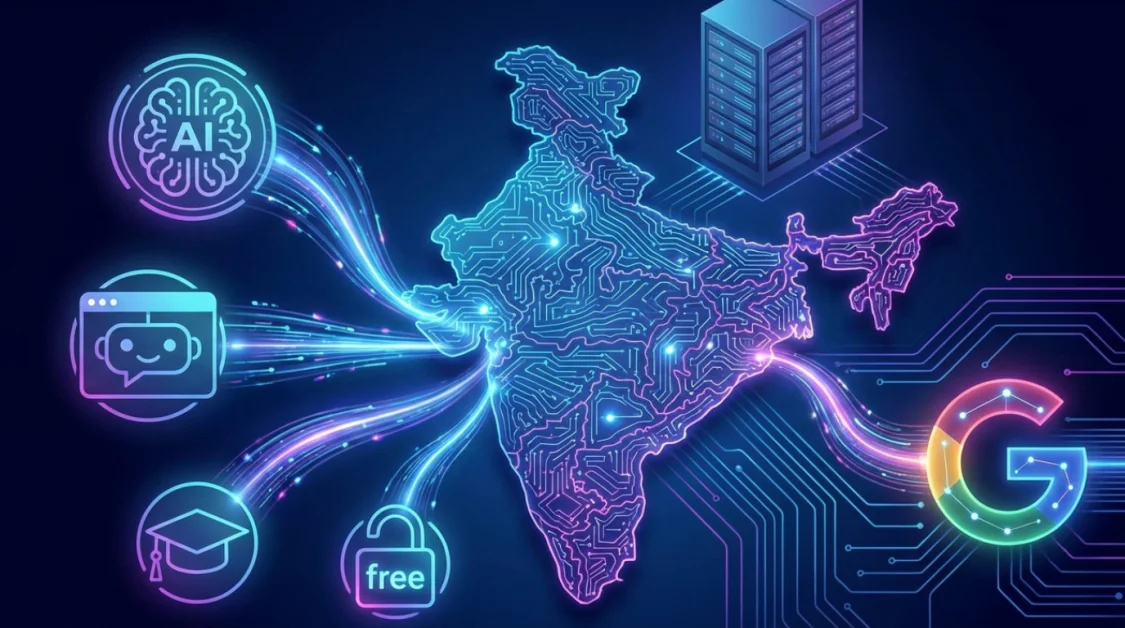
India now has 100 million weekly active ChatGPT users, making it OpenAI’s second-largest market behind only the United States. CEO Sam Altman shared the figure ahead of the India AI Impact Summit in New Delhi, calling the country a potential “full-stack AI leader” and confirming plans to deepen partnerships with the Indian government.
The number means one in eight of ChatGPT’s 800 million global weekly users is in India. More striking: India’s user base quadrupled over the past year, driven largely by students—the country now has the largest student population on ChatGPT of any nation.
But the headline figure masks a harder question. India’s users are overwhelmingly on ChatGPT’s free tier. Converting them into paying subscribers in a market where the average monthly mobile data plan costs under $3 will test whether OpenAI’s growth story can become a revenue story.
The Race for India’s AI Users
OpenAI is not alone in treating India as a strategic priority. Google partnered with Reliance Jio last October to offer 18 months of free Gemini AI Pro access to Jio’s 5G subscribers, initially targeting users aged 18 to 25 before expanding the offer to all eligible customers. The deal includes access to Gemini 3, Personal Intelligence features, and 2TB of cloud storage—a package worth approximately ₹35,100 that Jio users get at no additional cost.
The distribution asymmetry is significant. Google doesn’t need Indian users to find Gemini; it pushes Gemini to them through Android, the operating system running on roughly 95% of smartphones in India. Jio, India’s largest telecom provider with over 480 million subscribers, adds another distribution layer OpenAI can’t match.
OpenAI has responded with localized pricing. ChatGPT Go, launched in India at ₹399 per month (roughly $4.50), is a stripped-down subscription offering 10 times the usage of the free tier. In November, OpenAI went further, making ChatGPT Go free for 12 months for all eligible Indian users—a move that acknowledges the reality that competing with “free” requires being free yourself.
The pricing war reflects a global trend. ChatGPT’s global market share has dropped from 87% to 68% over the past year as Gemini tripled its position. In India, where price sensitivity is acute and Google’s ecosystem penetration is near-total, that competitive pressure is amplified.
What 100 Million Users Means for India’s AI Ecosystem
The summit itself tells part of the story. The India AI Impact Summit is the first global AI summit hosted in the Global South. Prime Minister Narendra Modi inaugurated the event alongside heads of state from roughly 20 countries and CEOs from Meta, Microsoft, Google, OpenAI, and Nvidia. The Indian government’s AI Mission, initiated in March 2024, has committed ₹10,372 crore (approximately $1.2 billion) to building domestic AI infrastructure and capabilities.
For Indian developers and startups, the 100 million user figure validates what many have argued for years: India isn’t just an AI consumer market—it’s becoming a building ground. OpenAI opened its first India office in Delhi last August and has been hiring across roles. The company launched IndQA, a benchmark specifically designed to evaluate AI model performance across 12 Indian languages including Hindi, Bengali, Tamil, and Telugu. ChatGPT Go supports native UPI payments, a detail that signals genuine localization rather than surface-level market entry.
The student adoption pattern is particularly noteworthy. Indian students are using AI chatbots for competitive exam preparation, coding practice, language learning, and research—use cases that create habitual engagement rather than one-off queries. If these users carry their ChatGPT habits into their professional lives, OpenAI builds a generational advantage that’s difficult to displace.
But that’s a long bet. OpenAI’s subscription conversion challenges in Europe suggest that even in wealthier markets, most users don’t see enough value in paid tiers to upgrade. In India, where per-capita income is a fraction of European levels and Google is giving away a competitive product for free through the country’s dominant telecom, the conversion math is even harder.
The strategic calculus for OpenAI may not be about near-term revenue at all. India produces more STEM graduates annually than any other country. A generation of developers, researchers, and entrepreneurs building on ChatGPT creates an ecosystem effect that pays off in enterprise contracts, API usage, and platform loyalty years from now. Altman’s characterization of India as a “full-stack AI leader” is a bet that the country will matter as much for building AI as for consuming it.
For India’s 100 million ChatGPT users, the immediate beneficiary of this competition is clear: two of the world’s most valuable companies are spending billions to give them access to frontier AI for free or near-free. Whether that access translates into economic opportunity, or simply makes India a battleground for Silicon Valley’s subscription wars, depends on what those users build with it.



