
Líderes de pensamento
IA Não Está Tirando Nossos Empregos. Mas os Custos de Energia Podem.

 Adicione Unite.AI às suas fontes preferidas no Google
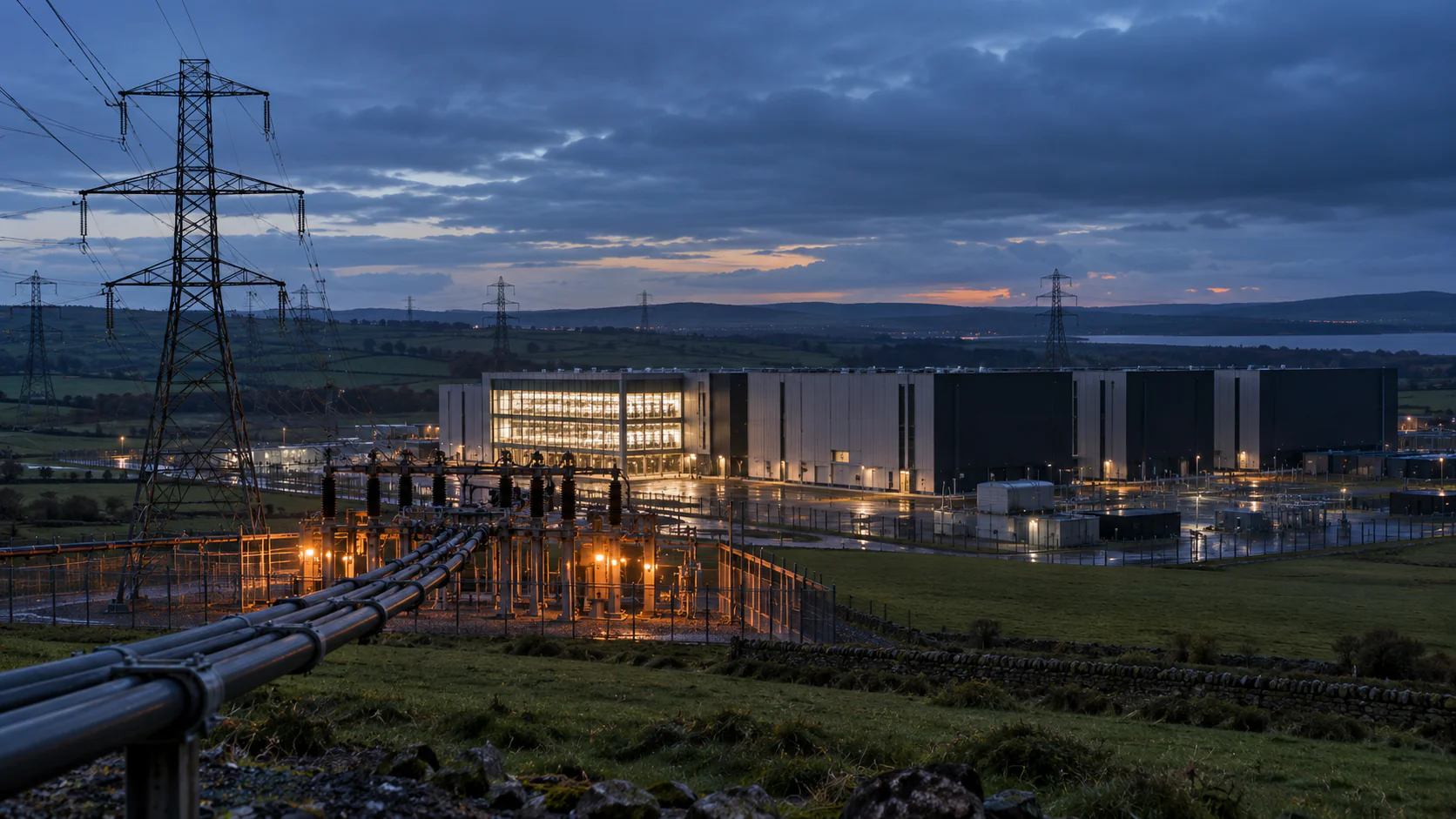
O pânico sobre empregos causados pela IA não tem respaldo nos números. O problema energético da IA é real, e agora a questão é se a Grã-Bretanha pode construir e implantar rapidamente o suficiente para competir.
Since late 2023, the share of UK businesses using artificial intelligence has almost tripled from around 12% to 35%, according to data from the ONS. Yet most of those businesses report no change at all to their overall headcount, and a wider review of the labour market evidence found no consistent displacement, even in the occupations most exposed on paper. Google’s own research on Gemini reached a similar conclusion in the US. None of this means AI has no effect on work. AI is changing which tasks get done inside a job. It is not, yet, emptying the office.
O Verdadeiro Gargalo: Capacidade da Rede vs. Demanda de IA
So any widespread panic about AI taking our jobs is running well ahead of the data. What is not ahead of the data is energy. The IEA expects global data centre electricity demand to more than double by 2030, to around 945 TWh, more than Japan’s entire electricity consumption today. AI is the biggest driver of that growth, and it is arriving faster than new generation, transmission or storage can be built to meet it. Throw in some convenient political theatre aimed at the jobs panic and what gets funded isn’t a fix at all: another AI taskforce or training scheme for a skills gap that was never the constraint, rather than the pylons and permits actually needed.
Here’s the other part the jobs debate misses: energy prices do not just rise because demand rises. They rise because the market that prices electricity was never built for a shock like this. Wholesale power is priced in half-hour windows, using generation and consumption data that is often estimated rather than measured, and reconciled weeks after the fact. That lag was tolerable when demand moved slowly. It is not tolerable when one new data centre can add the load of a small town overnight, and the price signal meant to tell generators where to build next arrives too late, and too distorted, to do its job.
That’s why energy bills don’t always track the headlines the way people expect. As oil shocks and shipping route interruptions from the war in the Middle East push gas (and with it power) prices further, that pressure rarely lands on a bill cleanly. Costs rise on infrastructure that most bills never itemise, layered on a wholesale price that is already a bloated, lagging and imperfect estimate of real‑time scarcity. Add a new class of buyer that needs always‑on power to run compute at scale, and you are stacking a fast, capital‑intensive demand shock on a market that still settles like it’s 2005.
Como os Atrasos no Mercado de Energia Ameaçam o Crescimento Econômico
This is where the jobs risk actually sits, and it has nothing to do with headcount at firms already using AI. The real cost of expensive, opaque energy is what never gets built. Britain’s grid connection queue has ballooned from 41 GW of contracted demand in novembro de 2024 to 125 GW by junho de 2025. Roughly 50 GW of that queue is data centre projects, with developers reporting waits stretching past a decade and some offered connection dates as late as 2037. Every one of those gigawatts represents a site, a construction contract, an operations team and a supply chain that stays on paper instead of becoming a payroll.
And it’s not only data centres. Last year, the CBI reported that nearly 90% of UK businesses have seen energy bills rise over the past three years, and four in ten now plan to scale back investment because of it. When the price of power is unpredictable and the wait for more of it is measured in years, companies do not usually start by sacking people they already employ. Instead, they cancel the expansion or the new site that would have hired the next hundred people. They think smaller, cap creativity and others follow. That is the mechanism: uncertainty about energy is a tax on ambition and the jobs that have not been created yet, not the ones that already exist.
Taken together, this is a national competitiveness problem as much as a commercial one. Compute capacity and energy capacity have effectively merged into a single constraint. Strip away the AI headline and we’re left with a loud warning shot: no country competes on the global stage while the cost of transacting power stays higher than its rivals. A country that cannot price and deliver power quickly, fairly or reliably will not win the new industrial race AI is creating, and it won’t build the jobs that race was supposed to bring, whatever its skills base or startup scene looks like. Bringing down the cost of the electron is existential.
Consertando a Infraestrutura: Prioridades de Política para a Infraestrutura de IA
If policymakers want to spend political capital on AI, they’d do better directing it at the market’s plumbing and the grid connection queue. Combined with a modernised approach to how power is priced, metered and settled, the jobs stuck in that 125 GW queue can turn into payrolls. Solve this and Britain competes for what gets built next: the cafe that opens a second branch, the gigafactory that builds an entire supply chain around it or the AI lab that becomes the next DeepMind.



