Podstawy AI
Czym jest rozpoznawanie mowy konwersacyjnej (CSR)?

 Dodaj Unite.AI do preferowanych źródeł w Google

Rozpoznawanie mowy konwersacyjnej (CSR) rozszerza automatyczne rozpoznawanie mowy poza izolowaną transkrypcję, wykorzystując kontekst dialogu, sygnały przejmowania kolejki, informacje o mówcy oraz przetwarzanie o niskiej latencji. Celem jest wspieranie interakcji na żywo, w której istotne są słowa, timing, przerwania oraz wcześniejsze wypowiedzi.
CSR jest nowo powstającą kategorią produktów i badań, a nie jedną ustandaryzowaną klasą modeli. Silny system łączy strumieniowe ASR z wyznaczaniem punktu końcowego, obsługą mówcy, kontekstowym modelowaniem języka, stanem dialogu oraz polityką odpowiedzi, a następnie ocenia doświadczenie od początku do końca.
Najważniejsze wnioski
- Rozpoznawanie strumieniowe generuje wstępne hipotezy i koryguje je w miarę napływu kolejnych danych audio.
- Wyznaczanie punktu końcowego i prognozowanie przejęcia kolejki są odrębne od dokładności transkrypcji.
- Historia rozmowy i słowa kluczowe mogą poprawić rozpoznawanie, ale także rozprzestrzeniać wcześniejsze błędy.
- Ocenić należy opóźnienie, przerwania, mówców, akcenty, szumy, prywatność oraz ukończenie zadania – nie tylko wskaźnik błędów słów.
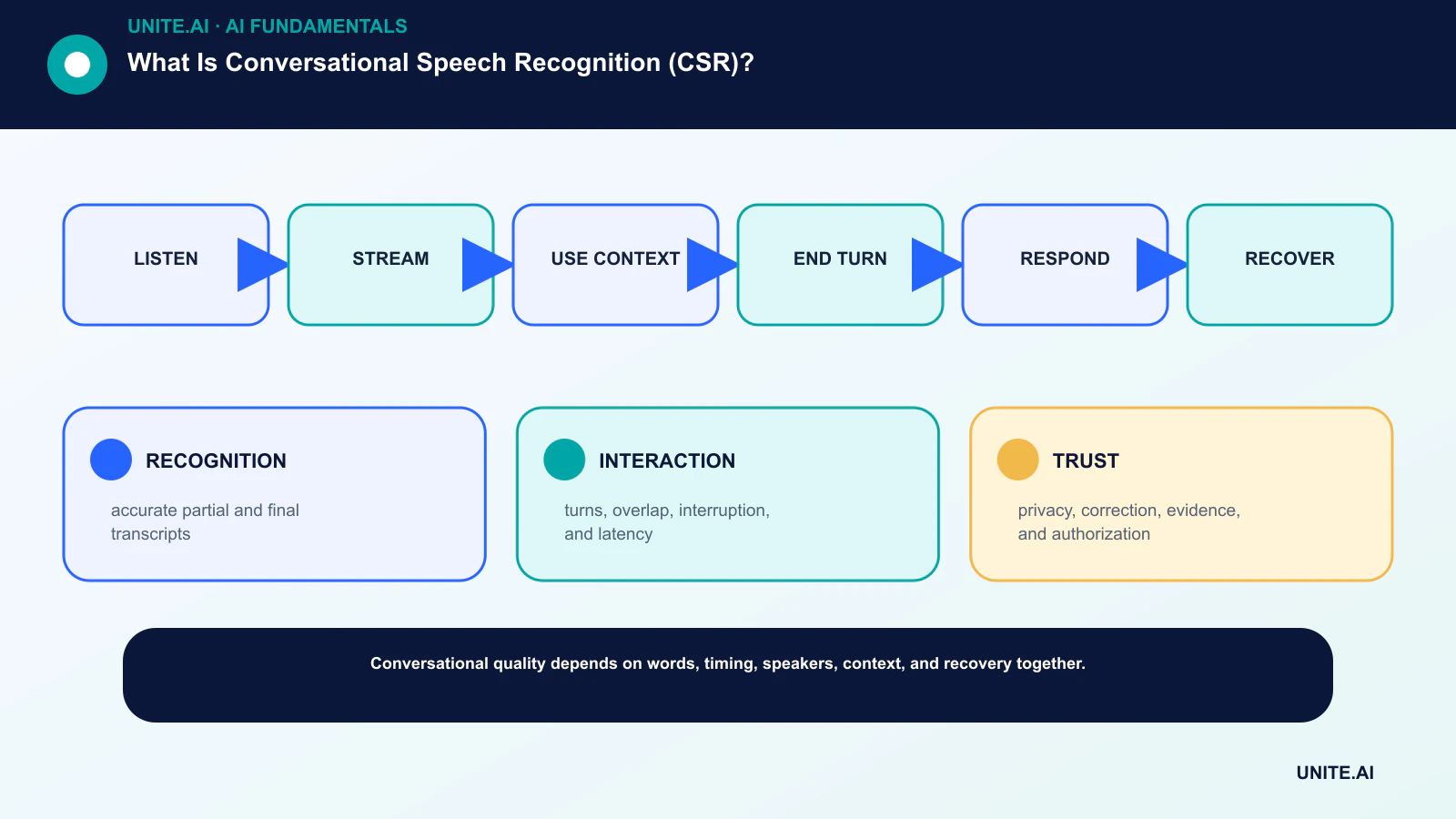
Od ASR do dialogu na żywo
Tradycyjne ASR przekształca dźwięk w tekst. System konwersacyjny musi decydować, kiedy słuchać, kiedy wypowiedź się kończy, czy mowa jest skierowana do systemu oraz jak odzyskać sytuację, gdy transkrypcja lub odpowiedź jest błędna.
Modele strumieniowe przetwarzają ramki stopniowo i generują częściowe transkrypcje. Niska latencja zwiększa responsywność, ale przedwczesne zobowiązanie może podnieść liczbę poprawek lub błędów. Aplikacja potrzebuje polityki rozróżniającej tekst stabilny od wstępnego.
Zarządzanie kolejnością wypowiedzi, nakładanie i mówcy
Czas trwania ciszy sam w sobie jest słabym sygnałem punktu końcowego. Zakończenie leksykalne, prozodia, timing, spojrzenie i stan dialogu mogą pomóc przewidzieć, czy osoba utrzymuje czy oddaje głos. Funkcja barge‑in pozwala użytkownikowi przerwać wygenerowaną mowę bez utraty kontekstu.
Nakładające się głosy i diarizacja wciąż są trudne. Systemy powinny zachować niepewność co do mówcy, unikać przypisywania wypowiedzi niewłaściwej osobie i zapewnić możliwość korekty – szczególnie w dokumentacji używanej w opiece zdrowotnej, finansach czy pracy prawnej.
Rozpoznawanie kontekstowe
Poprzednie wypowiedzi mogą rozjaśniać nazwy i odniesienia; listy słów kluczowych mogą ukierunkować rozpoznawanie na terminy domenowe. Modele mowy i języka mogą kodować kontekst audio i tekstowy w wspólnym mechanizmie podpowiedzi lub uwagi.
Kontekst może również utrwalać błędną wcześniejszą transkrypcję lub wyciekać informacje pomiędzy sesjami. Ogranicz historię do bieżącego celu, oddziel zaufane metadane od mowy użytkownika i stosuj kontekst transformera z wyraźnymi regułami przechowywania i dostępu.
Ewaluacja i odpowiedzialne wdrażanie
Raportuj strumieniowy wskaźnik błędów słów, opóźnienie pierwszego tokenu i finalizacji, wskaźnik poprawek, błędy punktu końcowego, skuteczność barge‑in, przypisanie mówcy oraz ukończenie zadania. Testuj prawdziwe mikrofony, szumy, akcenty, przełączanie języków, niepełnosprawność oraz mowę nacechowaną emocjami.
Dane głosowe mogą identyfikować lub ujawniać wrażliwe informacje. Stosuj zgodę, minimalizację, szyfrowanie, ograniczenia przechowywania oraz przegląd ludzki. Połącz generowane odpowiedzi z mechanizmami bezpieczeństwa chatbota, ponieważ dokładna transkrypcja nie czyni odpowiedzi poprawną ani autoryzowaną.
Od sygnału akustycznego do stanu konwersacji
System rozpoznawania mowy konwersacyjnej przechwytuje dźwięk, stosuje kondycjonowanie sygnału, wykrywa mowę, rozpoznaje słowa lub jednostki semantyczne, identyfikuje mówców w razie potrzeby i aktualizuje stan dialogu. Systemy strumieniowe generują częściowe hipotezy przed zakończeniem wypowiedzi. Hipotezy te mogą się zmieniać, więc elementy dalszego przetwarzania muszą odróżniać wyniki tymczasowe od ostatecznych.
Wykrywanie aktywności głosu i wyznaczanie punktu końcowego decydują, kiedy mowa się rozpoczyna i kiedy użytkownik kończy. Stałe progi ciszy zawodzą przy wolno mówiących, szumie tła i przerwach na myślenie. Modele zarządzania kolejnością mogą wykorzystywać słowa, prozodię, spojrzenie i kontekst dialogu, ale muszą równoważyć szybką reakcję z nieprzerywaniem mówcy.
Diarizacja odpowiada na pytanie, kto mówił kiedy; rozpoznawanie mówcy szacuje tożsamość; separacja źródła izoluje nakładające się głosy. Są to różne zadania o odmiennych ryzykach. W spotkaniach, opiece zdrowotnej i obsłudze klienta przypisanie właściwych słów właściwej osobie może być tak ważne, jak wskaźnik błędów słów w transkrypcji.
Kontekst, nakładanie, emocje i odzyskiwanie interakcji
Kontekst konwersacji rozwiązuje zaimki, elipsy, korekty, terminy domenowe i odniesienia do wcześniejszych wypowiedzi. System może łączyć dowody akustyczne z historią dialogu i pozyskaną wiedzą, ale wcześniejszy kontekst może także ukierunkować rozpoznawanie na błędne oczekiwania. Zachowaj dowody dźwiękowe i pewność, aby kontekst nie nadpisywał milcząco niepewności.
Naturalny dialog zawiera kanały zwrotne, przerwania, fałszywe początki, śmiech, przełączanie języków i jednoczesną mowę. Responsywny agent potrzebuje obsługi barge‑in: zatrzymać lub obniżyć swoją wypowiedź, przechwycić nową mowę użytkownika, ocenić, czy przerwanie zmienia intencję, i odzyskać sytuację bez duplikowania lub utraty akcji.
Prozodia i sygnały paralingwistyczne mogą wskazywać na podkreślenie lub niepewność, ale wyciąganie wniosków o emocjach, zdrowiu czy intencji z głosu jest podatne na błędy i zależy od kultury. Stosuj takie szacunki ostrożnie, ujawniaj je w odpowiednich sytuacjach i nie podejmuj istotnych decyzji na podstawie nieweryfikowanej etykiety emocji.
Ewaluacja, prywatność i projektowanie produkcyjne
Wskaźnik błędów słów pozostaje przydatny, ale ocena konwersacji powinna także mierzyć przypisanie mówcy, dokładność encji, sukces semantyczny zadania, stabilność częściowych hipotez, opóźnienie punktu końcowego, skuteczność przerwań, odzyskiwanie oraz wskaźnik korekt użytkownika. Segmentuj według akcentu, języka, urządzenia, szumu, nakładania, stylu mowy i warunków sieciowych.
Architektura strumieniowa wymaga ograniczonych buforów, mechanizmu backpressure, ponownego łączenia, numerów sekwencji i wyraźnej finalizacji. Trzymaj budżety latencji modelu i dialogu osobno, śledź każdy etap i testuj obniżone sieci. Gdy system wyzwala akcje, potwierdzaj intencje o wysokim wpływie i zapewnij, aby ponowne próby były idempotentne, tak aby powtarzany dźwięk lub ponowne połączenia nie powielały transakcji.
Mowa zawiera informacje o tożsamości, treści, otoczeniu i osobach postronnych. Minimalizuj przechowywanie, szyfruj transport i magazynowanie, kontroluj dostęp, definiuj usuwanie oraz rozróżniaj audio od wygenerowanych transkrypcji i osadzeń. Udostępniaj widoczne wskaźniki nagrywania oraz alternatywy, gdy brak zgody. Model lokalny może zmniejszyć transfer, ale nadal wymaga zgody i kontroli cyklu życia.
Przykład praktyczny: agent głosowy obsługujący przerwania i korekty
Rozmówca mówi: „Zarezerwuj wtorek — nie, środę po południu”, podczas gdy agent zaczyna odpowiadać po słowie „wtorek”. Rozpoznawanie strumieniowe generuje zmieniające się częściowe transkrypcje, wyznaczanie punktu końcowego wykrywa dalszą mowę, a barge‑in zatrzymuje wypowiedź. Stan dialogu oznacza wcześniejszą datę jako zastąpioną, zamiast tworzyć dwa żądania. Potwierdzenie encji koncentruje się na skorygowanej dacie i godzinie, przy czym system zachowuje pewność i dowody dla ostatecznej interpretacji.
Architektura oddziela przechwytywanie audio, wykrywanie mowy, rozpoznawanie strumieniowe, obsługę mówcy, politykę dialogu, wykonanie narzędzia i syntezę. Numery sekwencji oraz finalizacja zapobiegają nadpisaniu ostatecznej transkrypcji przez późne wyniki częściowe. Narzędzie rezerwacyjne przyjmuje ustrukturyzowane żądanie, sprawdza autoryzację i dostępność oraz używa klucza idempotentności. Konsekwentna rezerwacja jest odczytywana i potwierdzana przed wykonaniem; ponowne połączenie nie może jej cicho powtórzyć.
Testowanie łączy dokładność słów i encji z opóźnieniem punktu końcowego, skutecznością przerwań, obsługą korekt, przypisaniem mówcy, ukończeniem zadania oraz wskaźnikiem podwójnych akcji. Scenariusze obejmują szumy, nakładanie, akcenty, przełączanie języków, wolną mowę, urządzenia wspomagające, słabe sieci i ataki syntetyczne. Przechowywanie audio jest minimalizowane i ujawniane, dane postronnych są obsługiwane wyraźnie, a użytkownicy mogą przejść na tekst lub człowieka. Inteligencja konwersacyjna jest mierzona przez bezpieczne odzyskiwanie i wynik, a nie jedynie dokładność transkrypcji.
Lista kontrolna praktycznej implementacji
Przekształć koncepcję w ograniczony, testowalny przepływ pracy: słuchaj → strumieniuj → używaj kontekstu → zakończ wypowiedź → odpowiedz → odzyskaj. Wyznacz odpowiedzialnego właściciela, udokumentuj dane i zależności, ustal prostą bazę, określ kryteria akceptacji i zakończenia, przetestuj reprezentatywne awarie oraz zdefiniuj monitorowanie, wycofanie i przegląd przed rozszerzeniem zakresu. Rejestruj wersje i założenia, aby inny zespół mógł odtworzyć wynik i zrozumieć, co się zmieniło.
Przed uruchomieniem przeprowadź udokumentowaną ocenę gotowości z osobami, które budują, obsługują, zabezpieczają i są dotknięte systemem. Testuj typowe przypadki, warunki brzegowe, awarie zależności i niewłaściwe użycie; zachowaj dowody i nierozwiązane ryzyka. Określ, kto może zatwierdzić wydanie, zmienić próg, nadpisać wynik lub zatrzymać działanie. Ponownie rozważ decyzję po otrzymaniu danych z rzeczywistości, ponieważ technicznie udany pilotaż nie gwarantuje niezawodnej wydajności na większą skalę.
- ROZPOZNAWANIE: dokładne częściowe i końcowe transkrypcje.
- INTERAKCJA: wypowiedzi, nakładanie, przerwania i opóźnienia.
- ZAUFANIE: prywatność, korekta, dowody i autoryzacja.
Najczęściej zadawane pytania
Czy CSR różni się od ASR?
ASR jest komponentem przetwarzania mowy na tekst. CSR wykorzystuje ASR oraz kontekst dialogu, timing, obsługę mówcy i punktu końcowego oraz polityki interakcji dla rozmowy na żywo.
Czy niższy wskaźnik błędów słów gwarantuje lepszego agenta głosowego?
Nie. System może transkrybować dokładnie, a jednocześnie przerywać użytkownikom, odpowiadać wolno, przypisywać wypowiedzi niewłaściwym osobom lub podjąć niewłaściwą akcję. Wymagane są metryki interakcji end‑to‑end.
Podstawowe źródła