
Leaders d’opinion
L’IA ne prend pas nos emplois. Mais les coûts énergétiques pourraient le faire.

 Ajouter Unite.AI à vos sources préférées sur Google
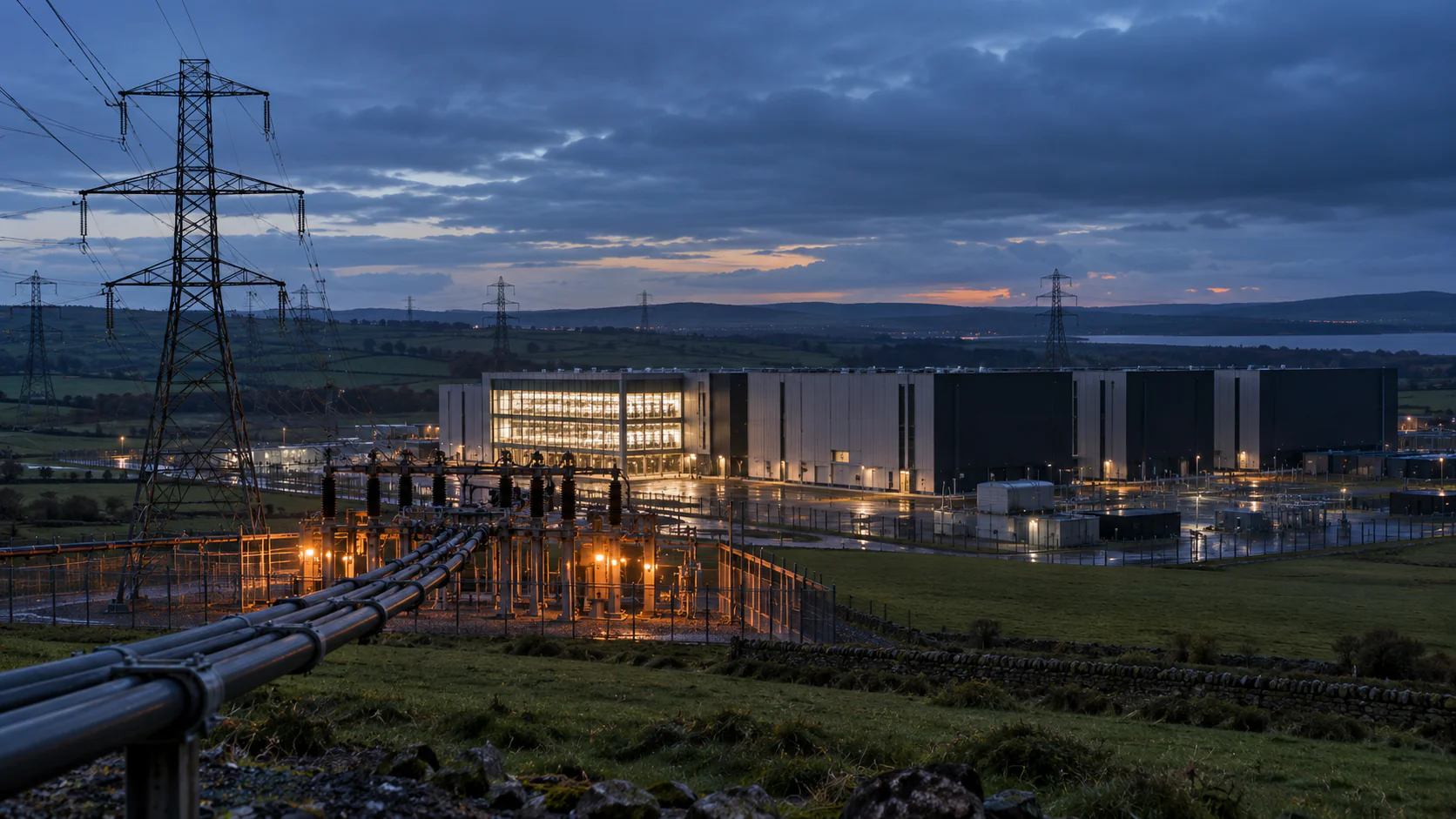
La panique autour des emplois menacés par l’IA n’est pas étayée par les chiffres. Le problème énergétique lié à l’IA est réel, et la question est désormais de savoir si la Grande‑Bretagne peut construire et déployer assez rapidement pour rester compétitive.
Since late 2023, the share of UK businesses using artificial intelligence has almost tripled from around 12% to 35%, according to data from the ONS. Yet most of those businesses report no change at all to their overall headcount, and a wider review of the labour market evidence found no consistent displacement, even in the occupations most exposed on paper. Google’s own research on Gemini reached a similar conclusion in the US. None of this means AI has no effect on work. AI is changing which tasks get done inside a job. It is not, yet, emptying the office.
Le vrai goulot d’étranglement: capacité du réseau vs. demande d’IA
So any widespread panic about AI taking our jobs is running well ahead of the data. What is not ahead of the data is energy. The IEA expects global data centre electricity demand to more than double by 2030, to around 945 TWh, more than Japan’s entire electricity consumption today. AI is the biggest driver of that growth, and it is arriving faster than new generation, transmission or storage can be built to meet it. Throw in some convenient political theatre aimed at the jobs panic and what gets funded isn’t a fix at all: another AI taskforce or training scheme for a skills gap that was never the constraint, rather than the pylons and permits actually needed.
Voici l’autre aspect que le débat sur l’emploi néglige: les prix de l’énergie n’augmentent pas seulement parce que la demande augmente. Ils augmentent parce que le marché qui fixe le prix de l’électricité n’a jamais été conçu pour un choc de cette ampleur. L’électricité de gros est tarifée par créneaux de trente minutes, en utilisant des données de production et de consommation souvent estimées plutôt que mesurées, et conciliées des semaines plus tard. Ce décalage était tolérable lorsque la demande évoluait lentement. Il ne l’est plus lorsqu’un nouveau centre de données peut ajouter la charge d’une petite ville du jour au lendemain, et que le signal de prix destiné à indiquer aux producteurs où construire ensuite arrive trop tard et trop déformé pour remplir sa fonction.
That’s why energy bills don’t always track the headlines the way people expect. As oil shocks and shipping route interruptions from the war in the Middle East push gas (and with it power) prices further, that pressure rarely lands on a bill cleanly. Costs rise on infrastructure that most bills never itemise, layered on a wholesale price that is already a bloated, lagging and imperfect estimate of real‑time scarcity. Add a new class of buyer that needs always‑on power to run compute at scale, and you are stacking a fast, capital‑intensive demand shock on a market that still settles like it’s 2005.
Comment les retards du marché de l’énergie menacent la croissance économique
This is where the jobs risk actually sits, and it has nothing to do with headcount at firms already using AI. The real cost of expensive, opaque energy is what never gets built. Britain’s grid connection queue has ballooned from 41 GW of contracted demand in novembre 2024 to 125 GW by juin 2025. Roughly 50 GW of that queue is data centre projects, with developers reporting waits stretching past a decade and some offered connection dates as late as 2037. Every one of those gigawatts represents a site, a construction contract, an operations team and a supply chain that stays on paper instead of becoming a payroll.
Et ce ne sont pas seulement les centres de données. L’an dernier, le CBI a indiqué que près de 90 % des entreprises britanniques ont vu leurs factures d’énergie augmenter au cours des trois dernières années, et que quatre entreprises sur dix envisagent désormais de réduire leurs investissements à cause de cela. Lorsque le prix de l’électricité est imprévisible et que l’attente pour en obtenir davantage se mesure en années, les entreprises ne commencent généralement pas par licencier les salariés déjà en poste. Elles annulent plutôt l’expansion ou le nouveau site qui aurait embauché les cent prochaines personnes. Elles pensent plus petit, limitent la créativité et d’autres suivent. Voilà le mécanisme: l’incertitude énergétique est une taxe sur l’ambition et sur les emplois qui n’ont pas encore été créés, pas sur ceux qui existent déjà.
Taken together, this is a national competitiveness problem as much as a commercial one. Compute capacity and energy capacity have effectively merged into a single constraint. Strip away the AI headline and we’re left with a loud warning shot: no country competes on the global stage while the cost of transacting power stays higher than its rivals. A country that cannot price and deliver power quickly, fairly or reliably will not win the new industrial race AI is creating, and it won’t build the jobs that race was supposed to bring, whatever its skills base or startup scene looks like. Bringing down the cost of the electron is existential.
Réparer les tuyaux: priorités politiques pour l’infrastructure IA
If policymakers want to spend political capital on AI, they’d do better directing it at the market’s plumbing and the grid connection queue. Combined with a modernised approach to how power is priced, metered and settled, the jobs stuck in that 125 GW queue can turn into payrolls. Solve this and Britain competes for what gets built next: the cafe that opens a second branch, the gigafactory that builds an entire supply chain around it or the AI lab that becomes the next DeepMind.



