
Artificial Intelligence
The Race to the Edge: Why AI Hardware Is Leaving the Cloud Behind

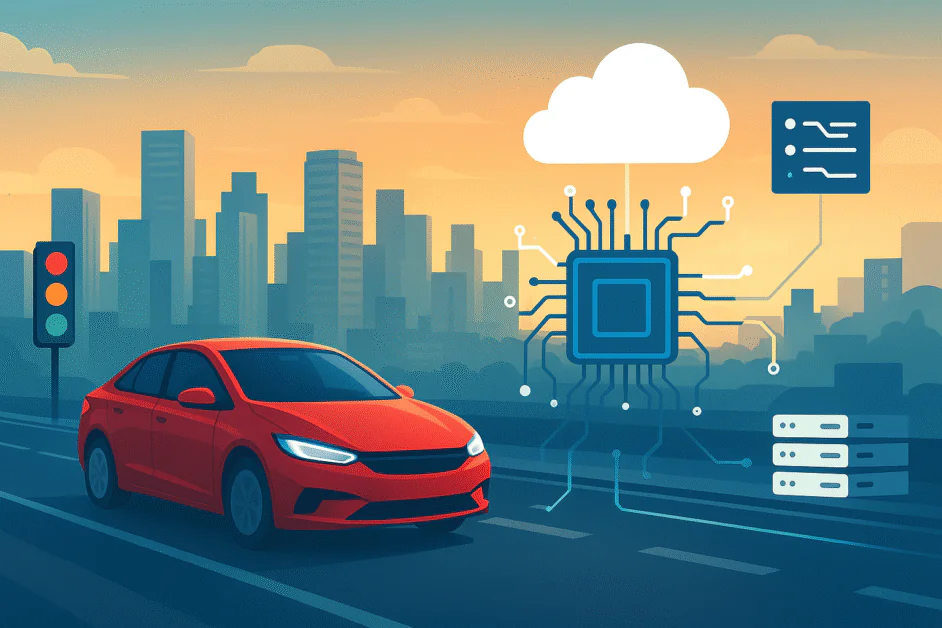
A self-driving car moving through busy streets must respond within milliseconds. Even a 200-millisecond delay while sending data to a cloud server could compromise safety. Similarly, in factories, sensors must detect anomalies instantly to prevent damage or injury. These situations demonstrate that cloud-only AI cannot meet the demands of real-time applications.
Cloud computing has played a major role in the growth of AI. It has enabled large models to be trained efficiently and deployed across the world. This centralized approach enabled companies to scale AI quickly and make it accessible to many industries. However, relying on cloud servers also creates significant limitations. Because all data must travel to and from a remote server, latency becomes a critical issue for applications requiring immediate responses. In addition, high energy consumption, privacy concerns, and operational costs present further challenges.
Edge AI hardware offers a solution to these problems. Devices such as NVIDIA Blackwell GPUs, Apple A18 Bionic, and Google TPU v5p and Coral can process data locally, close to where it is generated. By computing at the edge, these systems reduce latency, improve privacy, lower energy use, and make real-time AI applications feasible. Consequently, the AI ecosystem is shifting toward a distributed, edge-first model, where edge devices complement cloud infrastructure to meet modern performance and efficiency requirements.
The AI Hardware Market and Key Technologies
The AI hardware market is growing rapidly. According to Global Market Insights (GMI), in 2024, its value was estimated at around USD 59.3 billion, and analysts project it could reach nearly USD 296 billion by 2034, with an annual growth rate of approximately 18%. Other reports suggest a higher 2024 value of USD 86.8 billion, with forecasts exceeding USD 690 billion by 2033. Despite variations in estimates, all sources agree that demand for AI‑optimized chips is increasing across both cloud and edge environments.
Different types of processors now serve specific roles in AI applications. CPUs and GPUs remain essential, with GPUs still dominant for large-scale model training. Neural Processing Units (NPUs), such as Apple’s Neural Engine and Qualcomm’s AI Engine, are designed for efficient on-device inference. Tensor Processing Units (TPUs), developed by Google, are optimized for tensor operations and are used in both cloud and edge deployments. ASICs provide ultra-low-power, high-volume inference for consumer devices, while FPGAs offer flexibility for specialized workloads and prototyping. Together, these processors form a diverse ecosystem that meets the needs of modern AI workloads.
Energy consumption is a growing concern in the AI sector. The International Energy Agency (IEA, 2025) reports that data centers consumed about 415 TWh of electricity in 2024, representing roughly 1.5% of global demand. This figure could more than double to 945 TWh by 2030, with AI workloads being a major contributor. By processing data locally, edge hardware can reduce the energy burden of continuous transfers to centralized servers, making AI operations more efficient and sustainable.
Sustainability has become a major concern in the AI hardware industry. AI-driven data centers now consume almost 4% of the world’s electricity, compared to 2.5% only three years ago. This rising energy demand has encouraged companies to adopt green AI practices. Many are investing in low-power chips, renewable-powered micro data centers, and AI-based systems for cooling and energy control.
The growing demand for efficient and sustainable computing is now bringing AI processing closer to where data is created and used.
From Cloud Dominance to Edge Emergence
Cloud computing has played an important part in the early growth of artificial intelligence. Platforms such as AWS, Azure, and Google Cloud provided large computing power that made AI development and deployment possible at a global scale. This made advanced technologies accessible to many organizations and supported fast progress in research and applications.
However, full dependence on cloud systems is becoming difficult for tasks that require instant results. The distance between data sources and cloud servers creates latency that cannot be avoided, which is critical in areas such as autonomous systems, healthcare devices, and industrial monitoring. The continuous transfer of large data volumes also increases cost due to high bandwidth and egress fees.
Privacy and compliance are additional concerns. Rules like GDPR and HIPAA require local data handling, which limits the use of centralized systems. Energy use is another major issue, as large data centers consume heavy amounts of electricity and add pressure on environmental resources.
As a result, more organizations are now processing data closer to where it is generated. This transformation reflects a clear movement toward edge‑based AI computing, where local devices and micro data centers handle workloads that once depended entirely on the cloud.
Why AI Hardware Is Moving to the Edge
AI hardware is moving toward the edge because modern applications increasingly depend on instant, reliable decision-making. Traditional cloud-based systems often struggle to meet these demands, as every interaction requires sending data to distant servers and waiting for a response. In contrast, edge devices process information locally, allowing immediate action. This speed difference is vital in real-world systems where delays can lead to serious consequences. For instance, autonomous vehicles from Tesla and Waymo rely on on-device chips to make millisecond-level driving decisions. Likewise, healthcare monitoring systems detect patient issues in real time, and AR or VR headsets need ultra-low latency to provide smooth and responsive experiences.
Moreover, local data processing improves both cost efficiency and sustainability. Constantly transferring large volumes of data to the cloud consumes significant bandwidth and results in high egress fees. By performing inference directly on the device, organizations reduce data traffic, lower costs, and cut energy use. Therefore, edge AI not only improves performance but also supports environmental goals through more efficient computing.
Privacy and security concerns further strengthen the case for edge computing. Many industries, such as healthcare, defense, and finance, handle sensitive data that must remain under local control. Processing information on-site helps prevent unauthorized access and ensures compliance with data protection regulations like GDPR and HIPAA. In addition, edge systems improve resilience. They can continue functioning even with limited or unstable connectivity, which is crucial for remote locations and mission-critical operations.
The rise of specialized hardware has also made this transition more practical. NVIDIA’s Jetson modules bring GPU-based computing to robotics and IoT systems, while Google’s Coral devices use compact TPUs to perform efficient local inference. Similarly, Apple’s Neural Engine powers on-device intelligence in iPhones and wearables.
Other technologies, such as ASICs and FPGAs, offer efficient and customizable solutions for industrial workloads. Furthermore, telecom operators are deploying micro data centers near 5G towers, and many factories and retail chains are installing local servers. These setups reduce latency and allow faster data handling without depending entirely on centralized infrastructure.
This progress extends to both consumer and enterprise devices. Smartphones, wearables, and home appliances now perform complex AI tasks internally, while industrial IoT systems use embedded AI for predictive maintenance and automation. Consequently, intelligence is moving closer to where data is generated, creating faster, smarter, and more autonomous systems.
However, this change does not replace the cloud. Instead, cloud and edge computing now work together in a balanced, hybrid model. The cloud remains best suited for large-scale model training, long-term analytics, and storage, while the edge handles real-time inference and privacy-sensitive operations. For example, smart cities use the cloud for planning and analysis while relying on local edge devices to manage live video feeds and traffic signals.
Industry Use Cases of Edge AI Hardware
In autonomous vehicles, on-device AI chips can analyze sensor information within milliseconds, enabling immediate decisions that are critical for safety. This capability addresses the latency issues of cloud-only systems, where even small delays could affect performance.
In healthcare and wearable technology, edge AI allows real-time monitoring of patients. Devices can detect anomalies instantly, issue alerts, and store sensitive data locally. This ensures quick responses and protects privacy, which is essential for medical applications.
Manufacturing and industrial operations also benefit from edge AI. Predictive maintenance and robotic automation rely on local intelligence to identify equipment issues before they escalate. Factories using edge processing have reported significant reductions in downtime, improving both safety and operational efficiency.
Retail and smart city applications similarly take advantage of edge AI. Checkout-free stores use local processing for instant product recognition and transaction handling. Urban systems rely on edge-powered surveillance and traffic management to make quick decisions, minimizing latency and reducing the need to send large amounts of data to central servers.
Edge AI provides several advantages beyond speed. Local processing lowers energy consumption, reduces operational costs, and improves resilience in areas with limited connectivity. It also enhances security and regulatory compliance by keeping sensitive data on-site. Together, these benefits show that edge AI hardware is critical for real-time, privacy-sensitive, and high-performance applications across industries.
Challenges for Edge AI Hardware
Edge AI hardware faces several challenges that can limit its adoption and effectiveness:
Cost and scalability
Specialized AI chips are expensive, and scaling deployments across multiple devices or locations can be complex and resource-intensive.
Ecosystem fragmentation
The variety of chipsets, frameworks, and software tools can create compatibility issues, making integration across devices and platforms difficult.
Developer tooling
Limited cross-platform support slows development. Frameworks like ONNX, TensorFlow Lite, and Core ML often compete, creating fragmentation for developers.
Energy-performance trade-offs
Achieving high performance while maintaining low power consumption is challenging, particularly for devices in remote or battery-powered environments.
Security risks
Distributed edge devices can be more vulnerable to attacks than centralized systems, requiring robust security measures.
Deployment and maintenance
Managing and updating hardware in industrial or remote locations is difficult, adding operational complexity.
The Bottom Line
Edge AI hardware is transforming the way industries process and act on data. By moving intelligence closer to where it is generated, edge devices enable faster decisions, improve privacy, reduce energy use, and increase system resilience. Applications in autonomous vehicles, healthcare, manufacturing, retail, and smart cities demonstrate the real-world benefits of this technology.
At the same time, challenges such as cost, ecosystem fragmentation, energy-performance trade-offs, and security must be carefully managed. Despite these obstacles, the combination of specialized hardware, local processing, and hybrid cloud-edge models is creating a more efficient, responsive, and sustainable AI ecosystem. As technology advances, edge AI will play an increasingly central role in meeting the demands of real-time, high-performance, and privacy-sensitive applications.



