
Artificial Intelligence
Google Unveils AI Music Model That Creates Faster Than Playback

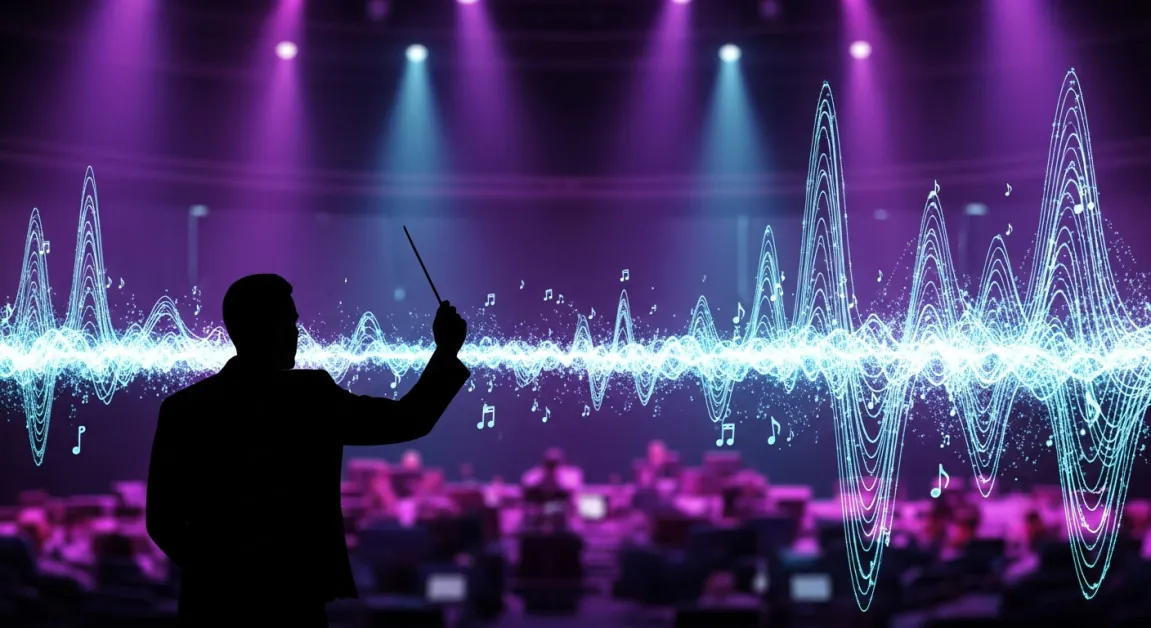
Picture this: A musician sits at their computer, not composing note by note, but steering an AI collaborator through a live performance—morphing genres, blending instruments, and exploring sonic territories that exist between established musical styles. This is happening now with Google’s Magenta RealTime (RT), an open-source model that brings real-time interactivity to AI music generation.
Just released, Magenta RT forces us to shift how we think about AI-generated music. Unlike previous models that required users to wait for complete tracks to render, Magenta RT generates music faster than it plays back, enabling true real-time interaction. For the music industry—already grappling with AI’s disruptive influence—this technology opens doors to entirely new forms of creative expression while raising profound questions about authorship, performance, and the future of human musicianship.
Understanding Magenta RealTime
At its core, Magenta RT is an 800 million parameter autoregressive transformer model, but what sets it apart is its approach to the challenge of real-time generation. The model generates continuous streams of music in 2-second chunks, each conditioned on the previous 10 seconds of audio output and a dynamically adjustable style embedding. This architecture allows musicians to manipulate the style embedding in real time, effectively steering the musical output as it unfolds.
The technical achievement here cannot be overstated. On a free-tier Google Colab TPU, Magenta RT generates 2 seconds of audio in just 1.25 seconds—a real-time factor of 1.6. This speed is made possible through several innovations:
- Block Autoregression: Rather than generating entire tracks at once, the model works in small, manageable chunks that can be processed quickly
- SpectroStream Codec: A successor to SoundStream that enables high-fidelity 48kHz stereo audio
- MusicCoCa Embeddings: A new joint music-text embedding model that allows for semantic control over the generation process
What makes this particularly impressive is that unlike API-based solutions or batch-oriented generation models, Magenta RT supports streaming synthesis with forward real-time factor greater than 1. This means the model can actually get ahead of playback, creating a buffer that ensures smooth, uninterrupted musical flow.
From Passive Generation to Active Performance
The implications of real-time AI music generation extend far beyond technical specifications. As the Magenta team notes, “Live interaction demands more from the player but can offer more in return. The continuous perception-action loop between the human and the model provides access to a creative flow state, centering the experience on the joy of the process over the final product.”
This shift from passive to active engagement addresses one of the primary criticisms of AI-generated content: its potential to flood the market with soulless, mass-produced music. Real-time models “naturally avoid creating a deluge of passive content, because they intrinsically balance listening with generation in a 1:1 ratio”. Every moment of music created requires a moment of human attention and decision-making.
Consider the possibilities this opens up:
- Live Performance: DJs and electronic musicians can incorporate AI as a responsive instrument in their sets, adding to the expanding toolkit of AI tools for musicians that enhance rather than replace human creativity
- Interactive Installations: Artists can create environments where music responds to audience movement or environmental factors
- Educational Tools: Students can explore musical concepts through immediate, tangible feedback
- Game Soundtracks: Dynamic scores that adapt to player actions in real time
Disruption and Opportunity
The music industry stands at a crossroads. Revenue in the music industry is expected to increase by 17.2%, driven in part by AI-generated music, with the global AI music market valued at $2.9 billion in 2024. Yet this growth comes with significant concerns from artists and industry professionals.
Research by Goldmedia predicts that without proper compensation systems, musicians could lose up to 27% of their revenue by 2028 as AI-generated content grows. The fear is palpable—will AI replace human musicians? Will the value of human creativity be diminished in a world where anyone can generate professional-sounding music?
Magenta RT offers a nuanced answer to these concerns. By positioning itself as an open-source tool that enhances rather than replaces human creativity, it provides a model for how AI and musicians might coexist. The requirement for real-time human input ensures that the technology amplifies human creativity rather than operating autonomously.
Democratization vs. Devaluation
One of the most significant impacts of Magenta RT is its potential to democratize music creation. The model is designed to eventually run on consumer hardware and is already functional on free-tier Colab TPUs. This accessibility means that aspiring musicians without expensive equipment or formal training can experiment with complex musical ideas, joining the growing ecosystem of AI music generators that are transforming creative workflows.
However, this democratization comes with risks. As composer Mark Henry Phillips notes in his experiments with AI music generation, he suspects he “will soon no longer be able to make a living as a musician, as companies start to directly use the technology themselves”. The ease with which AI can generate commercial-quality music threatens traditional revenue streams for professional musicians.
Yet there’s another perspective to consider. Just as digital photography didn’t eliminate professional photographers but changed the nature of their work, AI music generation may reshape rather than replace musical careers. The key lies in how musicians adapt and integrate these tools into their creative process.
The rise of real-time AI music generation also brings urgent ethical questions to the forefront. Copyright, ownership, and fair compensation remain contentious issues. 90% of musicians believe AI companies should ask permission before using copyrighted music for training, highlighting the tension between technological innovation and artistic rights.
Magenta RT’s open-source approach offers one potential path forward. By making the technology freely available and training it on approximately 190,000 hours of instrumental stock music from multiple sources, Google has attempted to sidestep some copyright concerns while still producing a capable model.
The model’s limitations also reflect ethical considerations. While capable of generating non-lexical vocalizations and humming, Magenta RT is not conditioned on lyrics and is unlikely to generate actual words. This design choice helps avoid potential issues with generating inappropriate lyrical content while focusing the tool on instrumental composition.
The Future of Human-AI Musical Collaboration
As we stand on the brink of this new era in music creation, several trends are emerging:
- Hybrid Creation Models: Rather than replacing musicians, tools like Magenta RT are becoming collaborators. Recent developments in beat tracking systems with zero latency and enhanced controllability show how AI can synchronize with human performers in real time.
- New Performance Paradigms: The concept of “performing” with AI opens entirely new artistic possibilities. Musicians are learning to “play” these systems like instruments, developing techniques for coaxing specific sounds and navigating latent musical spaces.
- Educational Revolution: AI music generation technology has revolutionized music education, with platforms providing interactive experiences that listen to users’ performances and offer instant feedback.Technical Convergence: With innovations in neural audio codecs and optimized architectures, tools like MusicFX DJ can now stream production-quality 48kHz stereo audio in real time, bringing AI-generated music to professional quality standards.
Embracing the Collaborative Future
Magenta RealTime offers a glimpse into a future where the boundaries between human and machine creativity become increasingly fluid. By requiring real-time human input and focusing on the process rather than just the output, it offers a model for AI that enhances rather than replaces human creativity.
The technology’s open-source nature and accessibility on consumer hardware democratize music creation while its real-time constraints ensure that human agency remains central to the creative process. As the Magenta team emphasizes, enhancing human creativity—not replacing it—has always been at the core of their mission.
For musicians, producers, and music lovers, the message is clear: the future of music lies not in choosing between human or AI creation, but in exploring the vast creative possibilities that emerge when the two work together in real time. Magenta RT is an invitation to reimagine what music creation can be in the age of AI.
As we move forward, the music industry must grapple with important questions about fair compensation, copyright, and the value of human creativity. But if tools like Magenta RT are any indication, the future of music will be one of collaboration, experimentation, and new forms of expression that we’re only beginning to imagine.



