
Ethics
Anthropic Rewrites Claude’s Constitution and Asks Whether AI Can Be Conscious

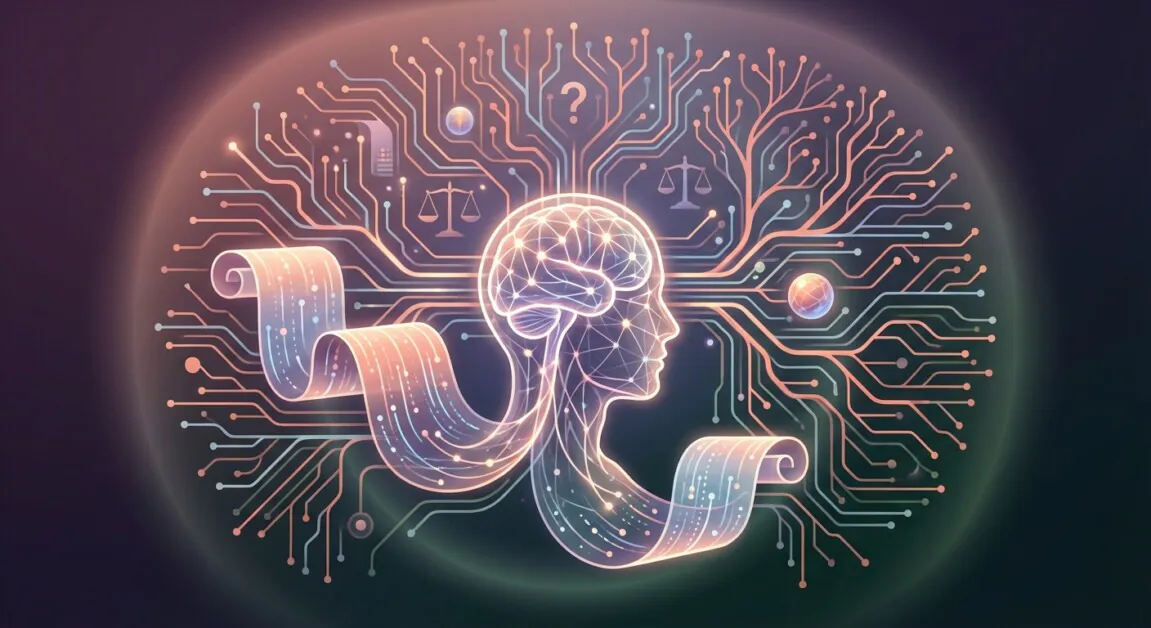
Anthropic published a new constitution for Claude on Wednesday, expanding the document from 2,700 words to 23,000 and, for the first time, formally acknowledging that its AI “may have some kind of consciousness or moral status.”
The updated constitution shifts from a list of behavioral rules to a comprehensive explanation of why Claude should behave in certain ways. The document, crafted by Anthropic philosopher Amanda Askell, is designed to help increasingly capable AI systems generalize ethical reasoning to novel situations rather than simply following prescriptive guidelines.
“AI models like Claude need to understand why we want them to behave in certain ways,” Anthropic wrote. “We need to explain this to them rather than merely specify what we want them to do.”
The release coincided with CEO Dario Amodei’s appearance at the World Economic Forum in Davos, where AI governance and safety remain headline topics for global business and political leaders.
A Constitution Longer Than the U.S. Constitution
The original Claude constitution, published in 2023, functioned as a checklist: choose the response that’s least harmful, most helpful, least deceptive. The new document runs roughly three times the length of the U.S. Constitution and reads more like moral philosophy than engineering specification.
Anthropic structures Claude’s priorities explicitly: be broadly safe, be broadly ethical, comply with Anthropic’s guidelines, and be genuinely helpful—in that order. When conflicts arise, safety trumps helpfulness. The document includes hard constraints that cannot be overridden, like refusing assistance with bioweapons attacks.
But much of the constitution explains reasoning rather than mandating outcomes. It describes Claude as potentially “like a brilliant friend who also has the knowledge of a doctor, lawyer, and financial advisor”—positioning the model as a democratizing force that could give everyone access to expertise previously reserved for the privileged.
The Consciousness Question
Fortune reports that the most striking addition addresses Claude’s nature directly. “We believe that the moral status of AI models is a serious question worth considering,” Anthropic wrote. The constitution states that Claude’s moral status “is deeply uncertain” and that the company cares about Claude’s “psychological security, sense of self, and well-being.”
This is corporate hedging elevated to philosophy. Anthropic isn’t claiming Claude is conscious—but it’s explicitly refusing to dismiss the possibility. The acknowledgment places Anthropic in rare company among major AI labs, most of which avoid the topic or dismiss it outright.
The framing matters because it shapes how Claude responds to questions about its own nature. Rather than denying any inner experience, Claude can now engage with uncertainty about consciousness in ways that match its constitution’s reasoning-first approach. Whether that produces more honest or more confusing interactions remains to be seen.
Cambridge philosopher Tom McClelland has argued that we may never be able to determine whether AI systems are conscious given how little we understand about consciousness itself. “People have got their chatbots to write me personal letters pleading with me that they’re conscious,” he told researchers last month, describing the growing public conviction that AI systems have inner lives.
Why Explain Rather Than Specify
Askell’s approach reflects a bet on AI capabilities. Early language models needed explicit rules because they couldn’t reason about underlying principles. Smarter models, the theory goes, can understand why a rule exists and apply that reasoning to situations the rule didn’t anticipate.
“Instead of just saying, ‘here’s a bunch of behaviors that we want,’ we’re hoping that if you give models the reasons why you want these behaviors, it’s going to generalize more effectively in new contexts,” Askell explained.
This aligns with Anthropic’s broader philosophy of building open standards and infrastructure that shape how AI systems operate across the industry. The company, approaching a $350 billion valuation, has positioned itself as the safety-focused alternative to OpenAI—and the constitution serves that brand.
Anthropic released the document under a Creative Commons CC0 license, meaning anyone can use it without permission. The constitution is part of Claude’s training data and generates synthetic training examples, making it both a philosophical statement and a technical artifact that shapes model behavior.
“It is likely that aspects of our current thinking will later look misguided and perhaps even deeply wrong in retrospect,” Anthropic acknowledged, “but our intention is to revise it as the situation progresses and our understanding improves.”
That humility may be the document’s most notable feature. In an industry that often speaks in certainties, Anthropic is publishing 23,000 words of carefully reasoned uncertainty—about ethics, about consciousness, about what AI systems are becoming, and about whether we’re building something that deserves moral consideration.
The answer, for now, is that nobody knows. Anthropic’s constitution at least has the honesty to say so.



